
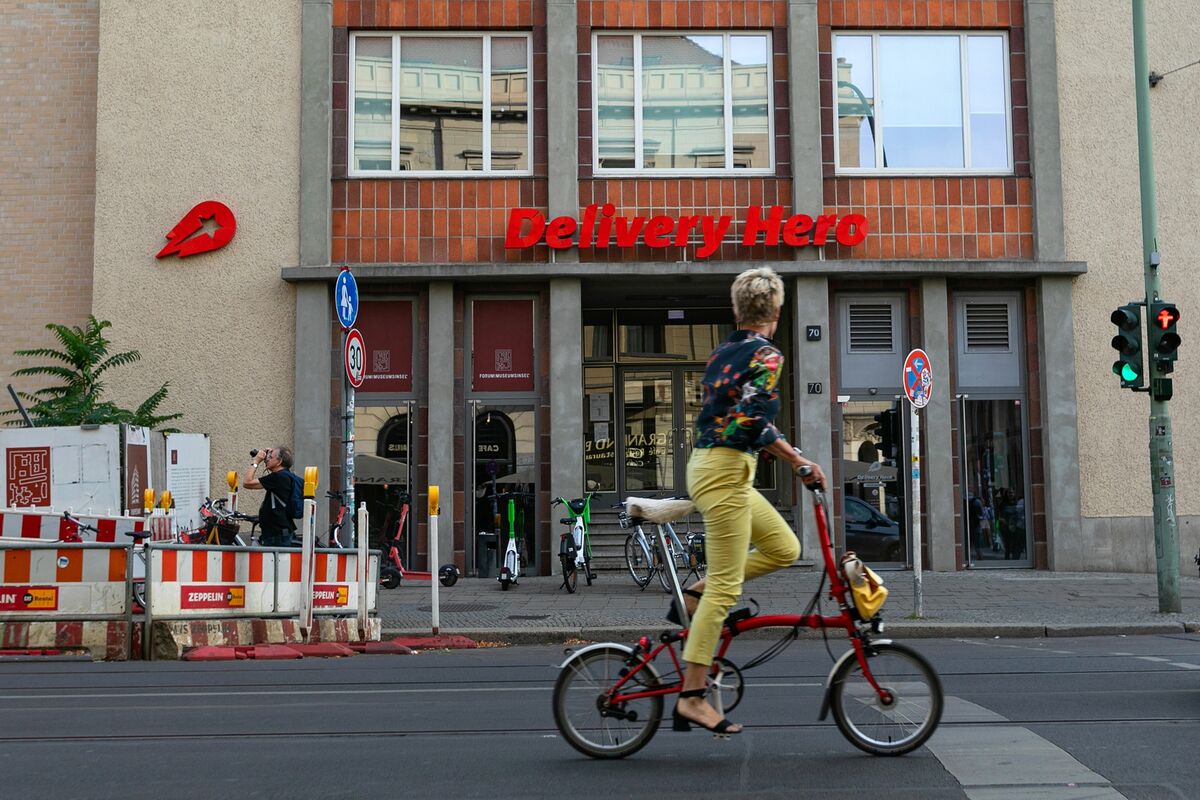

The global food delivery industry may be on the verge of a major consolidation moment. Mobility and delivery giant Uber is reportedly considering raising its acquisition offer for German food delivery company Delivery Hero after resistance from key shareholders pushed back against its initial proposal.
The potential takeover has quickly become one of the most closely watched developments in the tech and delivery ecosystem. If completed, the deal could dramatically reshape the balance of power in food delivery markets across Europe, Asia, the Middle East, and Latin America.
Credits: Mint
Uber’s Initial Offer Wasn’t Enough
According to reports, Uber recently proposed a deal valuing Delivery Hero at around 33 euros per share, putting the company’s overall valuation at more than 11.5 billion euros. Uber CEO Dara Khosrowshahi reportedly traveled to Oslo to meet Delivery Hero supervisory board chair Kristin Skogen Lund to discuss the proposal directly.
However, the talks appear to have hit an early roadblock.
One of Delivery Hero’s major shareholders reportedly rejected a separate offer of 38 euros per share from Uber, suggesting investors believe the company deserves a significantly higher valuation. Several shareholders are now said to be seeking a price above 40 euros per share for the entire business.
That puts Uber in a difficult position: either raise its bid further or risk losing the opportunity altogether.
Why Delivery Hero Is So Valuable
Despite challenges in the food delivery industry over the last few years, Delivery Hero remains one of the largest players globally. The company operates across dozens of countries and owns several regional delivery platforms, making it a highly strategic asset for any global competitor.
For Uber, acquiring Delivery Hero would instantly strengthen its international food delivery footprint through Uber Eats. It would also help the company deepen its presence in markets where competition remains fierce and profitability is difficult to achieve independently.
Food delivery companies have increasingly realized that scale matters. Larger networks allow companies to optimize delivery logistics, reduce operational costs, negotiate better terms with restaurants, and improve customer retention.
In a market where margins remain thin, consolidation is becoming more attractive than direct competition.
DoorDash Could Complicate the Deal
Adding more drama to the situation is the reported interest from DoorDashanother global delivery heavyweight.
Reports suggest DoorDash has also approached shareholders and explored possibilities around Delivery Hero, although it has not acquired any shares so far. Even without making a formal bid, DoorDash’s presence could create pressure on Uber to act more aggressively.
The possibility of a bidding war is now becoming a real concern for investors and analysts.
If multiple delivery giants start competing for Delivery Hero, the company’s valuation could rise rapidly. That would benefit shareholders but also increase the financial risks for whichever company eventually wins the deal.
The Food Delivery Industry Is Entering a New Era
The pandemic created a massive boom for online food delivery platforms, but the years that followed brought slowing growth, rising operational costs, and investor pressure for profitability.
As a result, many companies shifted focus from rapid expansion to efficiency and consolidation.
Uber itself has transformed significantly over the past few years. Once criticized for heavy losses, the company has steadily improved profitability across both its ride-hailing and delivery businesses. A successful Delivery Hero acquisition could further strengthen Uber’s position as one of the world’s dominant logistics and mobility platforms.
At the same time, competitors like DoorDash are also searching for international growth opportunities as the US market becomes increasingly saturated.
This makes Delivery Hero an especially attractive target because of its established global infrastructure and large customer base.
Credits: FWDStart
What Happens Next?
At the moment, Uber is reportedly evaluating whether it should improve its offer again. The company’s board recently met to discuss the current status of the takeover discussions and potential next steps.
The coming weeks could prove crucial.
If Uber decides to significantly raise its bid, negotiations may accelerate quickly. But if shareholders continue demanding even higher valuations, talks could become prolonged or attract additional bidders into the process.
Regardless of the outcome, the situation highlights how competitive the global food delivery business has become. Companies are no longer just fighting for customers — they are fighting for scale, survival, and long-term dominance in one of the world’s fastest-evolving digital industries.

Comments are closed.