
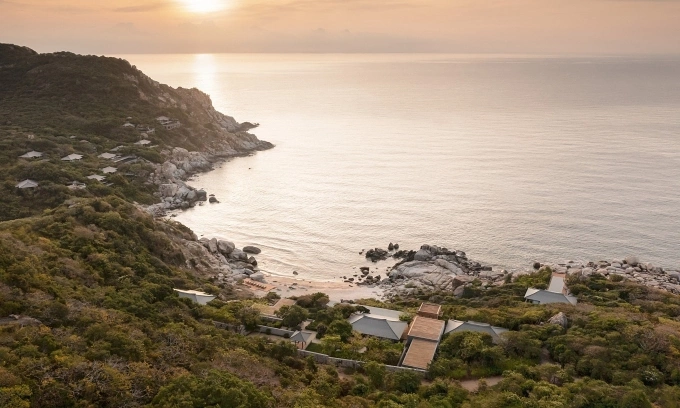

Amanoi Resort in Vinh Hy Bay in the central province of Khanh Hoa drew attention this year with a three-bedroom villa spanning 925 square meters priced at $15,000.
Guests must book a minimum of three nights. The private residence includes two swimming pools, a spa, a living room, a dining room, a private beach, and two butlers available 24/7.
Amanoi Ocean Pool Residence. Photo by Amanoi |
This is the highest rate for a three-bedroom residence across Aman Group’s entire portfolio of beach resorts in Asia, Joy Arpornrat Kuekthong, general manager of Amanoi, said.
“We expect the new ultra-luxury product to contribute about 8% of Amanoi’s total revenue in its first year, while also increasing average spending by around 11% and enhancing long-term brand value,” Kuekthong said.
Elsewhere, Vias Resort Van Phong Peninsula in the same province launched a five-star “exclusive buyout” private island resort targeting the ultra-wealthy in August.
Its prices range from $10,000 for a building per night to $25,000 for the whole peninsula. It can accommodate 100 guests and comes with a 25-strong staff.
Morgan Ulaganathan, director of tourism and hospitality advisory at consultancy Avison Young Vietnam, said the emergence of nightly rates of around $15,000 is creating a new benchmark for Vietnam’s high-end resort market.
Experts and operators say this milestone is reasonable when viewed against demand.
The international market is one driver. In the first 11 months of the year international arrivals in Vietnam numbered a record 19.15 million.
This year also saw several billionaire weddings being held at Vietnamese resorts.
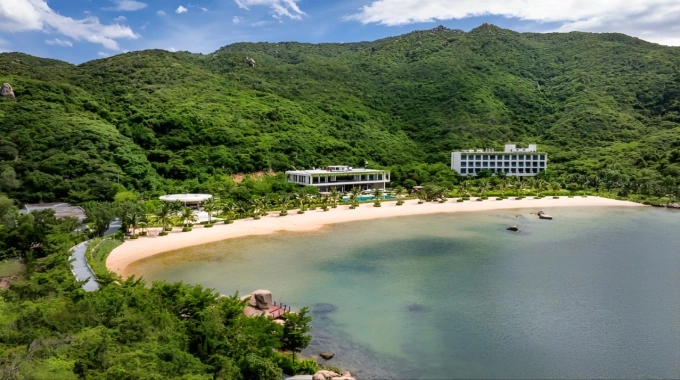 |
Vias Resort Van Phong Peninsula. Photo courtesy of Vias Resort |
The rising domestic customer base is also a factor. A 2023 report by Swiss-based citizenship and residence advisory firm Henley & Partners said Vietnam is among the countries with the fastest growth in the ultra-wealthy class in its region, with the number of millionaires expected to increase by 125% over the next decade.
Amanoi’s share of domestic guests has increased by four percentage points to 24% in the last two years.
Kuekthong expects the three-night villa offering to attract both groups, especially Vietnamese seeking high-end domestic getaways.
“This customer segment is not only concerned with luxury but also seeks unique resort experiences that deliver spiritual value, a high degree of personalization and non-replicable experiences.”
Vias Resort Van Phong Peninsula said it once hosted local clients from the financial sector who rented the entire peninsula at the highest price point.
Besides, full-building bookings have also attracted both local and foreign guests. “Customers have a demand for privacy and are willing to pay for it,” a resort spokesperson said.
Ulaganathan said Vietnam’s luxury and ultra-luxury resort segments are shifting under the influence of global trends but are driven by “distinctive internal dynamics.”
Resorts are being more associated with comprehensive wellness and longevity care. For example, Six Senses Con Dao has integrated marine conservation programs and biometrically guided menus similar to the SHA Wellness model in Spain.
At the same time branded residences are also booming. Following Aman and Four Seasons, Regent Phu Quoc and Rosewood Hoi An are set to launch, combining accommodation with the sale of resort villas.
Personalized multi-destination journeys are also becoming a trend, linking UNESCO cultural heritage sites such as Hue and Hoi An with pristine and luxurious destinations like Vinh Hy, similar to Aman’s model in Bhutan.
Four Seasons has invested in private jet tours, while Aman and Ritz-Carlton have introduced exclusive voyages aboard large luxury yachts.
Infrastructure serving the high-end segment is gradually taking shape. A dedicated fixed-base operator for business jets and private aircraft at Cam Ranh (Khanh Hoa) has been approved and is expected to begin operations in 2026, with another similar facility planned for HCMC in 2027.
This reflects demand from clients willing to spend more than $10,000 per flight hour.
“This reinforces Vietnam’s position on Asia’s ultra-luxury resort tourism map and is key to driving average daily rates in this segment,” Ulaganathan said.
The $15,000 per night rate at Amanoi is still “reasonable” compared with competitors such as Six Senses Zil Pasyon Seychelles on Felicite Island (Seychelles) and Cheval Blanc Randheli in the Maldives, both priced at around $25,000 per night for villas of the same size.
But analysts warned that entry into the global ultra-luxury resort market also brings long-term challenges that must be addressed for the segment to be sustainable, with accessibility seen as a key factor.
Beyond the upcoming opening of Long Thanh International Airport, expanding dedicated fixed-base operator services for private jets and high-end marinas would help shorten travel times and improve competitiveness with Phuket (Thailand) and Male (Maldives), Ulaganathan said.
The ultra-luxury segment also requires operators to compete fiercely for well-trained butlers and sommeliers, and Vietnam needs to develop specialized, high-quality training for niche hospitality roles such as those, he said.
It should also consider easing work permit rules for foreign managers to facilitate the import of global service standards, he said.
Environmental protection regulations need to be strictly enforced, such as limiting visitor numbers at nature reserves and the licensing of new resort projects, he added.
Analysts have also said Vietnam needs to elevate its high-end experience ecosystem such as having Michelin-standard restaurant chains, internationally accredited wellness centers and distinctive cultural activities integrated near resort destinations.

Comments are closed.