
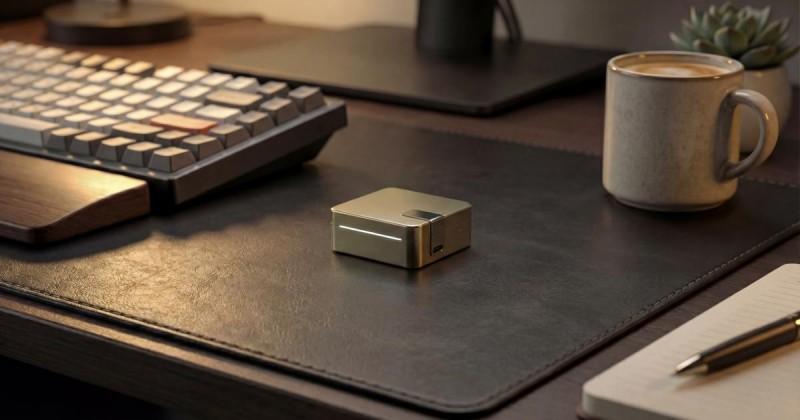

Indian wearable startup Ultrahuman is back in the United States—and this time, it’s positioning itself for a far more aggressive push.
After being cleared by U.S. Customs and Border Protection, the company has reopened access to its products in one of the world’s most competitive wearable markets, launching pre-orders for its latest device, the Ring PRO.
But the bigger story isn’t just the product. It’s the comeback.
Ultrahuman’s return raises a key question: why did it disappear from the US market in the first place and what’s different now?
What happened earlier?
Ultrahuman’s earlier disruption in the US was tied to regulatory and compliance hurdles rather than a single headline-grabbing ban.
The company’s smart ring products were effectively held back at the border, with US authorities flagging issues during import clearance processes. While details were never publicly framed as a formal “ban,” the outcome was the same: Ultrahuman’s devices were not able to reach customers in the US at scale.
The result: Ultrahuman’s US ambitions were paused just as the smart ring category was gaining traction.
Clearance signals a reset
That bottleneck now appears to have been resolved.
Ultrahuman confirmed that it has received clearance from U.S. Customs and Border Protection, allowing it to resume sales and distribution in the country.
This is a crucial development—not just operationally, but strategically.
Ultrahuman isn’t just re-entering the market—it’s doing so with a cleaner slate.
What’s different this time?
The comeback is not just about returning, it’s about returning stronger. Here’s the apporach.
1. A More Mature Product
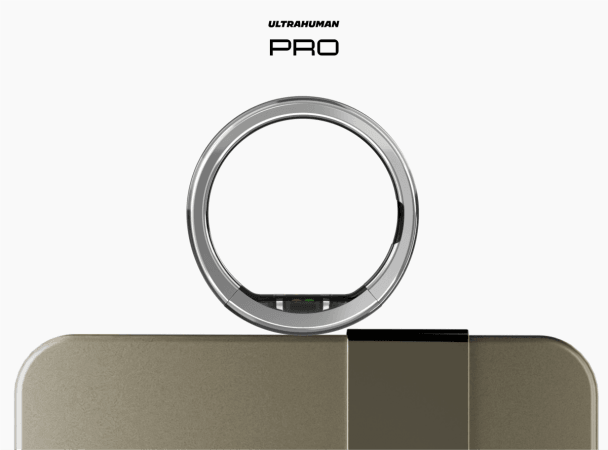
The new Ring PRO represents a significant leap from earlier iterations.
It features:
- Up to 15-day battery life, extendable to 45+ days with the PRO Charging Case
- A titanium unibody build
- On-device machine learning for real-time health insights
- Up to 250 days of onboard data storage
This positions it as a more refined and competitive offering in a category dominated by a few established players, such as Oura and Whoop.
2. No Subscription
Perhaps the biggest shift is Ultrahuman’s positioning.
Unlike many competitors, the company is doubling down on a subscription-free model, offering core health insights without recurring fees.
In a market where users increasingly face ongoing costs for basic features, this is a deliberate and potentially disruptive strategy.
Ultrahuman is also adopting a tiered pricing model for pre-orders.
- $349 for the first 1,000 customers
- $389 for the next 2,000
- $429 for the next 3,000
- $449 until pre-orders close
The full bundle—including the ring and PRO Charging Case—has a retail price of $479.
Shipping is scheduled to begin on May 15.
3. Push Toward Medical-Grade Features
The Ring PRO also reflects a broader ambition: moving beyond fitness into health monitoring.
With features like, AFib detection, ovulation and cycle tracking and respiratory and sleep analysis. Ultrahuman is edging closer to the medical device space, an area that likely contributed to earlier scrutiny but now appears to be more tightly managed.
4. Stronger Ecosystem Play
The introduction of “PowerPlugs”, modular add-ons for advanced health tracking, signals a shift toward building a platform, not just a product.
Combined with the PRO Charging Case, which extends both battery life and functionality, Ultrahuman is creating a more comprehensive ecosystem around the ring.
A High-Stakes Return
The US smart wearable market is more crowded than ever.
Since Ultrahuman’s initial setback, competitors have strengthened their positions, and consumer expectations have evolved.
That makes this return a high-stakes moment.
Ultrahuman is no longer just entering a growing category; it is re-entering a mature, competitive one, where differentiation is critical.
Whether that’s enough to reclaim momentum in the US market remains to be seen—but one thing is clear: This isn’t just a comeback. It’s a second attempt, with far less room for error.

Comments are closed.