
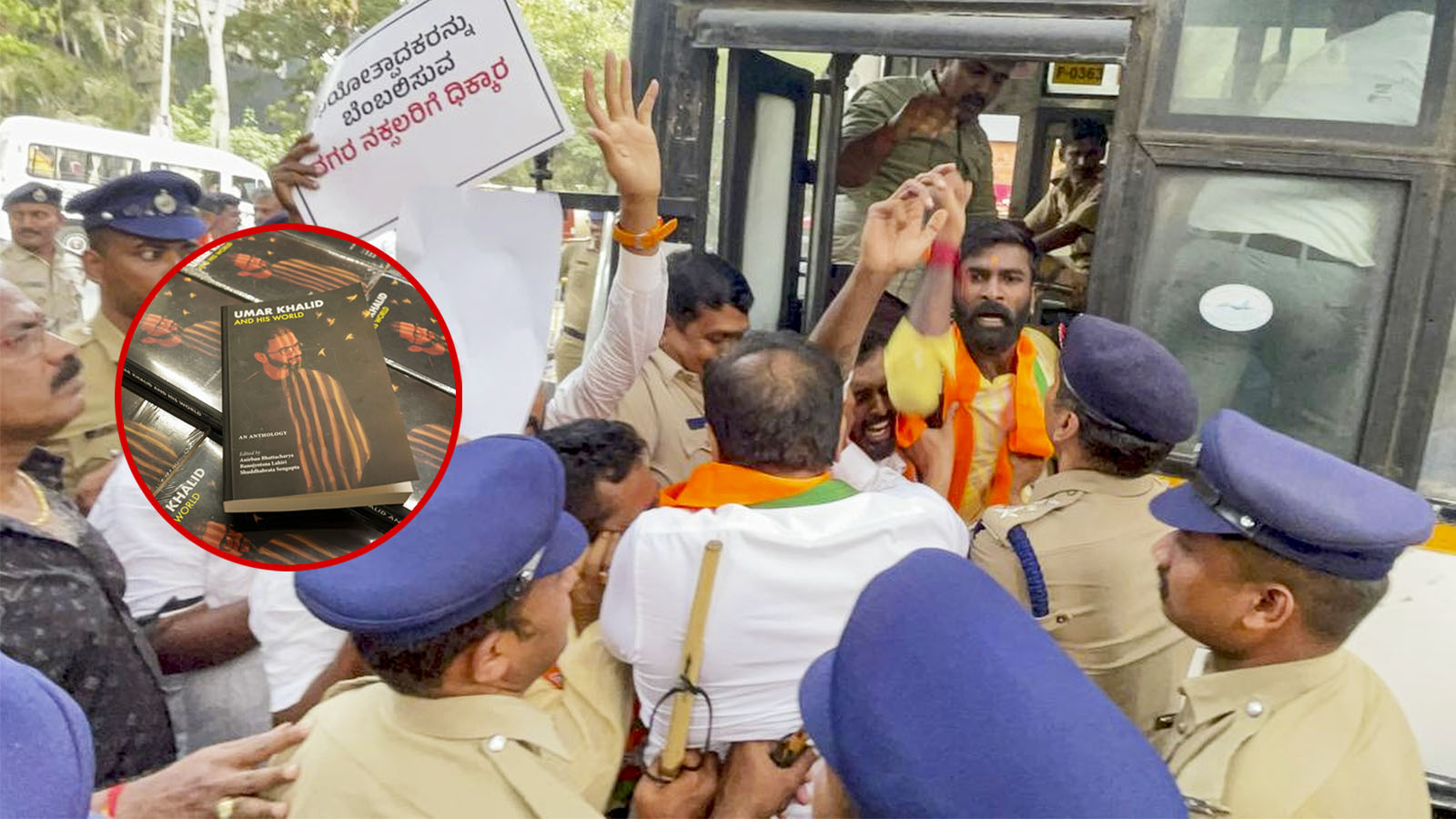

It must mark a special time in our national life when the release of a book has to be done under police protection.
In Bengaluru, India’s software centre and sprawling southern metropolis where municipal infrastructure and its misgovernance frequently lead to discontent, the state government stood out for one thing recently. It protected free speech and permitted the discussion of ideas, which ought to be routine democracy rituals in the normal course.
Here, however, this was being sought to be thwarted by a political party and its civil society adherents whose patronage, protection and source of power emanate from the Centre.
Heavy security
The previous day, a BJP delegation had urged the police not to permit the event.
Judiciary ‘failing’ ordinary Indians
When the wheel turns, answers may be sought to pointed questions. Some former Supreme Court judges (or their spirit), and judges down the order, will doubtless be interrogated not just by clamorous elements but by Law itself, on why the JNU scholar and his colleagues — all bright young men and women asking searching questions of their society and government — were put behind bars in the first place, and then denied bail for an interminable period, with no chance of the trial commencing.
Somehow, our justiciary appears routinely to fail ordinary Indians of late. It seems to keep an eye out for what might offend the political executive.
Were they really in deep conspiracy against India, as the state claimed, or were they victims of a government’s displeasure because its newly-devised laws pertaining to citizenship, targeting religious minorities, were brought under challenge by young Indians trained at some of our best educational institutions rated high around the world?
Did even a cursory look at police data give room for judicial disquiet before trial, and hence the incarceration? Or, was the truth simpler and on open view but not to those occupying powerful positions?
Somehow, our judiciary appears routinely to fail ordinary Indians of late. It seems to keep an eye out for what might offend the political executive. Protecting the citizen against state overreach now seems just a passing concern.
Ideological split, New India
At the BIC, it wasn’t an instance of federal values and the rights of states being in contention, since Karnataka is governed by the Congress while the BJP rules the Centre. Such clashes are frequent enough now, far more than ever.
In truth, the moment marked this — that in India, we are now split ideologically and politically and that the reason for the split is the desire of some to abjure the soul of the Constitution, the very core of modern India which stands on the pedestal of a victory that was gained in a non-violent, long fight against colonial oppression through a unity of all Indians.
That fight was not to valorise some Indians, or a given religion, a given ethnicity, or a given moment in India’s very long past. Nevertheless, the ideological and political divide of today in the country is centred on precisely such matters, and those who question the values emanating from the Constitution and question the values of the freedom fighters are in the saddle of power in Delhi.
They want to make the most of it while they can – subverting the levers of state authority, and bending its institutions to extend their stay in the hope that the colour of the Indian state will be forced to change — violence no bar, figurative or literal.
Do civil liberties of citizens in the democratic order need to be guarded only against the state or also against sections of the civil society itself that may be called the ‘uncivil’ society?
And in that bid, the rule of some over others, not based on principles of equality (Article 14) but on principles that sanctify certain religions, caste or class privileges, will be paramount. For New India, that is to be the norm. Or so runs the hope in the hearts of some.
Threat from ‘uncivil’ civilians
The book release in Bengaluru probably could not have gone ahead without police protection. Ironically, among the sponsors of the event was the People’s Union of Civil Liberties (PUCL), which mandates itself to protest police and state excesses that curb civil liberties of citizens.
The PUCL, itself a leading civil society organisation, needed protection of the state in this instance in order to resist the presumed aggressive plans of other elements of the civil society who derive their moral and political sustenance from the powers at the Centre.
The question arises: Do civil liberties of citizens in the democratic order need to be guarded only against the state or also against sections of the civil society itself that may be called the ‘uncivil’ society?
There is a further irony. Long ago, as a young man, the late Arun Jaitley, prominent minister in the Modi cabinet, was a PUCL activist in New Delhi. Of course, the colour of the government in Delhi was different then.
Travails of Indian democracy
The Constitution, which is premised on equality, fraternity, liberty just cannot survive without free speech, free expression, freedom of thought and freedom of life and livelihood. These are what make up its template, and these are the very premises that the denigrators of the Bengaluru event sought to challenge and therefore demanded that it be cancelled.
Their thinking was: Why should an event be held to discuss ideas around someone who has been put in jail without trial, when the judges did not see it fit to give him bail? In fact, locking people up, and locking up inconvenient truths and ideas, is key to the advancement of their ideas.
Putting people in jail without trial, denying them bail, foisting cases, giving bail but proclaiming that the person has perpetrated a criminal offence — these look to be a part of the toolkit of those who seek to undermine the Constitution.
If Umar Khalid is in jail without trial, for several years, Congress leader Rahul Gandhi has been on bail (narrowly missing jail) and attends Parliament in the capacity of an MP, although his speeches in the House are hampered at every step.
Rahul also has to run from one court to another in different states on a frequent basis to attend trials in cases instituted on ideological questions by the sorts of people who sought to disrupt the Bengaluru book-release event. Such are the travails of Indian democracy in the present era.
(The Federal seeks to present views and opinions from all sides of the spectrum. The information, ideas or opinions in the articles are of the author and do not necessarily reflect the views of The Federal.)

Comments are closed.