
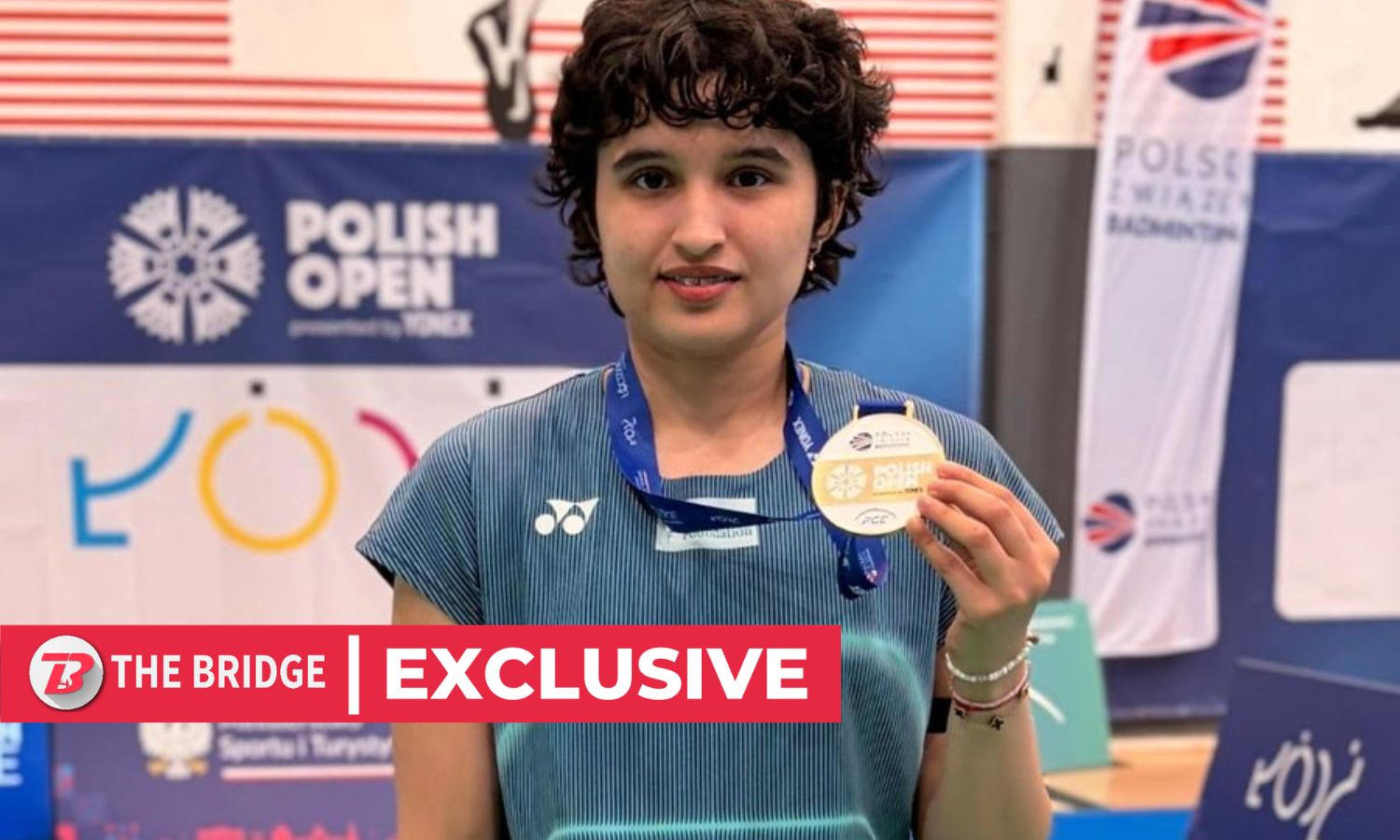

If badminton had not worked out for Unnati Hooda, she already seems to have had another dream in mind.
“Maybe a novel writer or something like that,” the 18-year-old smiled during a rapid-fire segment with Read.
It was an unexpectedly soft, thoughtful answer from one of India’s brightest young badminton stars, a player who, at the moment, is writing a rather remarkable sporting story of her own.
Hooda recently climbed to World No. 19 in the BWF rankings, becoming only the third Indian women’s singles player after Saina Nehwal and PV Sindhu to break into the top-20.
But despite the milestone, there was no dramatic celebration or loud proclamation from the teenager. Instead, Hooda described the moment with the same calmness and sincerity that defined her entire conversation.
“I am really feeling good that I was able to break top-20 for the first time,” she said. “Now I’m looking forward to how I can maintain my rankings and be consistent.”
The word, consistency, came up repeatedly through the interaction. For Hooda, the breakthrough ranking is not an endpoint, but part of a longer process of learning, adapting, and improving against the world’s best players.
From Rohtak to the world stage
Coming from Rohtak, a city more traditionally associated with wrestling excellence, Hooda’s badminton journey began with a racket gifted by her father, who also remains her coach today.
“My dad influenced me to start playing,” she recalled. “I started playing just for casual fun and then joined Chhotu Ram Stadium. From there, my journey started.”
Since then, the rise has been rapid.
Hooda transitioned to the senior circuit unusually early, winning the Odisha Open at just 14 years of age and quickly gaining exposure on the international circuit.
“I made the transition at an early age,” she said. “I was not expecting it at that age, but because I was winning in the starting, I got opportunities to play internationally.”
Still, the teenager admitted the jump from junior to senior badminton has been demanding.
“In the senior circuit, we have to be really focused,” she explained. “One mistake can cost a lot, so we have to be really mindful.”
Learning from the world’s best
Over the past year, Hooda has increasingly found herself competing against top-10 and top-20 players regularly. According to her, that exposure has transformed multiple aspects of her game.
“Competing against them, I am learning how to adapt to situations quickly,” she said.
She specifically highlighted the challenges of playing in Asian conditions, where drift inside arenas can heavily influence rallies and shot control.
“In Asian courts, there’s a lot of drift, so how to control and play mindfully in those conditions,” she said while discussing the adjustments she has made technically and tactically.
But the growth has not only been about strokes and strategy.
Hooda revealed that mental conditioning has become an increasingly important part of her development, alongside physical preparation and recovery work.
“I do have my psychologist who is really working with me right now with all the mental aspects,” she said. “Mental training is also really important, which helps a player in pressure situations.”
She also credited the support structure around her for helping manage nutrition, strength and conditioning, physiotherapy, and mental preparation.
Rather than pinpointing one magical improvement behind her rise, Hooda described progress as a combination of many smaller changes.
“There are a lot of things which I have changed over the past few months after competing with different players,” she said. “And there are still a lot of things which I can do.”
“Pressure can be good or bad”
With Indian women’s badminton already shaped by iconic figures like Saina Nehwal and PV Sindhu, comparisons and expectations naturally follow any young talent showing promise.
But Hooda does not appear overwhelmed by that reality.
“I don’t think it has pressure for me,” she said. “It gives us confidence also. They have done it before, so we can also do that.”
At the same time, she acknowledged that pressure is deeply personal.
“It’s up to the person how we perceive it,” she reflected. “Pressure can be good or bad.”
That perspective perhaps explains why she comes across as unusually balanced for someone still in her teens.
Even when discussing sacrifices, Hooda avoided dramatic answers.
“I’m happy that I’m into sports,” she smiled. “We go to different countries, meet new people, and try new food.”
Instead of framing the athlete’s life around loss, she preferred a simpler philosophy.
“You have to work hard to get something, in any profession,” she said.
Beyond badminton
Away from the court, Hooda revealed another side of herself. If she had not pursued badminton, she said she might have become “a novel writer or something like that.”
Before matches, meanwhile, music helps settle her nerves.
“Listening to music, I always do before my match,” she said.
And though she is now one of India’s brightest badminton prospects, some goals remain refreshingly straightforward.
Asked about a player she would love to defeat, Hooda immediately named Pornpawee Chochuwong, against whom she has suffered multiple losses already.
For now, however, the bigger focus remains staying healthy, improving steadily, and navigating a packed season featuring the Asian Games, World Championships in Delhi, and the Olympic qualification cycle.

Comments are closed.