
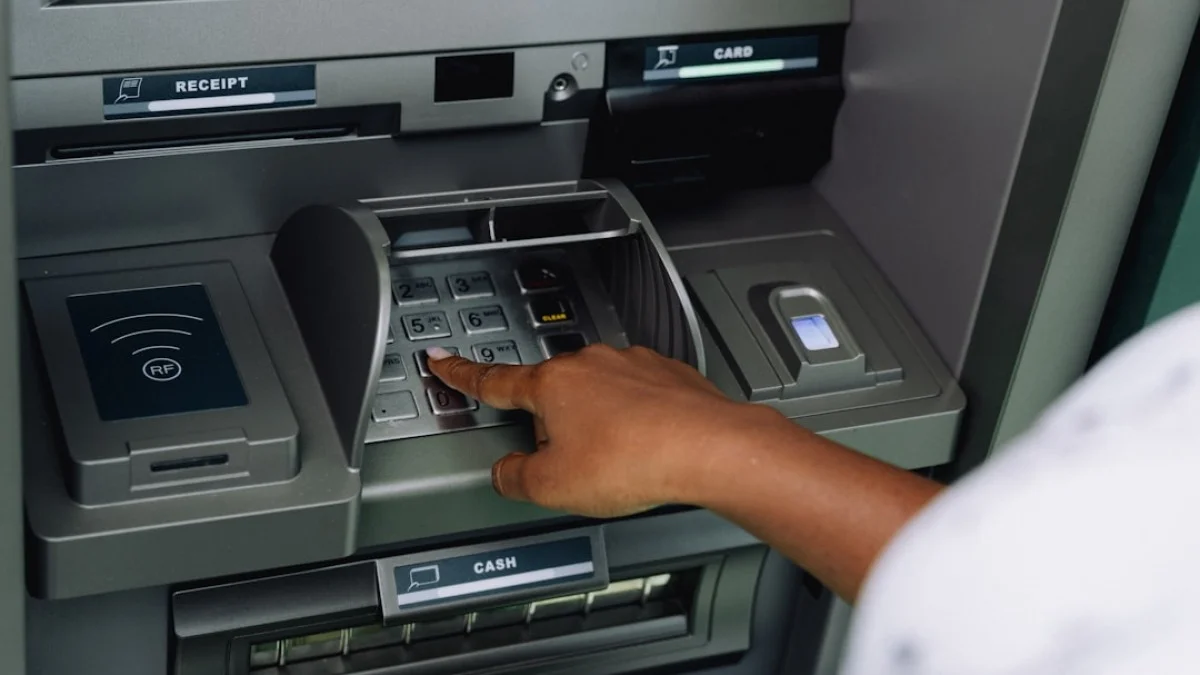

If you use ATMs regularly and assume your UPI cash withdrawals have been sitting in a separate free category, you need to read this before April 1, 2026. The rules are changing in ways that will affect how quickly you hit charges, how much cash you can pull out in a day, and how a new QR code-based withdrawal option works at banking correspondents. Here is everything you need to know, bank by bank.
The Big Change: UPI Cash Withdrawals Now Count Against Your Free ATM Limit
The most important change for the largest number of customers is at HDFC Bank, India’s largest private sector lender. From April 1, 2026, HDFC Bank is merging UPI-based cash withdrawals from ATMs into your total monthly free transaction count. Until now, these transactions were treated as a separate category and did not eat into your free ATM withdrawal limit. From April 1, they will.
This means if you have been making UPI cash withdrawals at ATMs thinking they were free and unlimited, they are about to start counting. Every UPI cash withdrawal from an ATM will now be counted as one of your monthly free transactions, reducing the number of regular ATM withdrawals you can make before charges kick in.
HDFC Bank’s free transaction structure currently gives most customers five free withdrawals per month at HDFC’s own ATMs, three free transactions at other banks’ ATMs in metro cities, and five free transactions at other banks’ ATMs in non-metro areas. From April 1, your UPI cash withdrawals share this pool. If you make two UPI cash withdrawals from HDFC ATMs in a month, you have only three regular free withdrawals left at HDFC ATMs before charges apply.
The charge for going beyond the free limit at HDFC Bank is ₹23 per transaction, excluding taxes. That is ₹23 every time you withdraw after exhausting your free limit, whether the withdrawal is a regular card-based ATM transaction or a UPI-based one.
What You Should Do: Check your monthly ATM usage pattern immediately. If you make frequent small UPI cash withdrawals at ATMs, start tracking them as part of your free transaction count rather than treating them as separate. Consider consolidating withdrawals to make fewer, larger transactions to stay within the free limit.
PNB Cuts Daily Withdrawal Limits for Some Cards
Punjab National Bank, one of India’s largest public sector banks, has revised its daily cash withdrawal limits for certain debit card categories under the updated structure taking effect from April 1. Customers will now be able to withdraw between ₹50,000 and ₹75,000 per day depending on their card type.
The significant change here is that some PNB cards that previously allowed withdrawals of up to ₹1 lakh per day will now have lower limits. PNB has framed this revision as a standardisation measure aimed at managing risk, but the practical impact for customers who relied on the ₹1 lakh daily limit for business purposes, property transactions, or large cash requirements is a meaningful reduction in ATM access.
What You Should Do: PNB customers should check which card category they hold and what the revised limit is for their specific card. If your daily withdrawal needs regularly exceed ₹75,000, you may need to plan your cash requirements differently from April 1 or explore alternative payment methods for large transactions.
Jio Payments Bank Launches QR Code Cash Withdrawal
On the new services side, Jio Payments Bank has launched a QR code-based cash withdrawal service that represents a meaningful expansion of cash access points beyond traditional ATMs. Under this system, customers can withdraw cash by scanning a UPI QR code and authorising the transaction through any UPI app at designated banking correspondents.
Banking correspondents are the network of local agents, often shopkeepers, kirana stores, or local service providers, who are authorised to provide basic banking services including cash deposits and withdrawals on behalf of banks. The QR code withdrawal extends this network to UPI users, enabling cash access in areas where ATMs are sparse or inconvenient. This is particularly significant for semi-urban and rural customers for whom the nearest ATM may be several kilometres away while a local business acting as a banking correspondent may be within walking distance.
The broader picture this development points to is a gradual evolution of cash access infrastructure in India away from pure ATM dependency and toward a more distributed model that integrates UPI, banking correspondents, and QR codes as alternative withdrawal points.
What You Should Do: Jio Payments Bank customers and UPI users in areas with limited ATM access should explore whether a banking correspondent near them is participating in the QR code withdrawal service. This can be a convenient alternative particularly for smaller cash requirements.
The Full Picture of What Changes From April 1
Taken together, the three changes paint a clear picture of where India’s ATM and cash withdrawal infrastructure is heading. Banks are tightening the free transaction framework by merging UPI cash withdrawals into the regular ATM free limit, meaning the era of unlimited free UPI ATM withdrawals is ending at least at HDFC Bank. Some public sector banks are reducing daily limits to manage risk exposure. And simultaneously, new QR-based withdrawal options are expanding the geographic reach of cash access beyond the existing ATM network.
For customers, the net effect is that thoughtful cash management becomes more important from April 1. Knowing your bank’s specific free transaction limit, tracking how many transactions you have used in the month, and planning withdrawal amounts to avoid frequent small trips that each eat into your free quota will all become more financially relevant habits.
Check Your Bank’s Specific Rules
The changes described above apply to HDFC Bank, PNB, and Jio Payments Bank specifically. Other banks may have different free transaction limits, different charges beyond the free limit, and different daily withdrawal caps. The Reserve Bank of India mandates that banks provide a minimum number of free ATM transactions per month but allows banks to set their specific structures within regulatory guidelines.
Before April 1, log into your bank’s app or website and check the current ATM transaction limits applicable to your account type and debit card category. Check whether your bank has announced any similar changes to how UPI cash withdrawals are counted. And check what the charge per transaction is if you exceed your free limit, so you can make informed decisions about your withdrawal behaviour going forward.
This article is for informational and educational purposes only. ATM transaction rules, free limits, and charges vary by bank, account type, and card category. Readers are advised to check directly with their bank for the specific rules applicable to their account from April 1, 2026.

Comments are closed.