
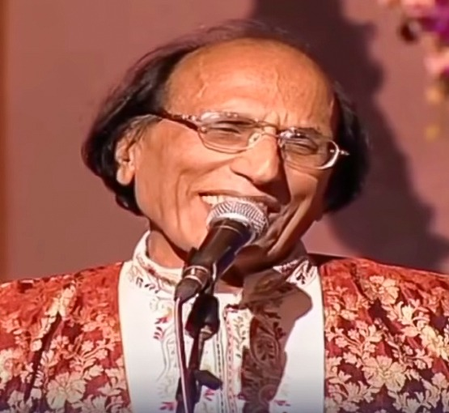

Mumbai: Celebrated Urdu poet and Padma Shri awardee Bashir Badr left for a heavenly abode at the age of 91 Thursday. According to the reports, he was suffering from a prolonged illness.
Veteran lyricist and screenwriter Javed Akhtar used social media to pay a heartfelt tribute and express his grief over the passing of the renowned poet.
He took to his official X (Formerly known as Twitter) handle and wrote in Urdu, “Today, our language Urdu has become a little poorer. Bashir Badr, an extremely melodious poet, has departed from our gathering forever. This poet and his poetry will live on in our memories forever (sic).”
Today, our Urdu language has become a little poorer. Bashir Badr, a very happy poet, got up from the party forever. This poet and his poetry will always live in our memories
— Javed Akhtar (@Javedakhtarjadu) May 28, 2026
Talking about this work, Bashir Badr penned the famous couplet “Dushmani jam karo lekin ye gunjaish rahe, jab kabhi hum dost ho jayein to shamenda na hon”, during the 1972 Shimla Agreement between India and Pakistan.
In addition to this, he is also remembered for his other work that includes “Kuch to majbooriyaan rahi hogi, yun hi koi bewafa nahi hota”, “Ujale apni yaadon ke hamare saath rehne do, na jaane kis gali me zindagi ki shaam ho jaye”, and “Log toot jaate hain ek ghar banane mein, tum taras nahi khaate bastiyan jalane mein,” naming only a few.
Bashir Badr was born February 15, 1935, in Ayodhya, Uttar Pradesh. He received his higher education at Aligarh Muslim University, where he also got his PhD.
The acclaimed writer even served as a professor of Urdu at the prestigious Aligarh Muslim University, contributing towards shaping the young literary minds of the time.
He also became the Head of the Urdu Department at Meerut College, where he taught for almost 17 years.
Bashir Badr, known for writing about love and human relationships, faced a major tragedy during the 1987 communal riots. His house was set on fire, destroying many of his priceless unpublished manuscripts and writings.
Devastated by the incident, he went on to live in Bhopal, where he ended up spending the rest of his days.

Comments are closed.