
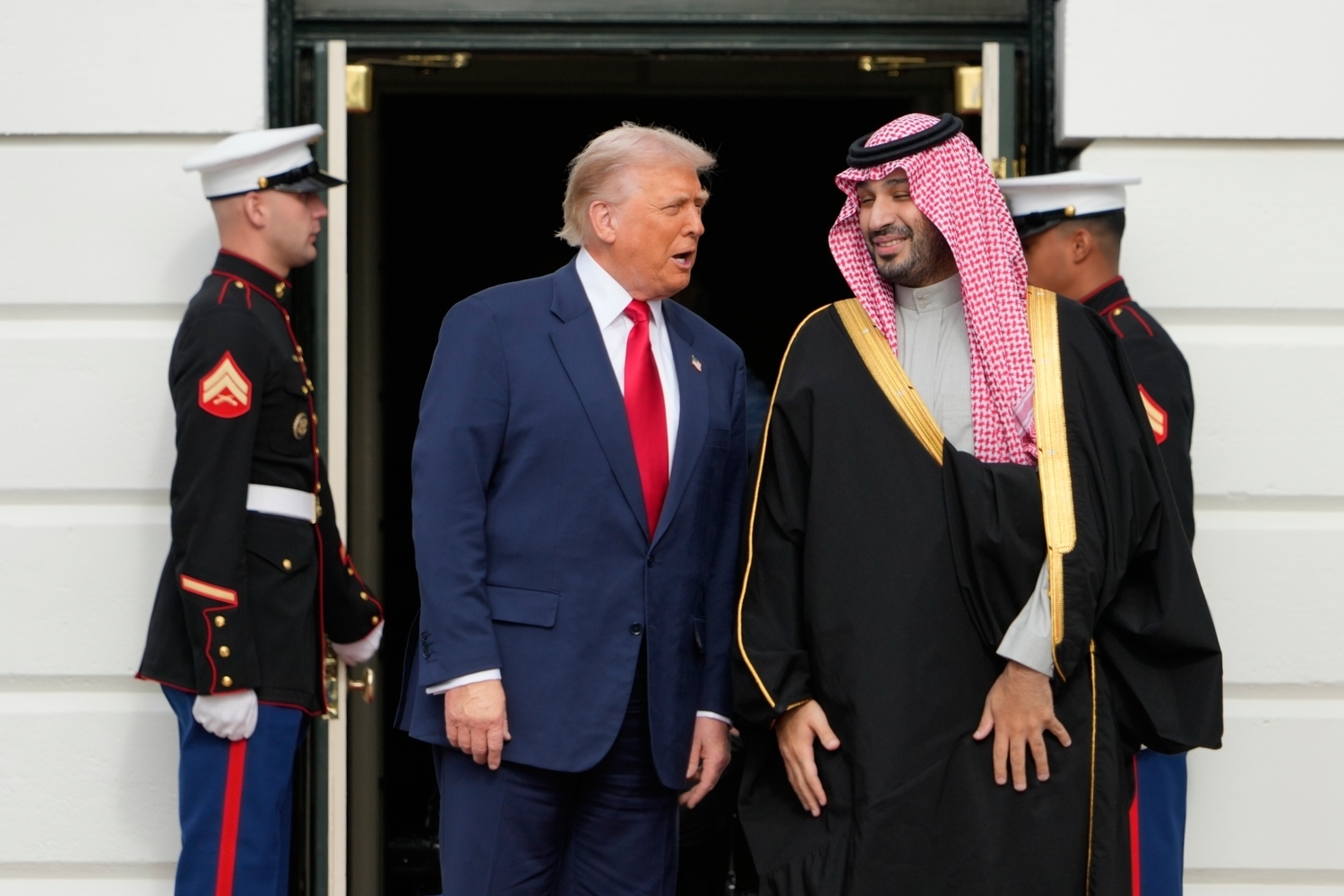

US and Saudi Arabia Sign Nuclear Deal That Could Allow Uranium Enrichment/ TezzBuzz/ WASHINGTON/ J. Mansour/ The United States and Saudi Arabia signed a nuclear cooperation agreement that could lead to the kingdom developing domestic uranium enrichment capability. The 30-year framework could involve American companies and allow construction of an enrichment facility following a joint U.S.-Saudi study. The agreement will undergo congressional review amid concerns about international safeguards, proliferation and possible weaponization.


Quick Look
- The United States and Saudi Arabia formally signed a nuclear cooperation agreement.
- Energy Secretary Chris Wright and Saudi Energy Minister Abdulaziz bin Salman signed the deal.
- The countries also signed what Washington called a “bilateral safeguards agreement.”
- The framework could permit a Saudi enrichment facility after a joint study.
- The agreement is expected to last 30 years.
- American nuclear companies could participate in Saudi Arabia’s civilian program.
- The deal does not include the IAEA’s Additional Protocol, according to a source familiar with it.
- The Energy Department says Congress will review the agreement.
- Secretary of State Marco Rubio says the deal will not create a proliferation risk.
- Critics warn enrichment capability could provide a pathway toward nuclear weapons.
- U.S. nuclear company Westinghouse could benefit from the agreement.

Deep Look
US and Saudi Arabia Sign Nuclear Cooperation Deal
WASHINGTON — The United States and Saudi Arabia signed a new nuclear cooperation agreement Wednesday that could eventually give the kingdom uranium enrichment capability for a civilian energy program.
U.S. Energy Secretary Chris Wright and Saudi Energy Minister Abdulaziz bin Salman formally signed the arrangement, known as a 123 agreement.
They also signed what the Trump administration called a “bilateral safeguards agreement.”
The administration released few details about the final terms. However, the framework could allow Saudi Arabia to build a uranium enrichment facility after a joint U.S.-Saudi study, according to two people familiar with the matter who were not authorized to speak publicly.
Wright Says Deal Meets Safety Standards
Wright said the agreements would deepen commercial relations while supporting American and allied security.
“These agreements reflect our two nations’ shared commitment to strengthening U.S.-Saudi commercial relations, delivering prosperity at home and security to our allies abroad,” Wright said.
“Rest assured, these agreements uphold the highest standards of nuclear safety and nonproliferation, while relying on the world’s best nuclear technology and scientists, designed right here in the United States.”
The agreement is expected to remain in effect for 30 years and involve American companies in developing Saudi Arabia’s commercial nuclear power sector.
Rubio Rejects Proliferation Concerns
Secretary of State Marco Rubio defended the administration’s nuclear policy before the agreement was announced.
Reporters questioned whether helping Saudi Arabia obtain enrichment capability could fuel nuclear competition in an already volatile region.
“The U.S. is not going to reach any agreement with any country in the world that leads to the risk of proliferation,” Rubio said while traveling in the Philippines.
Rubio did not publicly disclose the agreement’s safeguards or other technical conditions.
Additional IAEA Protocol Not Included
The deal does not include the International Atomic Energy Agency’s Additional Protocol, according to one person familiar with the decision.
The protocol gives international inspectors expanded authority to monitor nuclear programs and search for undeclared materials or facilities.
Its absence is expected to become a major focus during congressional review.
Alexander Bollfrass, a nuclear expert at the International Institute for Strategic Studies in London, described the agreement as “a revolutionary new approach” to nonproliferation policy.
“The revolutionary aspect of this agreement is that the United States is not asking Saudi Arabia to abide by the highest possible safeguards, internationally monitored safeguards that are standard and are available today, but instead is willing to at least theoretically transfer highly sensitive technology without the same level of oversight that one would expect,” Bollfrass said.
Agreement Comes During Iran War
The deal was announced during the U.S.-Israeli war against Iran, launched in part to prevent Tehran from developing a nuclear weapon.
Iran maintains that its enrichment activities have peaceful purposes.
The Saudi agreement could prompt questions about why Washington is potentially permitting uranium enrichment in one Middle Eastern country while using military force to restrict another country’s nuclear capabilities.
Trump and former President Joe Biden both pursued agreements to share American nuclear technology with Saudi Arabia.
Enrichment Could Create Weapons Pathway
Uranium enrichment does not automatically provide a country with a nuclear weapon. Developing a bomb requires other capabilities, including warhead design and the use of synchronized high explosives.
Still, domestic enrichment can supply the technical knowledge and nuclear material needed to begin moving toward weaponization.
Nonproliferation specialists warn that Saudi centrifuges could lay the foundation for a future weapons program.
Crown Prince Mohammed bin Salman, Saudi Arabia’s de facto leader, has previously suggested that the kingdom could pursue an atomic bomb if Iran obtains one.
Saudi-Pakistan Pact Adds to Regional Concerns
Saudi Arabia previously signed a mutual defense agreement with Pakistan, which possesses nuclear weapons.
The pact followed an Israeli attack in Qatar targeting Hamas officials. Pakistan’s defense minister later said the country’s nuclear program “will be made available” to Saudi Arabia if necessary.
The remark was widely seen as a warning to Israel, which has long been believed to possess the Middle East’s only nuclear arsenal.
UAE Deal Followed a Different Model
The United Arab Emirates also signed a 123 agreement with the United States before constructing its Barakah nuclear power plant with South Korean assistance.
Unlike Saudi Arabia, the UAE agreed not to enrich uranium domestically.
Nonproliferation experts have called the Emirati model the “gold standard” for countries pursuing civilian nuclear power because it reduces the possibility that sensitive technology could be diverted to a weapons program.
Congress Will Review Saudi Agreement
The Energy Department said the Saudi agreement will be submitted to Congress.
Under the standard process, 123 agreements can take effect unless veto-proof majorities in both chambers approve resolutions rejecting them.
Rubio supported a bipartisan proposal in 2018while serving as a senator from Florida, that would have required Congress to affirmatively approve any Saudi 123 agreement.
Democratic lawmakers reintroduced the legislation in March, but it has not become law.
Analyst Warns of Long-Term Saudi Leverage
Rosemary Kelanic, Middle East director at the Defense Priorities think tanksaid enrichment capability could give Riyadh greater leverage over Washington.
She warned it could become “a potent source of leverage to extract future concessions from Washington, including new security guarantees, by threatening to weaponize its program unless the United States promises enhanced military protection.”
“Giving Riyadh uranium enrichment could functionally enmesh the United States with the Kingdom of Saudi Arabia forever,” Kelanic said.
Westinghouse Could Benefit From Saudi Program
Rep. Brad Sherman, a California Democratsaid U.S. nuclear company Westinghouse could benefit from the agreement.
Saudi Arabia is seeking large light-water reactors of the kind built by Westinghouse. Its planned nuclear program could use the company’s AP1000 reactor design.
The Trump administration announced $17.5 billion in loans in June to accelerate the construction of 10 Westinghouse-designed reactors in the United States, partly to meet rising electricity demand from data centers.
Sherman highlighted what he described as a contradiction between Washington’s policies toward Iran and Saudi Arabia.
He said the American military is “bombing Iran because they insist upon enriching and reprocessing” nuclear material.
U.S. officials now “are entering into an agreement with Saudi Arabia, giving them the green light to reprocess and to enrich, and the only difference I see here is that Westinghouse stands to make an awful lot of money on this deal, whereas the Iranians were not enriching American companies,” Sherman said.
More on US News
Comments are closed.