
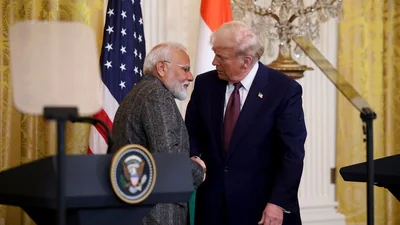

The United States recently explained why it permitted India to continue purchasing Russian oil despite ongoing tariff tensions and geopolitical disagreements between the two countries. Officials from the White House described India as a “good actor,” highlighting that New Delhi had previously cooperated with Washington’s efforts to restrict Russian energy exports. According to US officials, the decision was not a policy shift but a temporary measure aimed at stabilising global energy markets during a period of uncertainty. The move came at a time when tensions in West Asia, particularly the conflict involving Iran, were threatening to disrupt global oil supplies and push energy prices higher.
White House press secretary Karoline Leavitt stated that India had previously decreased or paused purchases of Russian oil in response to US recommendations. Because of this cooperation, the United States saw India as a trustworthy partner and decided to authorize limited transactions in rare circumstances.US Treasury Secretary Scott Bessent added India’s previous compliance, highlighting that the country had ceased purchasing Russian oil when Washington demanded it earlier. He stated that the existing license was aimed to sustain supply in global energy markets rather than to provide Russia with a significant economic gain.
Temporary 30-Day Waiver Issued During Iran-Related Supply Crisis:
The United States reportedly issued a 30-day waiver allowing Indian refiners to accept certain Russian oil shipments during the ongoing geopolitical tensions. The waiver applies primarily to oil shipments that were already in transit at sea, meaning the transactions were already underway when the policy adjustment was made. Officials emphasised that the measure was deliberately short-term and would not significantly benefit the Russian government. Because the oil shipments had already left Russian ports, preventing their delivery would not have meaningfully reduced Russia’s revenue but could have disrupted global supply chains.
The waiver was also intended to reduce volatility in international oil markets. Rising tensions in West Asia had already created concerns that shipping routes or supply chains could be affected, particularly through critical energy corridors such as the Strait of Hormuz. Any disruption in these routes could push crude oil prices higher and strain energy-importing economies around the world. By allowing India to accept these shipments, Washington hoped to ensure that oil already in the global supply chain continued to reach consumers rather than being stranded in transit.
Tariff Disputes Complicate US-India Energy Relationship:
The decision comes against the backdrop of strained trade relations between the two countries. The United States had previously imposed steep tariffs on Indian exports, partly linked to New Delhi’s continued purchase of Russian oil after the Ukraine conflict. At one stage, tariffs on Indian goods entering the US were raised significantly, including a penalty related to India’s energy trade with Russia. These measures triggered diplomatic tensions and sparked debate about the balance between geopolitical alliances and national energy security.
Despite the tensions, the US has also recognised India’s role in maintaining stability in global energy markets. Several American officials in recent years have acknowledged that India’s purchases of Russian oil helped prevent global prices from rising sharply, especially during periods of supply disruption. This complicated dynamic reflects the broader strategic relationship between the two countries. While Washington has pushed for sanctions against Russia, it has also attempted to avoid policies that could destabilise energy markets or strain relations with key partners such as India.
Energy Security Remains a Priority for India:
For India, the ability to purchase oil from multiple sources is considered essential for energy security. The country imports a large share of its crude oil requirements and must secure stable supplies to support economic growth and meet the needs of its population of more than 1.4 billion people. Russian crude has become an important part of India’s energy mix in recent years because it is often available at discounted prices compared to other international suppliers. This has helped Indian refiners manage costs and ensure a steady fuel supply for domestic markets.
At the same time, India has maintained that its energy decisions are guided primarily by national interests and economic considerations rather than geopolitical pressure. Indian officials have repeatedly stressed that affordable energy remains a priority for the country. The recent US waiver therefore highlights the delicate balance between geopolitics, global energy stability and bilateral relations. While Washington continues to maintain sanctions against Russia, it has shown flexibility in dealing with partners like India when broader energy market stability is at stake.

Comments are closed.