
US Iran ceasefire Strait of Hormuz impact explained April 2026: What it means for world

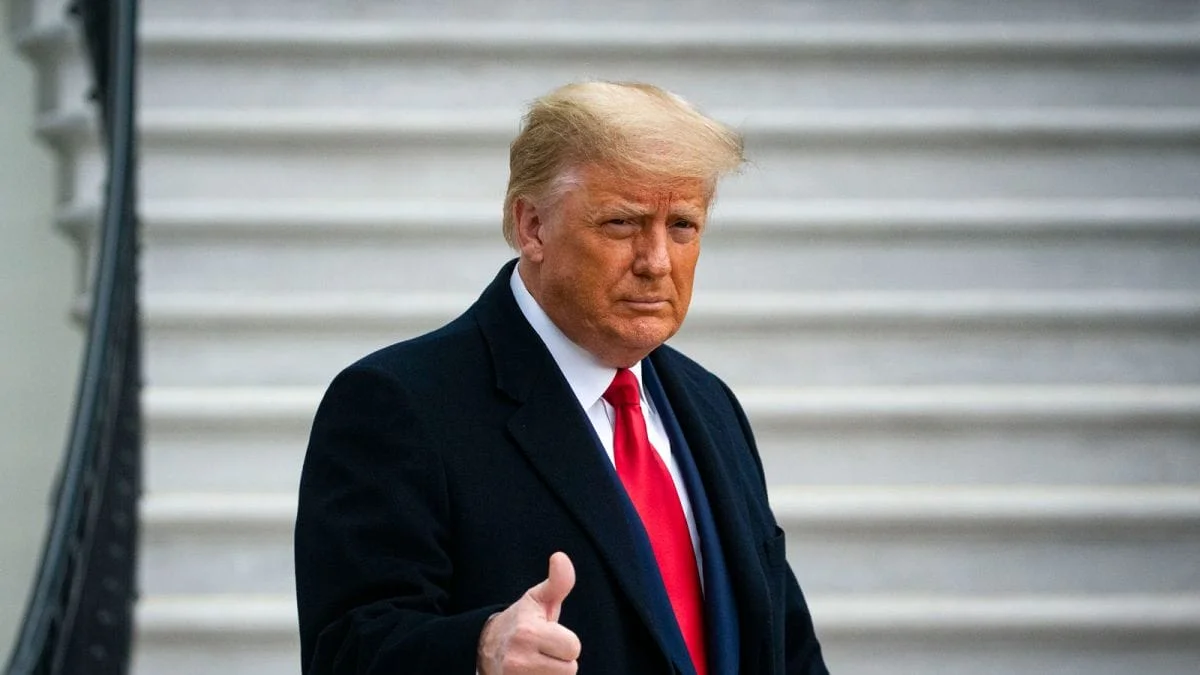
On April 8, Donald Trump announced a two-week ceasefire with Iran and called it a total and complete victory. Oil markets rallied. The Dow posted its best single session in over a year. Headlines declared the crisis was easing. And then, the next morning, the Strait of Hormuz was still moving four ships in a 24-hour window against a pre-war daily average of 138.
So what did the ceasefire actually change? And why does it matter so much whether it holds or collapses? Here is the full picture, explained simply.
What the ceasefire actually says
The agreement has two core clauses. The United States suspends airstrikes on Iran for two weeks. Iran allows safe passage of marine traffic through the Strait of Hormuz during that period. Indirect negotiations between the two sides take place in Islamabad, Pakistan, on uranium enrichment, sanctions relief, and nuclear sites.
That is it. Two weeks. Two conditions. One conversation in Islamabad.
What the ceasefire does not say is equally important. It does not cover Lebanon. Israel has explicitly confirmed it will keep striking Hezbollah wherever necessary, with full American approval. It does not define what safe passage means — Iran says it means vessels must seek IRGC permission and pay a fee before transiting. It does not commit Iran to the pre-war status of free international navigation. And it does not prevent either side from walking away if the other is seen to be violating its terms.
Why the Hormuz piece matters more than anything else
In 2024, oil flow through the strait averaged 20 million barrels per day, equivalent to about 20% of global petroleum liquids consumption. One in every five barrels of oil consumed anywhere on earth moves through a 21-mile wide channel between Iran and Oman. Around one-fifth of global liquefied natural gas trade also transited the Strait of Hormuz, primarily from Qatar. A closure would strand LNG exports from Qatar and the UAE, which together represent almost 20% of global LNG exports.
The ceasefire’s energy promise — that Iran would reopen the strait — was the single reason markets rallied on April 8. Everything else in the deal was diplomatic process. The strait reopening was the economic substance. And that substance has not materialised.
What the ceasefire has produced at the strait so far
Before the war, 138 ships crossed the Strait of Hormuz daily. In the first 24 hours after the ceasefire was announced, between 15 and 20 vessels crossed — roughly 14% of normal. By Tuesday April 8 that had fallen to 11 ships. By Wednesday, just four dry cargo ships crossed in a full 24-hour window, with oil tanker traffic specifically halted by Iran. On Thursday April 9, MarineTraffic data recorded the first non-Iranian oil tanker crossing since the ceasefire — a single vessel.
One tanker. Against a baseline of 138 ships per day including dozens of oil tankers. That is the ceasefire’s Hormuz dividend after 48 hours.
Why Iran has not reopened the strait despite the deal
Iran’s position is that the ceasefire does not mean unconditional reopening. Tehran has insisted vessels must seek permission from the IRGC and pay a fee before transiting — effectively replacing free international navigation with an Iranian toll booth. The IRGC issued a statement saying Iran would keep its finger on the trigger throughout the ceasefire. Iran’s army spokesman declared that Trump and the Americans had proven unworthy of trust. Iranian officials claimed three ceasefire provisions were already breached on day one.
The primary justification Iran has used for halting oil tanker traffic is Israel’s continued strikes in Lebanon. While Saudi Arabia and the UAE have some oil export routes that do not transit the Strait of Hormuz, other countries including Iran, Iraq, Kuwait, Qatar, and Bahrain rely on the Strait to deliver the vast majority of their oil exports. Iran understands that Hormuz is its most powerful leverage point in any negotiation. It is not going to release that leverage without something concrete in return.
Who is suffering while the talks continue
China alone accounts for 37.7% of total Hormuz crude flows, India at 14.7%, South Korea at 12%, and Japan at 10.9%. Together these four countries receive over 75% of everything that moves through the strait. Pakistan sourced more than 81% of its oil and gas from the region. Japan and South Korea each sourced at least half of their oil and gas imports from Gulf nations.
For India, the ceasefire’s failure to reopen the strait meaningfully translates directly into sustained crude above Rs 9,000 per barrel on MCX, a rupee that hit a record low of 95 per dollar earlier in 2026, FPI outflows of Rs 1.27 lakh crore this year, and a Sensex that fell 718 points on Thursday morning alone. The RBI held rates at 5.25% at its April 8 meeting while warning that the supply shock risks becoming a demand shock if supply chains are not restored. India’s Oil Minister flew to Qatar on April 9 specifically to secure energy supply continuity because the ceasefire has not yet provided it.
Is there any alternative to the strait
Barely. Saudi Arabia operates an east-west pipeline capable of transporting up to 5 million barrels per day to the Red Sea but it is already heavily utilised and cannot fully replace maritime shipments. The UAE has developed a pipeline that bypasses the strait but its capacity is only 1.5 million barrels per day. For Qatar’s liquefied natural gas exports, there are currently no viable alternative routes.
Even if Saudi Arabia and the UAE fully utilise their bypass pipelines, roughly two thirds of current Gulf crude exports remain physically dependent on the Strait of Hormuz. Iraq, Kuwait, and Qatar have no comparable alternative routes. The world cannot route around this problem. It has to resolve it.
What happens to the ceasefire and the strait in three scenarios
The first is that the Islamabad talks succeed. Iran agrees to a framework on uranium enrichment, the US provides meaningful sanctions relief, Israel eases its Lebanon campaign under American pressure — which a Channel 13 report on Thursday suggested is already beginning — and Iran gradually allows full tanker traffic to resume. In this scenario prices fall, but not quickly. The EIA has warned that Middle East oil production shut-ins will not return close to pre-conflict levels until late 2026, and that full restoration of flows will take months. An estimated 800 vessels remain trapped inside the Gulf. Supertanker repositioning from Southeast Asia takes a minimum of four weeks. Relief is real but slow.
The second is that the ceasefire holds in name but the strait remains under partial Iranian control permanently. Iran collects IRGC fees on tanker passage, the world adapts to a more expensive and more complicated energy supply chain, and the strait never returns to free navigation. This is the scenario Iran’s IRGC has explicitly stated it prefers, having declared the strait will never return to its former state. Global energy costs stay structurally higher. Asia restructures its procurement. India accelerates domestic energy and alternative supplier relationships. The economic damage is significant but manageable over years.
The third is that the ceasefire collapses. Israel kills another Hezbollah figure, Iran walks out of Islamabad, the IRGC closes the strait completely, and the US faces the decision it has been avoiding — whether to resume strikes on Iran to force reopening or accept Iranian control of one fifth of global oil supply as the new permanent reality. US officials have already told the Wall Street Journal that resuming strikes has not been ruled out. In this scenario crude spikes back toward and beyond $115, the global supply shock deepens into the demand shock the RBI warned about, and the economic damage extends well into 2027.
The single most important thing to understand
The ceasefire mattered because markets believed it would reopen the strait. The strait has not reopened. The ceasefire is therefore on trial, and the verdict will be delivered not in Islamabad but on MarineTraffic’s vessel tracking dashboard — by counting whether tomorrow brings five tankers through the Strait of Hormuz, or fifty, or one hundred and thirty-eight.
Until that number approaches normal, the ceasefire is a promise. Not a solution.
Disclaimer: This article is for informational purposes only and does not constitute investment advice. Energy market data is drawn from EIA, IEA, and publicly available sources. Readers are advised to consult a SEBI-registered financial advisor before making any investment decisions. Business Upturn is not responsible for any decisions made based on this article.

Comments are closed.