
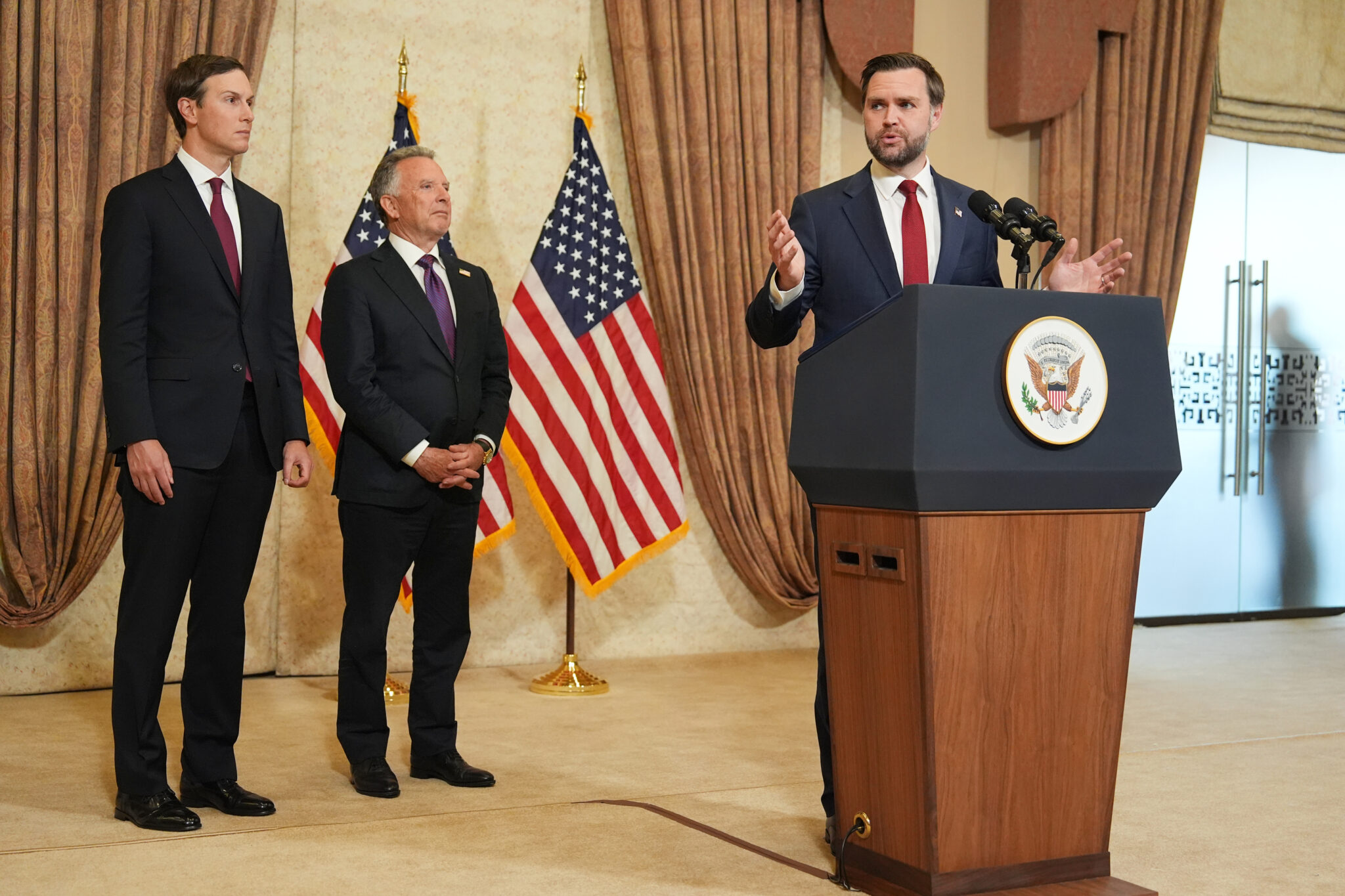

US-Iran Ceasefire Talks End Without Deal After 21 Hours/ TezzBuzz/ WASHINGTON/ J. Mansour/ Morning Edition/ U.S. and Iranian officials ended 21 hours of talks without agreement. Vice President JD Vance said Iran refused nuclear commitments. The fragile ceasefire remains uncertain as tensions persist.


- 21-hour US-Iran talks end without deal
- JD Vance leads U.S. delegation
- Iran rejects nuclear restrictions
- Pakistan urges ceasefire continuation
- Strait of Hormuz tensions escalate
- Trump orders mine-clearing operations
- War enters seventh week
- Israel-Hezbollah conflict complicates diplomacy


ISLAMABAD — The United States and Iran ended a historic round of face-to-face negotiations early Sunday without reaching an agreement, leaving the fate of a fragile two-week ceasefire uncertain as the war entered its seventh week.
Vice President JD Vance, who led the U.S. delegation during 21 hours of negotiations in Pakistan’s capital, said talks concluded without a breakthrough after Iran declined to commit to U.S. demands regarding nuclear weapons development.
“But the simple fact is that we need to see an affirmative commitment that they will not seek a nuclear weapon,” Vance told reporters.
“And they will not seek the tools that would enable them to quickly achieve a nuclear weapon. That is the core goal of the president of the United States.”
Vance added that the U.S. delegation presented what he described as a final proposal.
“We leave here with a very simple proposal — a method of understanding that is our final and best offer. We’ll see if the Iranians accept it.”
Constant Communication With Trump
Vance said he remained in close contact with President Donald Trump throughout the negotiations, underscoring the high stakes of the discussions.
“I spoke with the president a half dozen times, a dozen times, over the past 21 hours,” Vance said.
He also confirmed discussions with senior administration officials, including:
“We were constantly in communication with the team because we were negotiating in good faith,” Vance said.
After announcing the lack of agreement, the vice president departed Pakistan.
Pakistan Urges Ceasefire
Pakistani officials urged both sides to maintain the ceasefire despite the failed talks.
“It is imperative that the parties continue to uphold their commitment to ceasefire,” Pakistan Foreign Minister Ishaq Dar said.
Dar added that Pakistan would continue facilitating dialogue.
“We will try to facilitate a new dialogue between Iran and the U.S. in the coming days.”
Trump: Strait of Hormuz Clearing Continues
As negotiations continued, President Trump said the United States would proceed with clearing the Strait of Hormuz regardless of the outcome.
“We’re sweeping the strait. Whether we make a deal or not makes no difference to me,” Trump told reporters.
Trump described negotiations as “very deep,” while Iranian state media reported “serious differences” between the sides.
The U.S. military confirmed that two destroyers transited the Strait of Hormuz ahead of mine-clearing operations. Iran, however, disputed the claim.
U.S. Central Command Commander Adm. Brad Cooper later announced expanded efforts.
“Today, we began the process of establishing a new passage and we will share this safe pathway with the maritime industry soon,” Cooper said.
Officials also said additional U.S. forces, including underwater drones, would join mine-clearing efforts.
Iran Sets “Red Lines”
Iran’s delegation outlined demands during negotiations, including:
Iranian Foreign Minister Abbas Araghchi warned Tehran remained cautious.
Iran was entering talks with “deep distrust,” Araghchi said, adding the country was prepared to retaliate if attacked again.
War’s Growing Toll
The conflict has already caused significant casualties:
- At least 3,000 killed in Iran
- 2,020 killed in Lebanon
- 23 killed in Israel
- Additional casualties across Gulf states
Infrastructure damage across several countries has compounded humanitarian concerns.
Iran’s control over the Strait of Hormuz — a key global energy route — has also disrupted oil shipments. Normally more than 100 ships pass daily, but only about 12 have transited since the ceasefire.
Israel-Lebanon Conflict Adds Pressure
Israel continued strikes against Hezbollah in Lebanon, complicating ceasefire negotiations. Lebanese officials reported more than 2,000 deaths since the conflict escalated.
Negotiations between Israel and Lebanon are expected to begin in Washington, though protests in Lebanon and political uncertainty could affect talks.
Israel has called for Lebanon to disarm Hezbollah, but analysts question whether Lebanon’s military can enforce such measures.
Uncertain Path Forward
The U.S. and Iran entered negotiations with competing proposals:
U.S. Proposal:
- Restrict Iran nuclear program
- Reopen Strait of Hormuz
- Expand ceasefire
Iran Proposal:
- Guaranteed end to war
- Control of Strait of Hormuz
- Halt to Israeli strikes
With talks ending without agreement, uncertainty now surrounds the ceasefire’s future.
As diplomatic efforts continue, the outcome could determine whether tensions ease — or escalate further in an already volatile region.
More on US News
Comments are closed.