
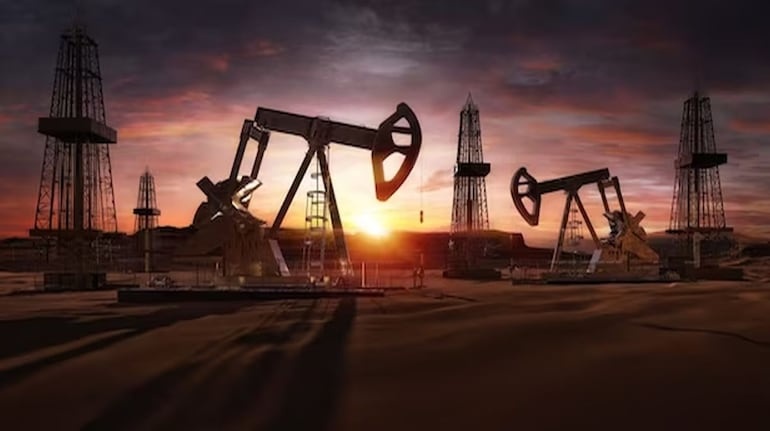
US-Iran Peace Deal & Crude Oil Impact: Huge fall in crude oil prices due to US-Iran peace deal; Know its full impact on the global energy market

A huge relief news has emerged from the point of view of the Global Energy Market and the international economy. An interim agreement (MoU) has been signed between the US and Iran with the aim of ending the war, reopening the strategically important Strait of Hormuz and relaxing US sanctions on Iranian oil exports. This historic peace agreement has completely removed the largest and most catastrophic disruption to global energy supplies in recent history. During the initial trading session on Thursday, June 18, 2026, a huge fall in the prices of crude oil was recorded in the international market, due to which importing countries around the world including India have heaved a sigh of relief. Latest crude oil prices in the international market As soon as the news of the peace agreement became public, both major global crude oil benchmark indices saw a sharp decline and completely lost their previous gains recorded on Wednesday: Brent Crude Futures: Brent crude, considered the international standard, fell by 89 cents or 1.12% to $78.66 per barrel. WTI Crude Futures (West Texas Intermediate): The US crude benchmark is also trading at $75.81 per barrel, down 98 cents or 1.28%. Earlier on Wednesday, there was a slight rise in the market due to a strong statement by US President Donald Trump, in which he warned that if Iran’s leadership "didn’t work properly" So American military attacks may start again. But after the last diplomatic success, the market sentiment has completely improved. 3 main conditions of the peace agreement: 30-day deadline on the Strait of Hormuz Under this 14-point historic memorandum agreed between the US and Iran, the next 60-day official negotiation window has started. The main points of this deal are as follows: Allowing toll-free transit: Iran has agreed to allow completely toll-free transit (free movement) for all international vessels through the ‘Strait of Hormuz’, the main sea route for global oil and natural gas (LNG). Full operating capacity in 30 days: As per the terms of the agreement, commercial vessel traffic through the Strait of Hormuz should return to its 100% operating capacity within the next 30 days. $300 billion economic package: Although in this initial deal, controversial and sensitive issues like Iran’s nuclear program are still unresolved, in return an appeal has been made to the US and its allies to create a $300 billion funding package to handle Iran’s crumbling economy. IEA’s warning: There may be a flood of ‘supply surplus’ in the market by 2027. According to a recent report by Reuters, the International Energy Agency (IEA) has introduced the world to a new economic equation in its Monthly Market Outlook on Wednesday: Surplus of 5.05 million barrels: IEA has warned that if this peace agreement is fully implemented on the ground and the Strait of Hormuz is opened regularly. If it opens up formally, the current huge global oil shortage will very soon turn into ‘supply surplus’ (more supply than required). The agency estimates that when Middle East crude returns to the international market at full capacity next year (by 2027), the daily supply of oil around the world could exceed its total demand by 5.05 million barrels per day, which could lead to an even bigger recession in crude oil prices. On the other hand: The demand for oil is expected to decrease due to the strictness of the US Fed. Not only the peace agreement, but the policies of the US Central Bank Federal Reserve (US Fed) are also indirectly putting pressure in bringing down the prices of crude oil. The Federal Reserve is aggressively considering the possibility of increasing interest rates to control inflationary pressure in the US by the end of this year. According to quarterly estimates released on Wednesday, nine of the Fed’s 19 policymakers now support the need for a rate hike, whereas three months ago none were in favor of it. If interest rates increase in America, industrial and economic activities there may slow down, due to which there is a possibility of a huge decline in global demand for fuel and crude oil in the coming time.

Comments are closed.