
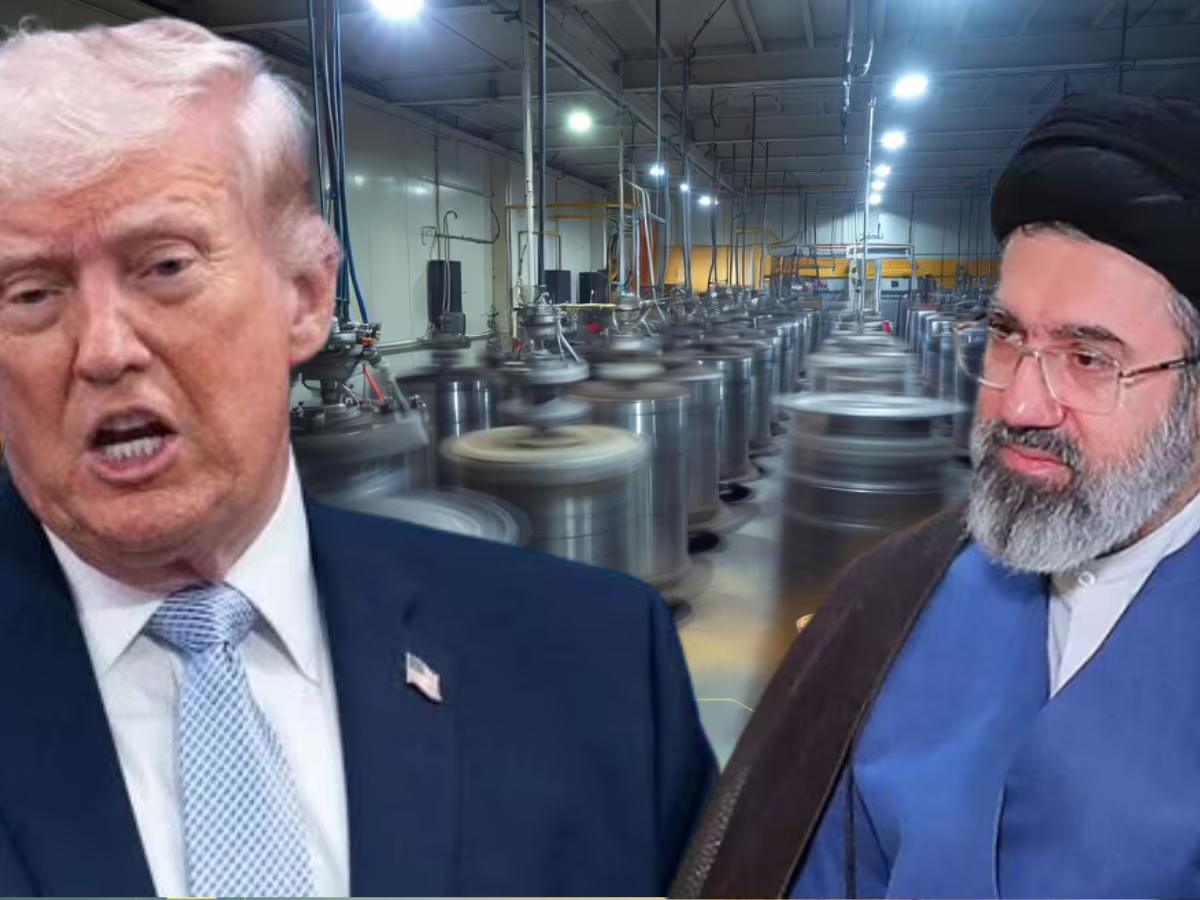
US-Iran Talks: Iran adamant on nuclear amid diplomatic talks, Trump bluntly says will destroy uranium

There have been some positive signs in the ongoing very sensitive diplomatic talks between America and Iran, but despite this, the great tension between the two countries is not showing any signs of reducing. The standoff over control over Tehran’s highly enriched uranium reserves and the world’s most important sea route, the Strait of Hormuz, is increasing. This deep dispute has not only put global oil supply and maritime trade in crisis, but has once again given rise to fears of a fierce military conflict in the Middle East. US Secretary of State Marco Rubio expressed caution regarding the recent talks, saying that although some good signs have been seen in the talks, complete caution is necessary before reaching any final solution. On the other hand, a senior Iranian source claims that the differences between the two countries have definitely reduced compared to before, but no final agreement has been sealed yet. Uranium reserves become a big controversy, Supreme Leader Khamenei’s refusal to transfer The biggest root of this entire international controversy is Iran’s extremely rich uranium reserves. America and its allied countries clearly allege that Iran is using this uranium to secretly develop nuclear weapons. However, Tehran has rejected these claims, saying its nuclear program is entirely peaceful and for energy needs. US President Donald Trump has taken a very aggressive stance on this issue and has made it clear that America will not allow Iran to maintain control over this dangerous stockpile at any cost. Trump said in a stern tone:
"We will achieve it. We personally don’t need it, but we can’t let them (Iran) keep it. If necessary, we can completely destroy this uranium stockpile."
On the other hand, Iran is also not ready to bow down. Tehran has made it clear that it is not ready to transfer its enriched uranium reserves out of the country to any other country. According to intelligence reports, Iran’s Supreme Leader Mojtaba Khamenei has issued a strict directive to completely ban any foreign transfer of enriched uranium. Tension increased on the Strait of Hormuz: Trump said – ‘There will be no toll’ The second biggest front of tension is the ‘Strait of Hormuz’, which is considered to be the most important energy corridor of the entire world. A large part of the global oil and gas supply passes through this narrow sea route. President Trump has strongly opposed Iranian efforts to impose any taxes, tolls or sanctions on international vessels in the Strait of Hormuz. Trump said that it is an international waterway and it should remain open and free for trade around the world. He made it clear that any kind of Iranian bullying or toll will not be accepted here. On the contrary, Tehran argues that, given recent military tensions and regional security conditions, it has the full sovereign right to take strong measures along this route to protect its maritime interests and borders. Panic in the global oil market, only 31 ships passing instead of 125. The direct and deadly impact of the ongoing conflict between America and Iran is now visible on the global energy market and international economy. The ‘International Energy Agency’ (IEA) has issued a serious warning saying that if this deadlock is not resolved soon, the world will fall into the abyss of a terrible energy crisis. According to the agency, in the months of July and August, when fuel demand will be at its peak due to global summer, the oil market may reach its period of greatest danger. Due to this tension, maritime traffic has already collapsed. According to reports from Iranian media, only 31 ships have passed through the Strait of Hormuz in the last 24 hours, whereas before the crisis, an average of more than 125 large commercial and oil tanker ships used to pass through it every day. This huge reduction in the number of ships is affecting the supply chain of essential goods across the world. Pakistan Army Chief Asim Munir’s mediation efforts intensified Amidst this very delicate and explosive situation, the neighboring country Pakistan has intensified its efforts to mediate between the two nuclear-armed countries (America and Iran). Quoting sources, it is reported that Pakistani Army Chief (COAS) General Asim Munir may soon make an important diplomatic visit to Tehran. Pakistan is trying to speed up the dialogue process going on behind the scenes between the two countries so that the danger of war can be avoided. However, despite these efforts, the situation on the ground remains extremely sensitive and tense. President Trump has clearly warned that if no concrete and correct solution is found through diplomatic talks, then America will not shy away from initiating major military action against Iran again. At the same time, Iran’s powerful organization ‘Revolutionary Guards’ (IRGC) has also hit back and said that any new attack by America will be responded to not only on its border, but in the form of a massive attack on American targets spread across the entire Middle East region. At present, the eyes of markets and countries around the world are fixed on the next round of US-Iran talks.

Comments are closed.