
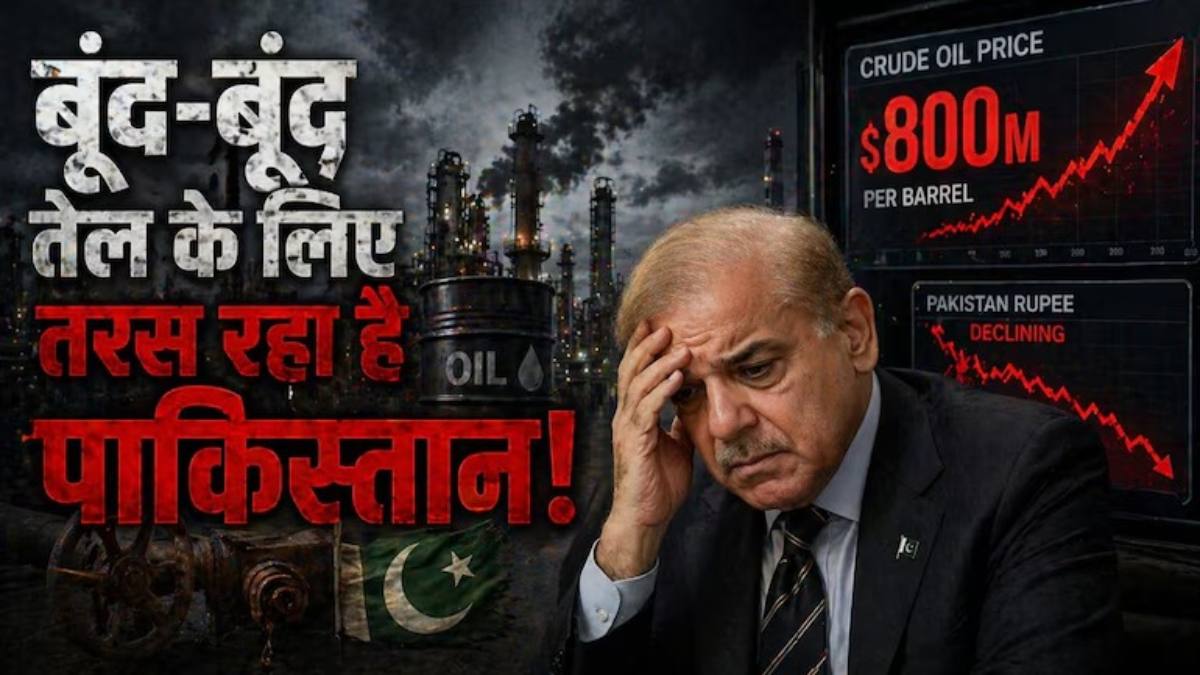
US-Iran War Impact on Pakistan: Pakistan is yearning for every drop of oil, know how the economy got burnt in the fire of war?

Business Desk – US-Iran War Impact on Pakistan: The ongoing conflict between America and Iran has paralyzed Pakistan’s economy. Pakistani Prime Minister Shehbaz Sharif has warned that whatever economic progress the country had achieved in the last two years. That is now under threat due to rising global fuel prices and regional instability. During a cabinet meeting, Sharif admitted that the conflict had led to a huge surge in the country’s weekly oil import bill, bringing the national economy to the brink of collapse.
Oil bill rises from $300 million to $800 million
Prime Minister Shehbaz Sharif presented shocking figures regarding the economic consequences of this conflict. Before the conflict began, Pakistan’s weekly oil bill was approximately $300 million. Now it has increased to $800 million. To deal with this crisis and fluctuating fuel prices, the government has constituted a special task force, which is monitoring the situation on a daily basis.
Pakistan’s diplomatic efforts for peace proved unsuccessful
To reduce the economic loss, Pakistan is trying to mediate between the two countries. Sharif said that Pakistan facilitated talks between America and Iran in Islamabad from April 11. This conversation continued for 21 hours without any interruption.
A temporary ceasefire is currently in force. Pakistan is planning to host the second round of talks. Sharif praised Field Marshal Asim Munir and Foreign Minister Ishaq Dar for their contribution in these peace efforts.
Huge jump in global oil prices
Global oil supplies have been severely disrupted due to the naval blockade imposed by the US Navy on Iran. The price of Brent crude has increased by 7.6 percent, reaching $119.69 per barrel. This is its highest level in four years. US President Donald Trump has described this blockade as more effective than a military attack, which has further increased the pressure on Iran.
The growing threat of extreme poverty around the world
The United Nations Development Program (UNDP) has issued a dire warning regarding the possible consequences of this conflict. According to UNDP, due to this war and inflation, more than 30 million people in 160 countries could be trapped in the vicious cycle of poverty. UNDP chief Alexander De Croo has described the situation as “reverse development”. That is, reversal of the pace of development.

Comments are closed.