
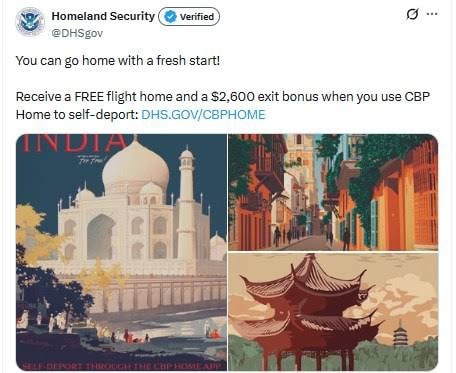

The United States has introduced a controversial voluntary return programme offering free flights and a financial incentive of $2,600 to undocumented migrants willing to leave the country.
The initiative, promoted by the Department of Homeland Security (DHS), has drawn global attention, particularly after campaign visuals featured India’s iconic Taj Mahal.
‘Project Homecoming’ and Its Objectives
The programme, titled Project Homecomingwas launched during the second term of Donald Trump with the aim of encouraging voluntary departures instead of forced deportations. Authorities say the initiative is designed to provide a more structured and less confrontational pathway for individuals without legal status to return to their home countries.
Through official messaging, the DHS has highlighted that participants can “go home with a fresh start,” emphasising support, flexibility, and dignity in the process.
How the Scheme Works
Eligible individuals can apply through the CBP Home application, where they can register their intent to leave, submit required details, and access travel assistance. The programme includes a fully funded flight and a financial payout of $2,600 upon departure.
Officials state that over 2.2 million individuals have reportedly used the scheme since early 2025, reflecting significant uptake.
Cost Efficiency and Policy Rationale
According to DHS estimates, forcibly deporting a single individual costs approximately $18,245. In contrast, voluntary departures under this programme cost about $5,100 per person, resulting in substantial savings for taxpayers.
Authorities have positioned the initiative as a practical alternative that reduces administrative burden while maintaining immigration enforcement goals.
Use of Global Landmarks in Promotion
The campaign’s promotional material has attracted particular attention for featuring globally recognised landmarks, including the Taj Mahal, alongside sites from other countries. The visuals aim to resonate with migrant communities by referencing their countries of origin, though the approach has sparked debate online.
Public Reaction and Criticism
The announcement has triggered mixed reactions across social media platforms. While some users acknowledged the financial and logistical support offered, others criticised the use of public funds and questioned the messaging strategy.
Several comments reflected scepticism, with users debating whether taxpayer money should be allocated to such programmes and raising broader concerns about immigration policy priorities.
A Policy with Global Implications
The initiative highlights a shift toward incentivised voluntary migration management, blending enforcement with financial support mechanisms. As discussions continue, the programme is likely to influence broader debates on immigration policy, cost efficiency, and humanitarian considerations in the United States and beyond.

Comments are closed.