
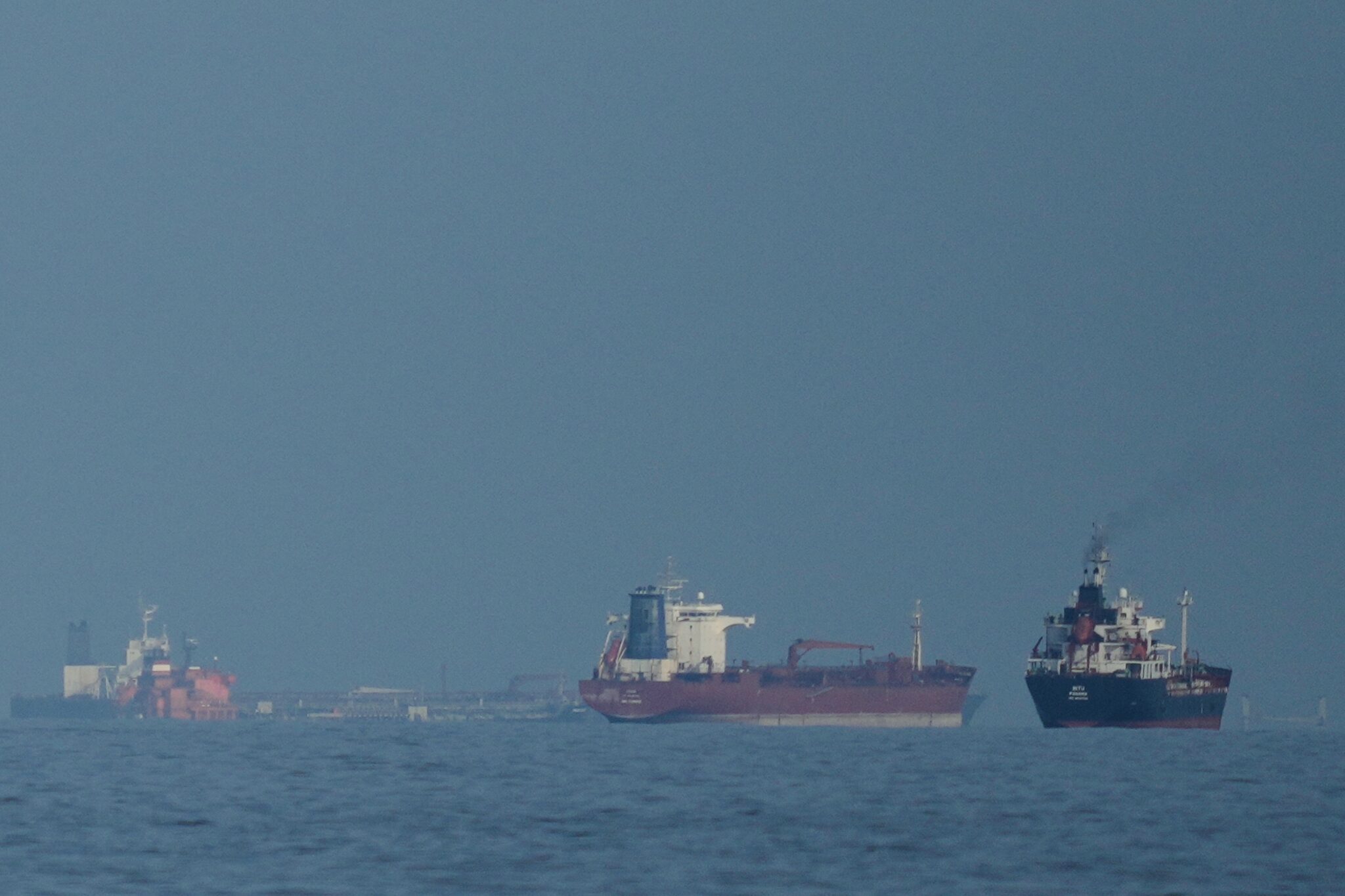

US Naval Blockade Begins on Strait of Hormuz, Iran Threatens Gulf Ports/ TezzBuzz/ WASHINGTON/ J. Mansour/ Morning Edition/ The United States imposed blockade on Iranian ports, escalating tensions as Iran threatens retaliation across Gulf shipping lanes. The standoff raises fears of economic disruption, soaring oil prices, and renewed conflict. Fragile ceasefire talks have stalled, increasing uncertainty across global markets.

- U.S. military plans blockade of Iranian ports
- Iran threatens ports across Persian Gulf
- Strait of Hormuz shipping disruption continues
- Oil prices surge above $100 per barrel
- Ceasefire talks end without agreement
- War began Feb. 28 with U.S.-Israel strikes
- Global economy faces major risks
- Iran charges ships to pass through strait
- U.S. aims to pressure Tehran into concessions
- Iran warns “no port in region safe”
- Ceasefire expires April 22
- Diplomats push for extended negotiations


The U.S. began enforcing a blockade on Iranian ports in the Strait of Hormuz at 10 a.m. ET on Monday.
Trump ordered the blockade after peace talks with Tehran collapsed this weekend. A map of U.S. vessels in the region showed at least 17 ships deployed as of Monday morning.
US Central Command announced plans to enforce the blockade earlier Monday in a notice to seafarers.
“Any vessel entering or departing the blockaded area without authorization is subject to interception, diversion, and capture,” the note said.
Iran has condemned the blockade as “piracy” and vowed to respond with force, potentially ending the fragile ceasefire with the U.S.
Tensions between the United States and Iran intensified Monday as the U.S. military enforced a blockade of Iranian ports — a move that threatens global shipping routes and raises fears of renewed conflict across the Middle East.
The blockade is designed to pressure Tehran into reopening the Strait of Hormuz and agreeing to broader peace terms following weeks of fighting that began Feb. 28 with U.S. and Israeli strikes on Iranian targets. Iran quickly responded with threats targeting ports across the Persian Gulf and Gulf of Oman, raising concerns that the fragile ceasefire could collapse.
Global Economic Stakes Rise
The confrontation centers on the Strait of Hormuz, one of the world’s most critical energy chokepoints. Roughly 20% of global oil shipments pass through the narrow waterway during normal conditions.
Iran’s effective closure of the strait has already sent shockwaves through global markets. Oil prices surged sharply, with Brent crude rising about 7% to around $102 per barrel — a significant jump from roughly $70 before the conflict began.
The price spike is already impacting consumers worldwide, driving up fuel costs, food prices, and shipping expenses.
Iran has allowed limited vessels to pass, particularly those considered friendly, while imposing heavy transit fees. Critics accuse Tehran of using control of the strait to pressure global economies.
U.S. Military Blockade Plan
U.S. Central Command announced that the blockade would begin at 10 a.m. EDT, targeting vessels entering or leaving Iranian ports along both the Persian Gulf and Gulf of Oman.
However, U.S. officials said ships traveling between non-Iranian ports would still be allowed to transit the Strait of Hormuz — a partial step back from earlier threats to block all shipping.
The plan aims to restrict Iran’s ability to export oil, which remains a key source of revenue for Tehran despite sanctions. Analysts believe Iran has continued exporting millions of barrels through covert shipping methods that evade oversight.
Yet experts warn that enforcing a blockade could prove difficult and risky, potentially exposing U.S. naval forces to retaliation.
Iran Threatens Regional Retaliation
Iranian officials quickly responded with strong warnings.
“Security in the Persian Gulf and the Sea of Oman is either for everyone or for no one,” Iranian state media reported, quoting military officials.
Iranian leaders warned that no port in the region would be safe if the blockade proceeds, signaling potential threats to shipping routes used by U.S. allies.
The threats have already impacted shipping activity. Marine tracking data shows only about 40 vessels passed through the strait since the ceasefire — significantly below the typical 100 to 135 daily ship movements before the war.
International Reactions Split
Israeli Prime Minister Benjamin Netanyahu supported the U.S. blockade, calling it a strong response aimed at forcing Iran to compromise.
Meanwhile, Spain criticized the move. Spanish Defense Minister Margarita Robles described the blockade as another escalation in an already volatile conflict.
“Since the war began, everything has been senseless,” Robles said, warning the situation continues to spiral downward.
The divide reflects growing international concern about the potential for broader conflict and economic instability.
Iran Warns of Escalation
Iranian lawmakers and military officials signaled readiness to escalate if necessary.
Iranian parliament security spokesperson Ebrahim Rezaei dismissed the blockade threat as partially rhetorical but warned Iran still has additional leverage.
Iranian Parliament Speaker Mohammad Bagher Qalibaf issued a direct warning to Washington: “If you fight, we will fight.”
Such statements highlight the fragile nature of the current ceasefire.
Ceasefire Talks Collapse
Negotiations aimed at ending the conflict stalled during talks held in Pakistan over the weekend.
U.S. Vice President JD Vance said discussions broke down after Iran rejected U.S. demands related to its nuclear program.
American negotiators pushed for:
- Ending uranium enrichment
- Dismantling enrichment facilities
- Retrieving highly enriched uranium
- Halting support for regional armed groups
- Opening the Strait of Hormuz
Iran rejected several of these demands, insisting its nuclear program is peaceful and seeking sanctions relief and war reparations.
Iran’s ambassador to India identified nuclear restrictions, sanctions relief, and reparations as key sticking points.
Rising Casualties and Regional Impact
The conflict has already caused significant casualties and damage across multiple countries.
Reported deaths include:
- 3,000 in Iran
- 2,055 in Lebanon
- 23 in Israel
- Dozens in Gulf Arab nations
Infrastructure damage has spread across several countries, further increasing pressure to reach a diplomatic resolution.
Diplomatic Efforts Continue
Pakistan’s foreign minister said new talks may be scheduled soon, while Turkey proposed extending the ceasefire by 45 to 60 days to allow further negotiations.
However, with the ceasefire set to expire April 22, the window for diplomacy is rapidly closing.
The coming days may determine whether tensions escalate into renewed conflict or move toward a negotiated settlement.
More on US News
Comments are closed.