
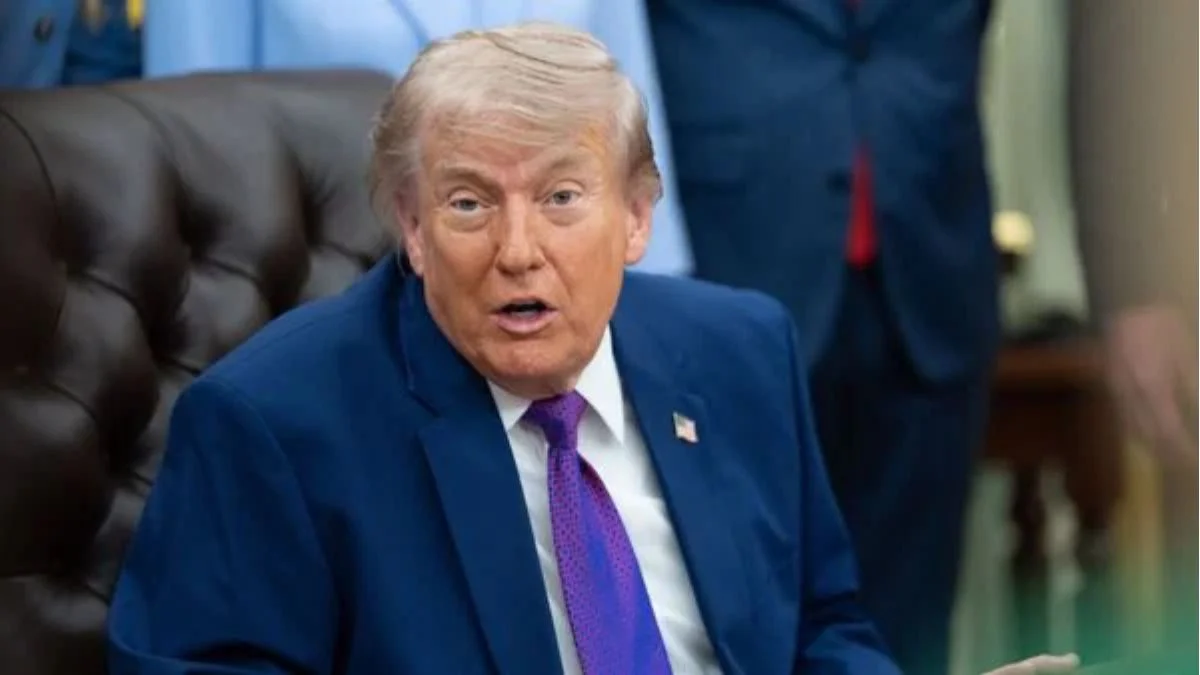
US President Donald Trump says they have stopped planned attack on Iran amid fresh ‘serious’ negotiations

US President Donald Trump on Monday said he has decided to hold off a planned military strike on Iran after requests from key Gulf leaders, including the Emir of Qatar, the Crown Prince of Saudi Arabia, and the President of the United Arab Emirates, citing ongoing negotiations aimed at reaching a fresh deal with Tehran.
In a post on Truth Social, Trump claimed the planned attack on Iran was scheduled for “tomorrow” but said he instructed US Defence Secretary Pete Hegseth, Joint Chiefs Chairman General Daniel Caine, and the US military not to proceed for now.
Trump said the decision followed direct requests from Qatar’s Emir Tamim bin Hamad Al Thani, Saudi Crown Prince Mohammed bin Salman, and UAE President Mohamed bin Zayed Al Nahyan, who conveyed that serious negotiations were underway and that a deal acceptable to the United States and the wider Middle East could still be reached.
The US President reiterated that any agreement must ensure “no nuclear weapons for Iran,” while also warning that the military remains prepared for a “full, large scale assault” if negotiations fail.
The latest statement comes amid heightened tensions in the Middle East following weeks of escalating rhetoric, military threats and stalled negotiations over Iran’s nuclear programme. Trump had recently warned that “the clock is ticking” for Iran to accept a deal, while US officials were reportedly preparing contingency plans for possible strikes on Iranian infrastructure.
Regional tensions further intensified after drone attacks near the UAE’s Barakah nuclear facility earlier this week, which Emirati officials blamed on Iran or Iran-backed proxies. The incident raised fears of a broader regional conflict involving Gulf nations hosting US military assets.
At the same time, diplomatic efforts have accelerated behind the scenes. Reports suggest Iran recently floated a new proposal through regional mediation channels, including possible limits on its nuclear activities and broader negotiations around sanctions relief and regional security arrangements.
Qatar, Saudi Arabia and the UAE have increasingly taken active roles in de-escalation talks due to concerns that a direct US-Iran military confrontation could severely impact regional stability, energy infrastructure and global oil markets. Qatar in particular has historically acted as an intermediary between Iran and Western nations during previous crises.
Trump’s announcement signals a temporary diplomatic opening, though the White House has maintained that military options remain fully on the table if Tehran does not agree to terms deemed acceptable by Washington.

Comments are closed.