
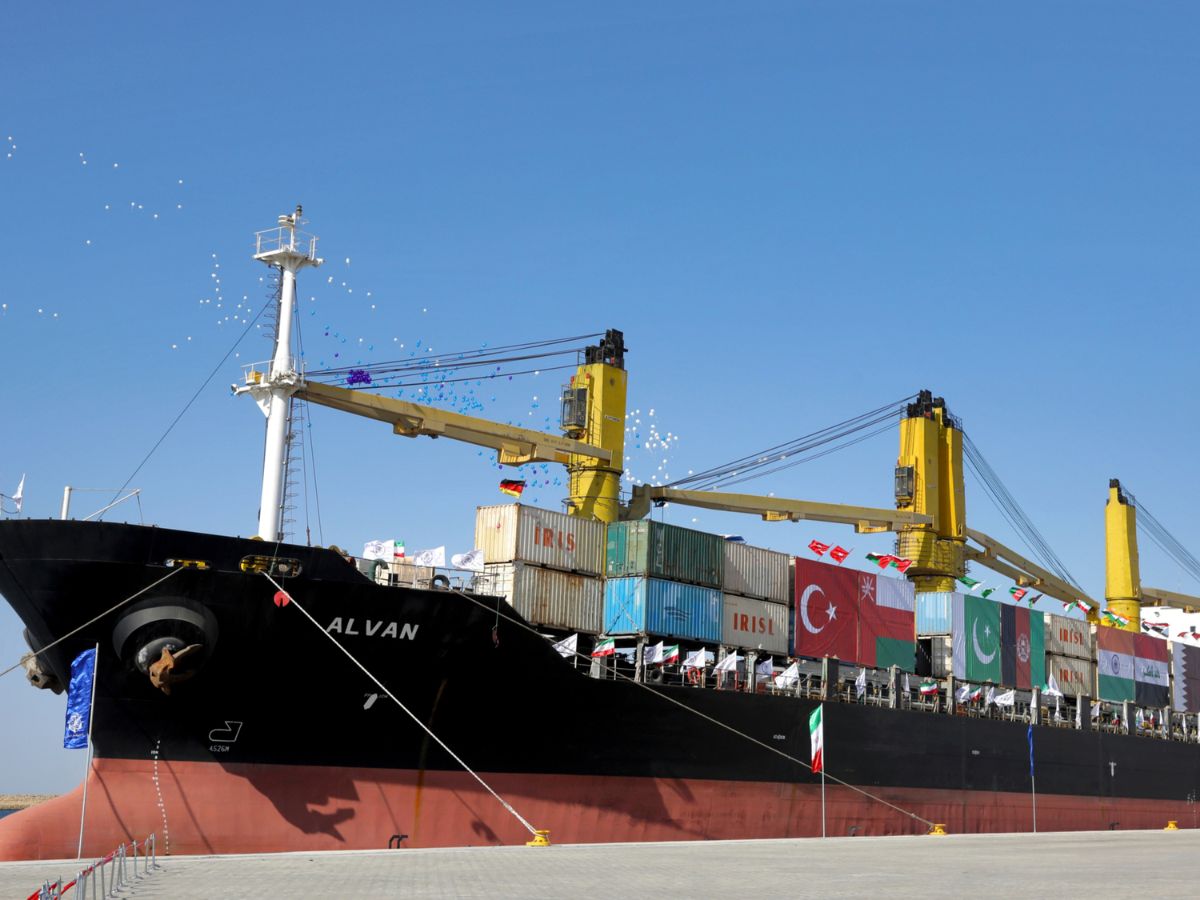

Enclosing a list of 14 vessels connected to the shadow fleet of the son of Ali Shamkhani—a top adviser of Iran’s then supreme leader Ayatollah Ali Khameini—and the alleged “illicit activities of his network” that visited Indian ports, the US had asked India to review the history of vessels entering Indian ports for indications of extensive Automated Identification System (AIS) gaps or AIS transmissions in or near Iran.
In the documents that have been enclosed by the Ministry of External Affairs (MEA) in its letter to the DG (Shipping), and available to this newspaper exclusively. the MEA noted that the US had shared “non-papers pertaining to Iran” on the subjects of “offloading of ammonia by a US-sanctioned vessel at an Indian port” and “vessels connected to the shadow fleet of Mohammed Hossein Shamkhani networks visiting Indian ports.”
An informal document is used in diplomatic and highlevel policy discussions—a non-paper is particularly used within the European Union and the United Nations—to introduce ideas, propose potential solutions, or outline positions without officially committing the authoring government or organisation. It does not bind the sending party to the proposed idea.
Along with the DG (Shipping), the letter has been marked to the top management of five ports along India’s western coast and the Gujarat Maritime Board. Noting the above, the letter accessed by Read dated December 22, 2025 states that the US had requested India to “review the history of vessels entering Indian ports for indications of extensive Automated Identification System (AIS) gaps or AIS transmissions in or near Iran.”
Further, it said that the US had also requested India to notify port authorities in a timely manner about these vessels, refuse reberthing, inspect the vessels, verify cargo origins and destinations and monitor flag restrictions.
In the letter written by the MEA’s Director (Americas), Saswati Dey to the DG (Shipping), Shyam Jagannathan, and chairmen of the Jawaharlal Nehru Port Authority, New Mangalore Port Authority and Deendayal Port Authority, the CEO of the Mundra Port Authority, the COO of the Vadinar Port Authority and the vice chairman and CEO of the Gujarat Maritime Board on December 22, 2025, the senior MEA official requested the officials of these ports that “appropriate action be taken up by relevant authorities for the above instances.”
Among the documents enclosed with the letter, is a “non-paper” from the US that states that the US has designated more than 50 individuals and entities, and identified as blocked property more than 50 vessels belonging to the vast shipping empire controlled by Mohammad Hossein Shamkhani (Hossein) on July 30, 2025.
Iranian oil magnate Mohammed Hossein Shamkhani is the son of Ali Shamkhani, a longtime Iranian security official who had been serving as the secretary of Iran’s Defence Council till his death. He was killed in the US-Israeli airstrikes on February 28, 2026, the same day Iran’s Supreme Leader Ali Khamenei was killed in similar targeted strikes.
Shamkhani has also been sanctioned by the European Union and the United Kingdom. Hossein leveraged his father’s political influence at the highest levels of the Iranian regime to build and operate a massive fleet of tankers and containerships. “This shadow fleet network transports oil and petroleum products from Iran and Russia, as well as other cargo, to buyers around the world, generating tens of billions of dollars in profit,” the document states.
It further states that the network “employs significant measures to disguise its operations and obfuscate its ties to the Shamkhani family, Iran, and Russia.”
THE SHAMKHANI FLEET
“The network’s fleet, which consists of both oil tankers and containerships, undergoes frequent changes in the operators and managers of each vessel. These actions ensure ultimate responsibility for any vessel remains opaque and difficult to trace to the Shamkhani family,” the document states.
“Although the primary income source for Hossein’s network is oil sales, the network also operates a containership fleet that carries cargo both to and from Iran, among other locations. To evade sanctions related to the sale of certain non-humanitarian goods to Iran, Hossein’s network offers certain overseas trading partners Iranian oil in lieu of payment,” the document states.
“The network’s containerships have utilised obfuscation tactics like those used by tankers carrying Iranian oil. For example, modifying or misrepresenting cargo in bills of lading or turning off automatic identification system (AIS) transponders. Over the past five months, the US government tracked the following vessels connected to the Mohammed Hossein Shamkhani network visiting Indian ports,” reads the document.
It further names Alor 2, Enzo 2, Gauja, Nyra 2 and Mahadev as the vessels having visited Indian ports between July and November 2025.
Further, the document further names nine more vessels that it identifies as being “connected to the illicit activities of the Shamkhani network” that visited Indian ports in 2025, before they were identified by the US “as blocked property.” These include Nora, Abhra, Aether, Briont, Flexi 2, Guanyin, Kylo, Nemrut and Evali. The document further states that while Alor 2, Enzo 2, Nyra 2, Nora, Aether, Flexi 2, Kylo and Evali used “false” flags, Gauja, Mahadev, Abhra, Briont and Nemrut had changed their previous flags to those of new countries.
“The Department of State is concerned that these vessels may be involved in activities that contravene US sanctions, environmental regulations, or maritime safety standards, thereby putting India’s interests at risk,” the document states.
It adds that if these vessels returned to Indian waters, Government of India is requested to warn port authorities of the current location at or intended arrival of these vessels to Indian ports, deny docking in Indian ports to vessels identified as being connected to the Shamkhani network, conduct thorough port state control inspections to ensure compliance with environmental and maritime safety standards and sanctions, confirm that the cargo onboard is not being transported or traded in contravention of US/UN sanctions and confirm the vessels’ flag status with registry officials.
Read verified the types of the vessels mentioned in the document enclosed in the MEA’s letter to the DG (Shipping) and found that while six of them are container ships, six of them are crude oil tankers, one is an oil product tanker while another one is an asphalt/bitumen tanker.
Among these, the Iranianflagged Flexi 2 is currently located along India’s west coast and is waiting for orders, according to Kepler data, while the container ship Gauja’s current location is in Iran.
The bitumen tanker Mahadev’s reported location is at the Gulf of Oman.
Moreover, while Nora’s destination is Denmark, Abhra’s destination is UAE’s Khor Fakkan port, Guanyin’s destination is Russia, Nemrut’s destination is Turkey, Evali’s destination is China, Nyra 2’s destination is Malaysia while the destination of Alor 2, Enzo 2 and Aether is noted as Suez Canal in Egypt.
U.S. PRESSURE CAMPAIGN
The request from the US is significant given that Indian ports have had Iranian vessels visit them for decades and traditional partners India and Iran have distanced over the past few years courtesy the US.
An analysis titled “The United States and the dismantling of the India-Iran relationship,” written by Dr Sandeep Bhardwaj, a Visiting Research Fellow at the Institute of South Asian Studies (ISAS), the National University of Singapore (NUS) had noted that under the first Trump administration, the US launched a maximum pressure campaign to choke the Iranian economy. “Whereas before, Washington sought to push New Delhi away from Tehran but allowed it some latitude, now the US moved towards uncompromising coercion. It discontinued the sanction waiver to India for Iranian petroleum imports in 2019. The sanctions regime became much more precise and sweeping; for instance, White House officials started identifying and personally intimidating Indian captains of tankers carrying Iranian oil. The Joe Biden administration continued the aggressive tactics and even threatened to target India’s investment in Chabahar, the one exemption to have survived so far. In 2025, US prosecutors targeted the Adani group, one of India’s largest conglomerates, for allegedly violating Iran sanctions,” the analysis noted.
“The pressure campaign has whittled India-Iran relations to a nub. Unlike China, which decided to resist US sanctions, India’s oil and gas imports from Iran nearly zeroed out after 2019. Most commercial and infrastructure projects envisioned by the Vajpayee government have stalled or died, including the IPI Pipeline, the Farzad-B gas field project and the Chabahar-Zahedan railway link. Chabahar port, the only major project to survive, has also failed to take off due to sanctions—only 450 vessels have visited it in the last six years. Although the economic and strategic rationales for closer India-Iran ties still exist on paper, the two nations have drifted apart in the absence of any concrete link holding them together,” Bhardwaj noted.
Read sent an e-mail to the US embassy spokesperson Christopher Elms for a response on the issue. It received an automatic response from Elms’ email ID stating that he was out of the office and would return on March 30.
The Iranian embassy was yet to respond to the email sent to them at the time of filing the story. MEA OSD Vasudev Ravi told Read that while the MEA had no comments to offer as of now, this newspaper could ask questions related to the issue “at the next weekly briefing” and the Ministry “would respond.”

Comments are closed.