
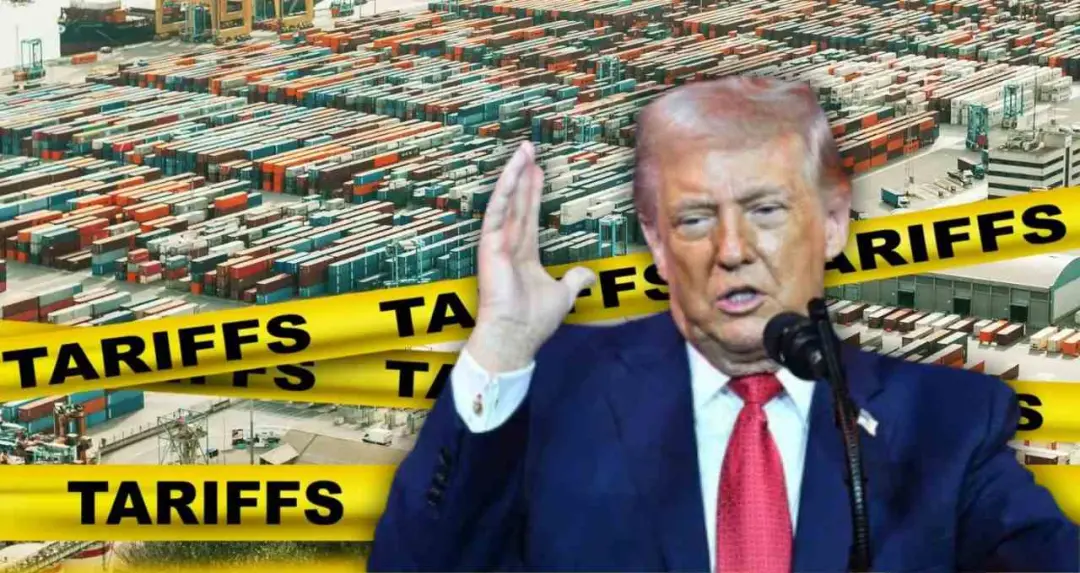

The US Supreme Court’s decision on President Donald Trump’s tariff orders has dealt a major legal blow to the Trump administration. However, in the changed circumstances, US Finance Minister Scott Besant clarified that the court has only restricted the right to impose tariffs under IEEPA.
World News: The US Supreme Court has declared the Trump administration’s global tariff order illegal, sparking a new debate over US trade policies and global exports. The Court specifically stated that the President does not have the authority to impose import tariffs under the International Emergency Economic Powers Act (IEEPA), because this power is given only to Congress under the Constitution.
Supreme Court’s 6-3 majority decision
The Supreme Court ruled by a 6-3 majority that President Trump overstepped his authority by using the 1977 IEEPA law to impose massive import tariffs. According to the court, the purpose of the IEEPA is to curb emergency economic sanctions and national security threats, not to raise government revenue through tariffs.
After this decision, the Trump administration immediately announced the imposition of a 10% global tariff and said that it would take action under Section 122 of the Trade Act of 1974. This provision allows the President to impose a temporary import surcharge of up to 15% for 150 days.
New path for Trump administration
Finance Minister Scott Besant clarified that the Supreme Court decision only blocks the use of IEEPA, and not the entire tariff policy. The Supreme Court did not say the tariffs are illegal, he said at the Dallas Economic Club. Six judges only said that IEEPA cannot be used to raise revenue.
For this, the administration will now take recourse to valid legal powers like Section 232 and Section 301. Besant said this would result in almost no change in tariff revenues in 2026.
What is IEEPA?
The IEEPA (International Emergency Economic Powers Act) came into force as US federal law in 1977. Its purpose is to give the President the power to control international economic transactions in the event of a “national emergency”. President under IEEPA:
- Economic sanctions can be imposed
- Can freeze foreign assets
- Can ban trade with countries or entities that pose a national security threat
According to the Library of Congress, this law was passed after the National Emergencies Act of 1976 to limit and define the president’s emergency powers. IEEPA has been used by US Presidents 77 times so far. Its first major use was by then-President Jimmy Carter in 1979 during the Iran hostage crisis, when Iranian government assets were frozen in the US. Subsequently it has often been adopted to control foreign governments, terrorist organizations, and national security threats.

Comments are closed.