
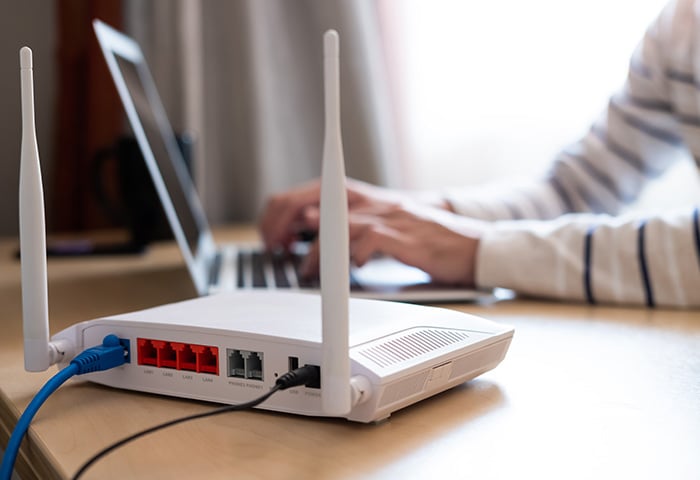

United States has moved to block the entry of newly manufactured foreign-made internet routers, citing growing concerns over cybersecurity and national safety. The decision, announced by the Federal Communications Commission, reflects a broader push by American authorities to reduce potential vulnerabilities in the country’s digital ecosystem.
Under the new rules, consumer-grade routers produced outside the US will no longer be freely sold or distributed in the American market unless they meet strict regulatory conditions. The move effectively places these devices in the same category as other restricted foreign technologies, including drones that were previously flagged for security risks.
Routers are a core part of modern connectivity, enabling homes and businesses to access the internet by linking multiple devices such as smartphones, computers, and smart TVs. Because they sit at the center of digital networks, any weakness in their security can have far-reaching consequences.
Why Routers Are Under Scrutiny
The decision stems from increasing evidence that routers can be exploited as entry points for cyberattacks. Authorities have warned that weaknesses in certain foreign-made devices have been used by malicious actors to gain unauthorized access to networks, monitor activity, and even disrupt essential systems.
Officials believe that these vulnerabilities could allow attackers to spy on users, steal sensitive data, or interfere with critical infrastructure. Over time, concerns have grown that foreign-manufactured hardware may carry hidden risks, whether due to poor security standards or the possibility of external influence.
The issue has gained urgency following a series of cyber incidents in recent years, which exposed how easily compromised networking equipment can be used to infiltrate larger systems. These developments have prompted US regulators to adopt a more cautious approach toward imported technology.
Existing Devices Spared, New Ones Face Barriers
Despite the sweeping nature of the policy, it does not affect routers already in use. Consumers and businesses can continue using their existing devices without any restrictions, even if those routers were made overseas.
The new rules apply specifically to future products. Any newly developed router manufactured outside the United States will now need formal approval before it can be sold in the country. This adds a significant compliance step for global manufacturers hoping to access the US market.
Tougher Requirements for Overseas Manufacturers
To gain approval, companies producing routers abroad must go through a detailed certification process overseen by the FCC. This includes providing transparency about their ownership structures, such as identifying foreign investors or any form of external control.
In addition, manufacturers will be required to outline plans to relocate at least part of their production to the United States. This requirement highlights a dual objective behind the policy: improving security while also encouraging domestic manufacturing.
Regulators have made it clear that approvals will not be automatic. Each application will be carefully reviewed to ensure that any potential risks are addressed before a product is allowed into the market.
National Security Agencies May Grant Exceptions
Although the policy is strict, it does allow for limited flexibility. Certain routers could still be approved if they are cleared by key security bodies such as the Department of Defense or the Department of Homeland Security.
So far, no specific models have been granted exemptions, indicating that most foreign-made routers will face significant challenges under the new system. The lack of immediate exceptions underscores the seriousness with which US authorities are treating the issue.
Cyberattacks Highlight the Risks
The crackdown follows several high-profile cyber operations between 2024 and 2025 that targeted US infrastructure. These incidents, known as Volt Typhoon, Flax Typhoon, and Salt Typhoon, reportedly took advantage of weaknesses in networking hardware, including routers.
Investigations by US agencies linked these attacks to actors believed to be connected to the Chinese government. The findings have added to geopolitical tensions and reinforced concerns about relying on foreign-built technology in sensitive areas.
These attacks demonstrated how routers, often overlooked by users, can become powerful tools in large-scale cyber operations. Once compromised, they can provide attackers with a foothold into broader networks, potentially affecting everything from businesses to essential services.
Global Supply Chains Face Disruption
The new restrictions are expected to have a significant impact on the global technology industry. Most routers sold in the United States are currently manufactured overseas, particularly in countries like China and Taiwan.
Brands such as TP-Link have been widely used due to their affordability and availability. However, increased scrutiny over their security has brought them into the spotlight.
Even American companies are not immune to the changes. Firms like Netgear, which design products domestically but rely on overseas manufacturing, may also be affected by the new requirements.
Push to Bring Manufacturing Back Home
The policy aligns with a broader effort by the US government to reduce dependence on foreign supply chains, especially for critical technologies. By requiring companies to consider US-based production, regulators are aiming to strengthen both economic resilience and national security.
One notable exception in the current market is SpaceX, whose Starlink internet service includes routers reportedly manufactured in Texas. Such examples highlight the possibility of building more technology domestically, though scaling this approach remains a challenge.
For now, most consumers are unlikely to feel an immediate impact, as the policy does not affect devices already in use. However, the longer-term effects could include fewer product choices and potentially higher prices as companies adapt to the new regulatory environment.
Manufacturers may need time to shift production or meet compliance standards, which could temporarily limit supply. On the other hand, the changes could also lead to more secure products entering the market over time.

Comments are closed.