
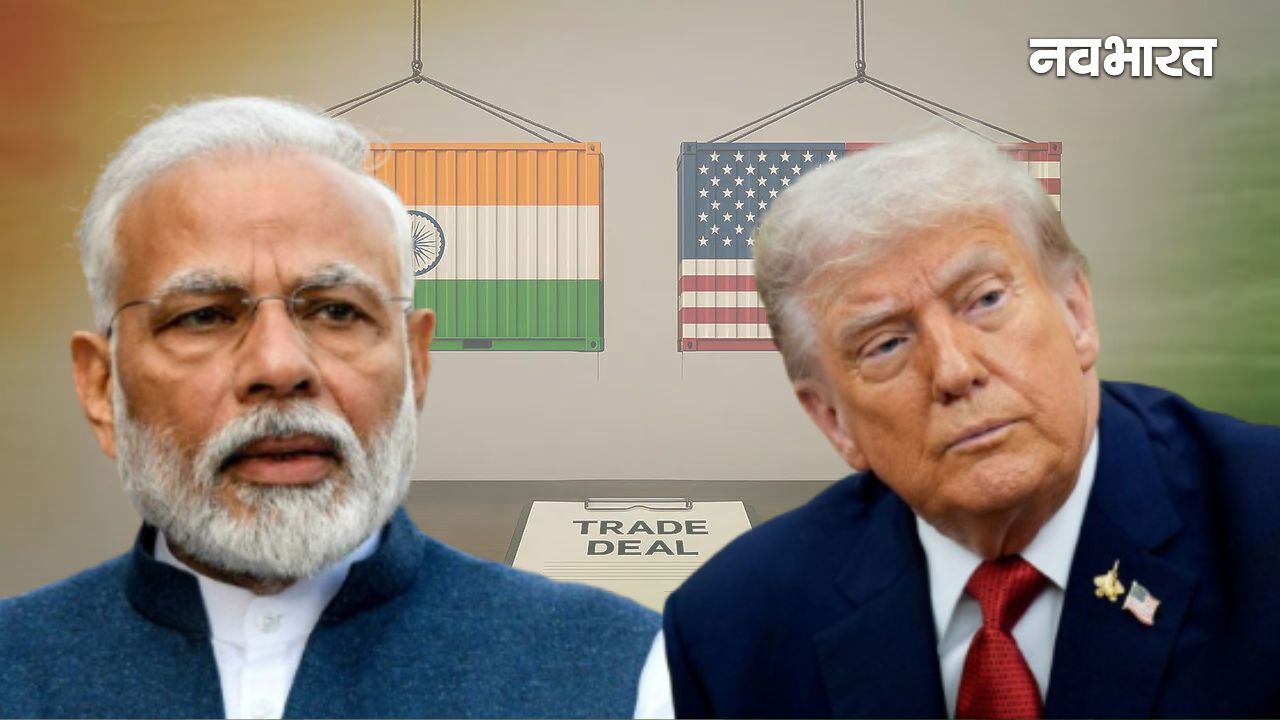
Trump’s tariffs backfire; America’s trade deficit rises to $58 billion; pressure strategy failed

India-US Trade Deal: Despite President Donald Trump imposing a huge 50 percent tariff on Indian exports, America’s trade deficit (goods and services) with India has increased to $ 58.2 billion by 2025, from $ 45.7 billion earlier. This information was given by the American government.
The US government reported that America’s trade deficit (goods and services) in December was $ 70.3 billion, which was $ 53 billion in November. At the same time, the trade deficit with India in December was 5.2 billion dollars.
America’s total trade deficit
The US trade deficit for the entire 2025 is $901.5 billion, which was $903.5 billion in 2024. During this period, exports have increased by $199.8 billion to $3,432.3 billion. At the same time, imports have increased by $197.8 billion to $4,333.8 billion. Trade deficit in goods is expected to increase by $25.5 billion to $1,240.9 billion in 2025. The surplus from services increased by $27.6 billion to $339.5 billion.
in 2025 America’s trade deficit It was $218.8 billion from the European Union, $202.1 billion from China, $196.9 billion from Mexico, $178.2 billion from Vietnam and $146.8 billion from Taiwan. Apart from this, the US Supreme Court has given a major decision on the Trump tariff, calling it illegal and canceling it.
America reduced import tax
However, using Section 122, President Trump has imposed a 10 percent tariff on goods imported into the US for a period of 150 days. This temporary import duty will be applicable from February 24. Trump invoked ‘Section 122 of the Trade Act 1974’ Has used the power given under. Under this, the President can address certain ‘fundamental international payments problems’ through surcharges and other special import restrictions.
Also read: Big impact of PLI scheme, investment of Rs 2.16 lakh crore in 14 sectors; More than 14 lakh people got employment!
According to a fact sheet released by the White House, temporary import tariffs will not apply on some goods to more effectively address the fundamental international payments problems facing the US. These include certain critical minerals, metals used in currency and bullion, energy and power products, natural resources and fertilizers, certain agricultural products, pharmaceuticals and pharmaceutical ingredients, certain electronics, passenger vehicles and other products.

Comments are closed.