
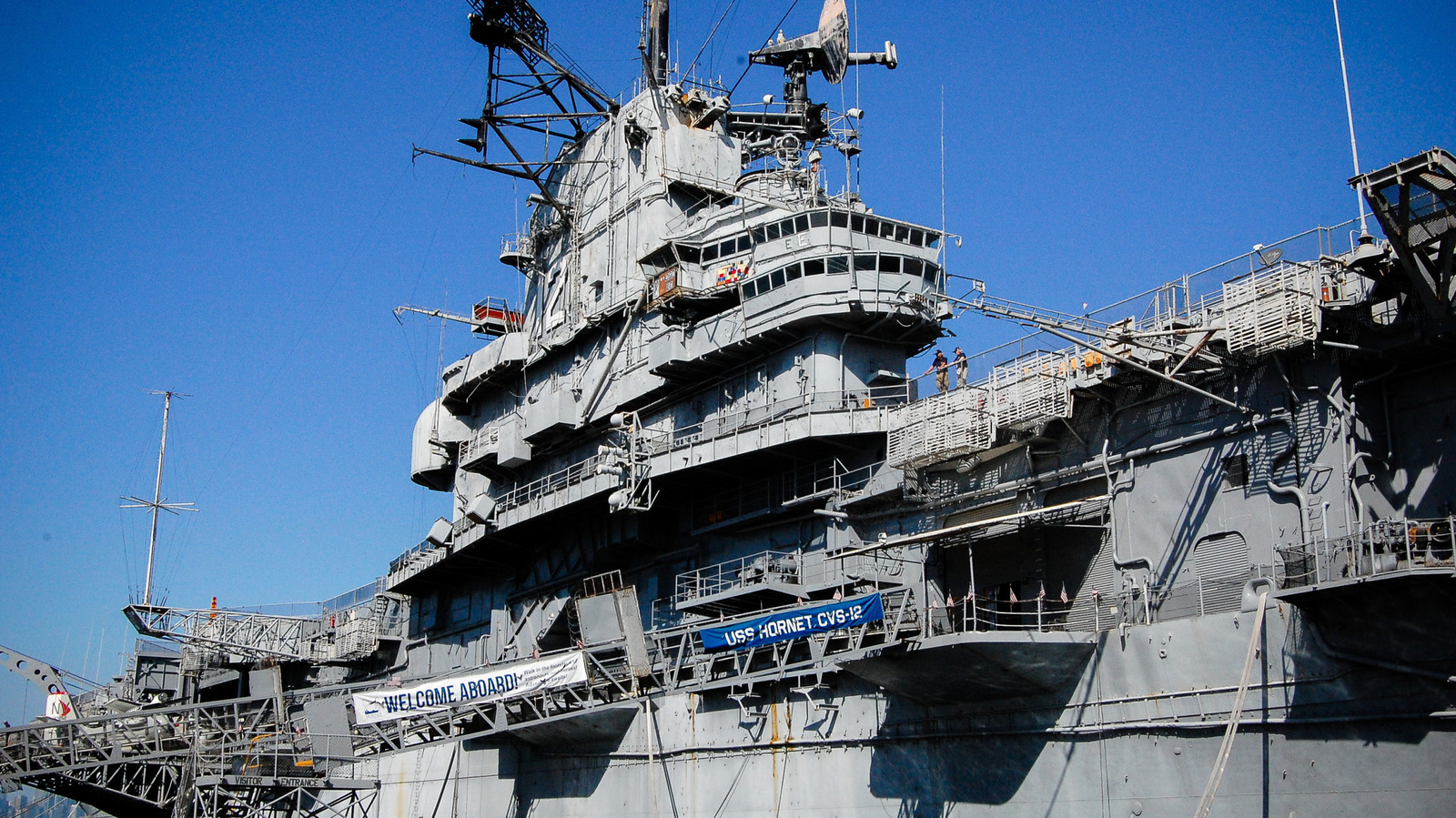

The USS Hornet is a nearly 900-foot-long aircraft carrier from the World War II era, designed to launch and land planes out at sea. After 26 years of service, she was decommissioned in June 1970 and sold for scrap – until a nonprofit organization decided that was no way for a ship like this to bow out. So, they towed it back up to Alameda Point, a former naval air station across the bay from San Francisco and turned the USS Hornet into a museum.
The carrier has been living at Alameda Point for close to thirty years, and for most of the time, it has played two roles for visitors. One of these is showing off its own history and other miscellaneous achievements like when it pulled the Apollo 11 crew, the first people to walk on the moon, out of the Pacific. Then there’s the other side, where the ship doubles as one of the more unique event venues in the Bay Area, hosting everything on its decks from anime conventions to raves. Lately, though, the second role has put the museum at odds with the city, and the fallout has the foundation wondering whether the Hornet’s days in Alameda are numbered. Unfortunately, even the relocation won’t come cheap, as the ship needs work it can’t pay for its own.
A safety review put a lid on the big crowds
The City of Alameda recently introduced a cap on the number of people that can be aboard the Hornet at any one moment. The cap is a mere 660 people, including staff, which is a pretty notable drop for a venue that once hosted events like Rattleship, a two-day rave. In fact, a new edition of that event even got canceled due to these new regulations. Put into perspective, the ship boasted a crew complement of up to 3,500 sailors following WWII.
To be fair, the cap has a pretty solid reason behind it — safety — since the ship currently lacks suitable escape routes. As it stands, the gangways linking the ship to its pier, along with the stairs running between decks, simply can’t move a big crowd off fast enough in case of a fire. This isn’t some quirk limited to the Hornet alone, though, as similar ship museums across the country – 300 of them – have to deal with similar rules, specifically around whatever the local fire code demands. One example is the Hornet’s sister ship, the USS Intrepid, which has been converted into a similar museum — except it’s docked in New York. It moves roughly a million visitors a year, which it’s able to pull off without any restrictions because it’s fitted with six wide, gently sloping gangways.
Fitting the ship with a similar setup will certainly help remove the cap, but it won’t fix the deeper issue: The Alameda simply draws very few day-to-day visitors. So, the foundation is eyeing San Francisco instead. With its busier waterfront, the Hornet will be able to pull far bigger crowds there. At the same time, it will get a new pier with improved gangways built to handle large events.
Staying won’t be cheap, and leaving might cost more
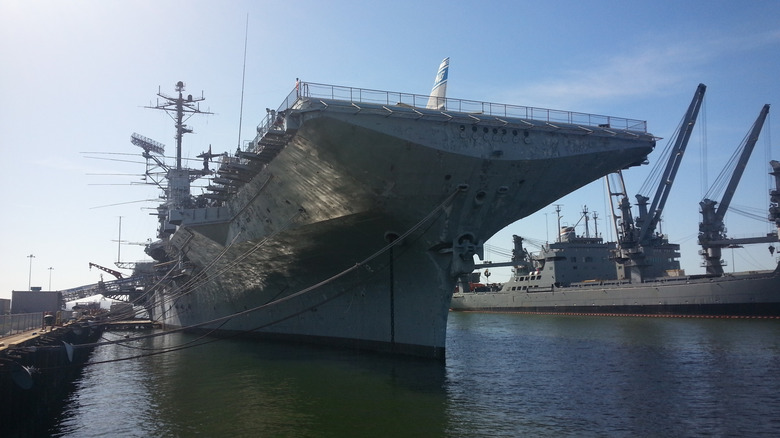
Regardless of whether the ship chooses to leave or stay, it still needs money, estimated at around $250,000, to simply clear the city’s immediate safety checklist. That’s mostly for adding another gangway to support bigger crowds. But that’s only part of the expenses. Overall upkeep on this ship actually climbs into the millions, which is the kind of bill that lands on any old Navy ship getting a major facelift. In fact, the foundation closed the fiscal year ending 2024 roughly $865,000 in the hole – although things have thankfully picked up since, with 2025 revenue climbing past $3 million. Those big events matter more than you’d guess, too, because they now bring in close to a third of what the museum earns.
However, moving comes at substantial price as well. San Francisco’s port makes any incoming historic ship cover costs including a feasibility study, moving costs, berthing facilities and more. After that comes the actual trip, which needs tugboats and a Coast Guard sign-off. All of this will cost money, but it will also attract many more visitors. Currently, the Hornet pulls close to 100,000 visitors a year, and that figure is set to dramatically increase should the ship find a new spot in the city. The foundation plans to start raising money this summer to study whether the math really adds up.

Comments are closed.