
Vande Mataram Debate In Lok Sabha: PM Modi Says, ‘When Vande Mataram Turned 100, India Was In The Clutches Of Emergency’; Key Points

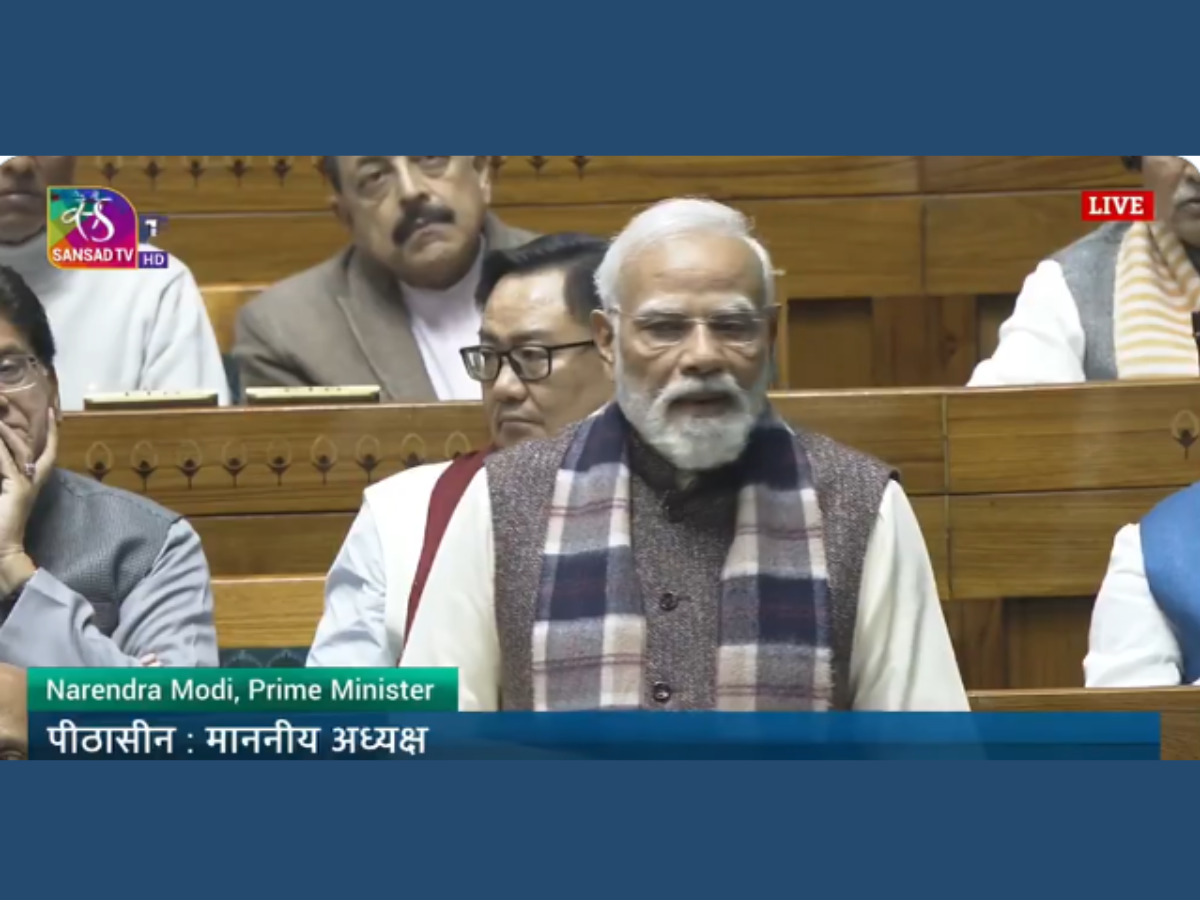
Prime Minister Narendra Modi inaugurated a 10-hour debate in the Lok Sabha on Monday to commemorate the 150th anniversary of the national song Vande Mataram. The discussion aimed to explore both well-known and lesser-known aspects of its history, followed by a one-day special session in the Rajya Sabha on Tuesday, chaired by the Home Minister.
1. 150 Years of Vande Mataram
PM Narendra Modi addressed the Lok Sabha, celebrating 150 years of Vande Mataram. He said, “We recently celebrated 75 years of our Constitution as a glorious festival. Today, on the completion of 150 years of ‘Vande Mataram’, we are trying to feel and experience the collective energy of this House.” Modi highlighted that the song’s 150-year journey passed through many historical phases, including British colonial rule and the Emergency. He said, “When the song completed 100 years, India was in the clutches of Emergency. Patriots were imprisoned. It inspired freedom and unity during dark times.”
2. Restoring Pride and Legacy
PM Modi emphasized that this milestone is an opportunity to reinstate national pride. He said, “The 150-year milestone is an opportunity to restore that honour, and I believe neither this House nor the nation should let this moment pass. This is the same ‘Vande Mataram’ that inspired the country to attain independence in 1947.” Modi called on the nation to collectively acknowledge the song’s historical significance and ensure its legacy inspires current and future generations.
3. No Political Divide, Only Unity
Modi highlighted that Vande Mataram transcends politics. He said, “There is no leadership and opposition here. We are here to appreciate and accept the debt of Vande Mataram collectively. It united the nation from North to South and from East to West.” Modi urged citizens to use this occasion to unite and move forward together. He emphasized that the song should energize the country to fulfill the dreams of freedom fighters and make India self-reliant and developed by 2047.
4. Origin of Vande Mataram
PM Modi traced the origins of the song to Bankim Chandra Chatterjee in 1875. He said, “Vande Mataram was composed at a time when the British were oppressing India, and their national anthem, God Save the Queendominated. Bankim Chandra challenged this and gave birth to Vande Mataram.” Modi emphasized that the song became the anthem of resistance and a source of courage for millions during colonial rule.
5. Beyond Political Freedom
Modi explained that Vande Mataram represented more than political freedom. He said, “It was not just about the British leaving; it was about liberating our motherland. Ved kaal se kaha gaya hai, ‘Mata Bhumi, Putro Aham’ – this land is my mother, and I am the son of the earth.” The song combined spiritual, cultural, and patriotic values, inspiring Indians to fight for their homeland.
#WATCH | PM Narendra Modi says, “There is no leadership and opposition here. We are here to appreciate and accept the debt of Vande Mataram collectively. It is because of this song that we are all here together. It is a sacred occasion for all of us to acknowledge the debt of… pic.twitter.com/B4KvoXd5Wn
— ANI (@ANI) December 8, 2025
6. Cultural Symbolism
Modi highlighted that Vande Mataram became the modern avatar of India’s cultural heritage. He said, “When Bankim Chandra created Vande Mataramit naturally became the voice of the freedom movement and the resolve of every Indian. It reflected India’s cultural pride and inspired the independence struggle.”
7. Inspiring India’s Vision
Modi explained the song’s broader significance: “Vande Mataram carried the vision for a free and strong India. During British rule, India was portrayed as weak and dependent. This song revealed the true power of India and inspired courage, resistance, and pride.” He cited the line ‘Amalam Ulama Sujalam Safalam Mataram’ as an expression of India’s potential and resilience.
8. Bengal and Partition
Modi recalled British plans to use Bengal as a laboratory for divide-and-rule. He said, “Until India is divided, ruling here is difficult. The British wanted Bengal’s strength to be fragmented, believing once Bengal fell, the country would follow.” Vande Mataram symbolized unity and resistance against these colonial strategies.
#WATCH | PM Narendra Modi says, “There is no leadership and opposition here. We are here to appreciate and accept the debt of Vande Mataram collectively. It is because of this song that we are all here together. It is a sacred occasion for all of us to acknowledge the debt of… pic.twitter.com/B4KvoXd5Wn
— ANI (@ANI) December 8, 2025
9. 1905 Anti-Partition Movement
Modi highlighted Bengal’s resistance during the 1905 partition. He said, “Vande Mataram stood like a rock. It became a slogan for Bengal’s unity, echoing in every street. The song mobilized citizens to protect national integrity and inspired collective action against British policies.”
10. Struggles in Barisal and Sacrifices
Modi highlighted the hardships faced in Barisal, saying, “Women and children protested against the ban on Vande Mataram. Sarojini Bose said, ‘The ban on Vande Mataram is unjust. I will remove my gold bangles in protest.’” Children faced punishments, and the song echoed through Bengal’s streets, symbolizing courage.
11. Courage of Children
He added, “Even children were fearless. The song ‘Jaye jabe, jibono chole, jogote maje, toma kaje, Vande Mataram bole’ gave them strength. Their voices became the voice of the nation.” Modi emphasized that their bravery inspired wider participation in the independence movement.
12. Repression in Haripur
Modi noted, “In 1905, children in Haripur who chanted Vande Mataram were beaten by the British. Their only ‘crime’ was singing this song. Yet they stood firm, demonstrating the power and influence of the national anthem even among the young.”
13. Martyrs Inspired by Vande Mataram
Modi honored the martyrs, saying, “Khudiram Bose, Madan Lal Dhingra, Ram Pratap Bismal, Asfak Ulla Khan, and others recited Vande Mataram even as they faced execution. Their courage transformed the song into the enduring voice of India’s freedom struggle.”
14. The national poet Subramania Bharati translated Vande Mataram into Tamil and composed devotional songs, in which his deep reverence for Vande Mataram is clearly visible.
15. Mahatama Gandhi On Vnade Mataram
Today, in this House, I want to share Mahatma Gandhi’s feelings about Vande Mataram. Gandhi, in his weekly publication Indian Opinion from South Africa, wrote on December 2, 1905: “The song Vande Mataramcomposed by Bankim Chandra, has become extremely popular throughout Bengal. During the Swadeshi movement, large gatherings in Bengal sang this song.” Gandhi further wrote, “This song has become so popular that it has become like our national anthem. Its sentiments are profound, and it holds greater significance than the songs of other nations. Its purpose is to awaken patriotism in us. It sees India as a mother and praises her.”
Vande Mataram was so powerful that in 1905 Gandhi regarded it as a national anthem. Yet, why did such great injustice occur with the song in the last century? Why did trust in Vande Mataram falter? What was the force so strong that even the revered Bapu’s own sentiments were overshadowed by it?
16. Congress bowed down before the Muslim League
In Lucknow, on 15 October 1937, a strong protest was raised against Vande Mataram. After this, the then Congress President Jawaharlal Nehru reportedly felt political pressure. Instead of firmly countering the Muslim League’s unfounded objections or condemning its statements, and instead of expressing his own and the Congress Party’s commitment to Vande Mataramevents took an unexpected turn. Nehru began reviewing the song itself.
Just five days after Muhammad Ali Jinnah’s opposition, on 20 October, Nehru wrote a letter to Subhas Chandra Bose. In that letter, Nehru aligned himself with Jinnah’s concerns and said that the Anandamath background of Vande Mataram might “irritate” Muslims. “I have read the background of the song Vande Mataram, and I feel it may provoke resentment among Muslims,” he wrote.
Soon after, the Congress announced that from 26 October, a meeting would be held in Kolkata to review Vande Mataram. The choice of Kolkata—Bankim Chandra Chattopadhyay’s own land and the birthplace of the song—surprised many across the country.
On 26 October, the Congress took a conciliatory stand. The party decided to shorten Vande Matarameffectively segmenting a song that had once united the nation. History stands witness that the Congress bowed down before the Muslim League.
Must Read: What Does It Take To Become A Chief Minister? ‘Just Rs 500-Crore Suitcase,’ Says Navjot Singh Sidhu’s Wife, Sparks Debate
Swastika Sruti is a Senior Sub Editor at NewsX Digital with 5 years of experience shaping stories that matter. She loves tracking politics- national and global trends, and never misses a chance to dig deeper into policies and developments. Passionate about what’s happening around us, she brings sharp insight and clarity to every piece she works on. When not curating news, she’s busy exploring what’s next in the world of public interest. You can reach her at [swastika.newsx@gmail.com]
The post Vande Mataram Debate In Lok Sabha: PM Modi Says, ‘When Vande Mataram Turned 100, India Was In The Clutches Of Emergency’; Key Points appeared first on NewsX.

Comments are closed.