
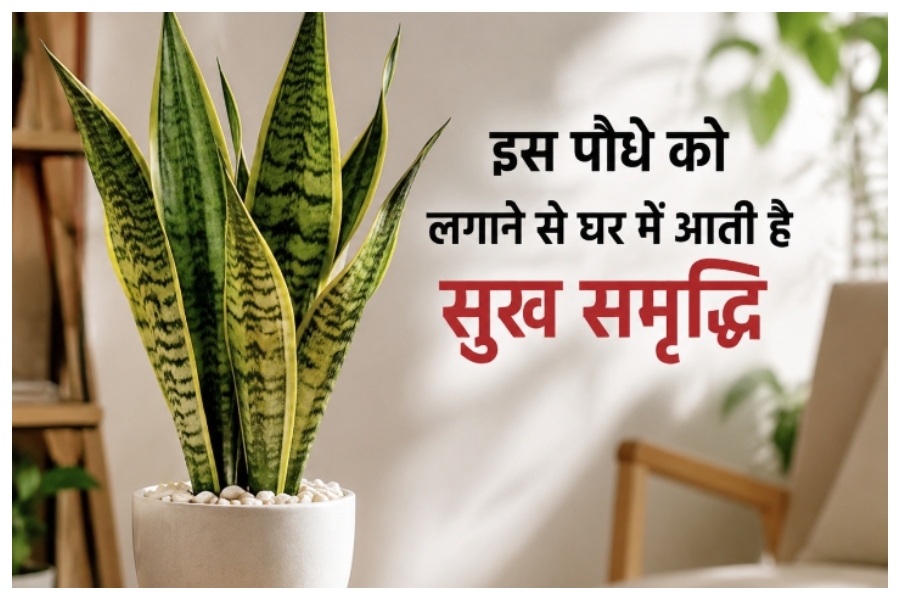
Vastu Tips: Planting this plant increases happiness and prosperity, there is no shortage of money in the house.

Vastu Tips: Nowadays, indoor plants are not limited to just enhancing the beauty of the house, but many people also plant them in their homes due to the beliefs related to Vastu and Feng Shui. Among these plants, the name of snake plant is also taken prominently. In Vastu Shastra, it is considered a symbol of positive energy. It is believed that this plant, placed in the right direction, is considered helpful in keeping the environment of the house balanced and creating an atmosphere of happiness and prosperity. However, all these things are based on religious and traditional beliefs.
Why is snake plant considered special in Vastu?
According to Vastu Shastra, snake plant is considered to be an indoor plant which is a symbol of maintaining positivity in the home environment. Many people plant it in the house for auspiciousness, peace and prosperity. It is believed that this plant helps in keeping the environment of the house balanced and promotes positive thinking.
It is advised to keep it in this direction (Vastu Tips)
According to Vastu beliefs, it is considered auspicious to keep the snake plant in the south-east, east or south direction. These directions are seen to be linked to the balance of energy. It is advisable to keep the plant in a place where it gets adequate light and air, so that it remains healthy for a long time.
This plant is planted not only in homes but also in offices.
Many people also keep snake plants at their workplace. It is believed that this makes the workplace environment feel better and helps in keeping the mind focused. For this reason, this plant has become a popular part of home as well as office decoration.
Stays green for a long time with less care
The biggest feature of snake plant is that it does not require much care. It can grow well even in less water and normal light. This is the reason that even people planting trees for the first time can easily plant it in their homes.

Comments are closed.