
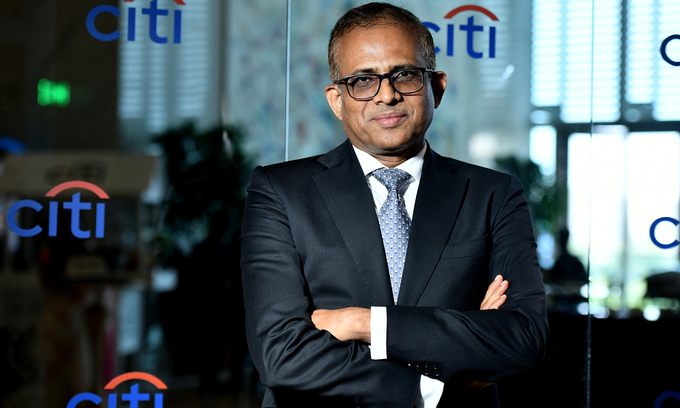

Kaustubh Kulkarni, Citi’s Head of Investment Banking, Japan, Asia North & Australia, and Asia South. Photo courtesy of Citi |
How would you describe the current investment banking landscape in Asia?
We are seeing strong activity across mergers and acquisitions (M&A), equity capital markets and debt capital markets. This week alone, for example, we have helped clients across the region raise more than US$3 billion from global capital markets.
The momentum that emerged in 2025 has continued into this year. Activity is broad-based, although M&A remains particularly robust. We are seeing transactions across sectors including consumer, healthcare, technology, media and telecommunications, as well as significant activity involving private equity sponsors on both the investment and exit sides.
One of our strengths is the ability to connect local companies with global pools of capital and international investors with opportunities across Asia.
Many transactions today are increasingly cross-border and multi-product in nature. Clients may require M&A advice alongside equity financing, debt financing, hedging, foreign exchange and transaction banking solutions. In that environment, a global platform becomes increasingly valuable.
Where does Vietnam stand in Asia’s investment banking landscape?
Vietnam is becoming a more significant market in the regional investment banking landscape.
For many years, discussions about Vietnam largely centered on its role as a manufacturing hub and foreign direct investment destination. That narrative remains important, but it is now expanding into a broader financial and capital markets story.
There are several reasons for this. Vietnam continues to post strong economic growth, while its domestic economy is becoming increasingly attractive. At the same time, the financial system is entering a new phase of development. Banks and large corporations will require additional capital over time, while strategic investors continue to seek long-term exposure to the market.
Capital markets are also expected to play a larger role. As Vietnam moves closer to emerging-market status and continues to improve market infrastructure, it is likely to attract greater interest from international institutional investors.
As a result, Vietnam is evolving from being primarily an FDI story into a broader investment banking story. We see considerable opportunities arising from that transformation.
What has Citi done in Vietnam, and what is the bank’s strategy in the country?
Vietnam is an important market because it sits at the intersection of several major themes, including trade, supply-chain diversification, foreign direct investment and capital markets development.
In recent years, the bank has advised on several notable transactions in Vietnam. These included acting as exclusive financial adviser on a major insurance-sector M&A deal and serving as adviser on the equity sale of one of the country’s largest banks.
It also advised on the sale of a 100% stake in FV Group, one of Vietnam’s leading private healthcare providers, to an international healthcare company.
The transaction was the largest healthcare deal completed in Vietnam and demonstrated the firm’s ability to execute complex cross-border mandates, from preparation and due diligence to auction management, structuring and execution.
In addition, the bank is working on a number of capital-raising and M&A transactions involving major commercial banks and large domestic corporations. The current pipeline in Vietnam is among the strongest we have seen.
These transactions reflect the ongoing evolution of Vietnam’s financial sector. The strategy in Vietnam remains focused on supporting multinational corporations, financial institutions and leading Vietnamese companies by connecting them with global capital and international expertise.
Rather than viewing investment banking as a standalone business, the approach combines investment banking, corporate banking, markets, treasury and trade solutions, capital markets and advisory services.
This model is particularly relevant in Vietnam, where clients often require integrated support. The country’s growth is closely linked to cross-border trade, investment and capital flows, making a global network an important advantage.
You have spent many years working with India-related businesses. How do you compare Vietnam’s strategic position with India’s?
India and Vietnam are both important markets, although they offer different opportunities.
India is fundamentally a scale story. Its investment banking market already has significant depth across IPOs, private equity, M&A, structured finance and debt capital markets.
Vietnam’s position is different, but equally compelling.
From our perspective, both countries represent distinct dimensions of Asia’s growth story. Together, they illustrate why Asia remains one of the most important destinations for global capital.
Comments are closed.