

The area, which covers parts of Long Thanh Ward and the communes of Phuoc Thai and Long Phuoc, just southeast of HCMC, is currently home to about 61,000 mostly rural residents. Under the planning vision, the population is projected to grow roughly seven-fold by 2045, turning what is now agricultural land and small settlements into a major regional commercial center.
A consulting firm will be selected to draft the full plan over roughly nine months, after which it will go through formal appraisal and approval before construction can begin.
The site is bounded by two of Vietnam’s busiest expressways – the Ho Chi Minh City-Long Thanh-Dau Giay Expressway running along its northern edge and the Ben Luc-Long Thanh Expressway forming its southern boundary. Long Thanh airport sits directly to the east, and the area is designed as a major node on the planned Thu Thiem-Long Thanh light rail, a 41.8-kilometer line that will run from the airport directly to Ho Chi Minh City’s Thu Thiem commercial district. Construction on the railway is scheduled to begin before June 30.
According to Dong Nai City authorities, the urban hub will be built around airport-driven services including air logistics, distribution centers, free trade zones, financial and banking services, hotels, conferences and smart-city infrastructure. The plan follows a transport-oriented development model, with high-density mixed-use neighborhoods clustered around transit nodes to ease pressure on private vehicle traffic.
The site sits within a much larger 43,000-hectare metropolitan region that Dong Nai is planning around the airport. A separate 7,500-hectare free trade zone is also under development nearby, which Dong Nai officials estimate could eventually contribute 8% to 10.5% of the city’s gross regional domestic product.
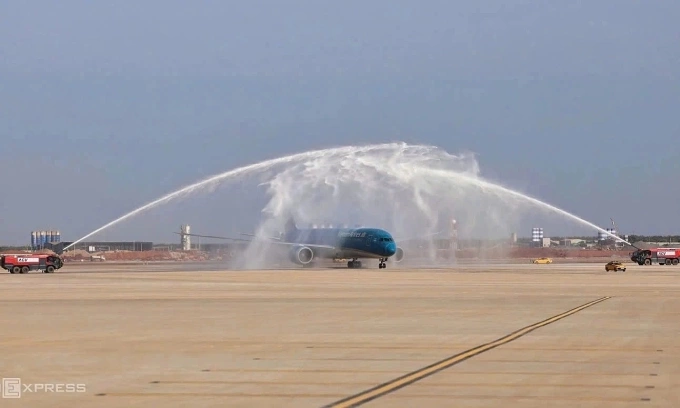
Long Thanh International Airport covers 5,000 hectares in Long Thanh Ward and is being built to ICAO’s 4F standard, the highest aerodrome classification used globally. With total investment at VND337 trillion (US$12.8 billion), it is the largest aviation infrastructure project in Vietnamese history. When all phases are complete, the airport is projected to handle around 100 million passengers and 5 million metric tons of cargo annually, putting it in the same capacity bracket as Singapore’s Changi Airport.
Phase 1, designed for 25 million passengers a year, is targeted for completion in 2026.
Comments are closed.