
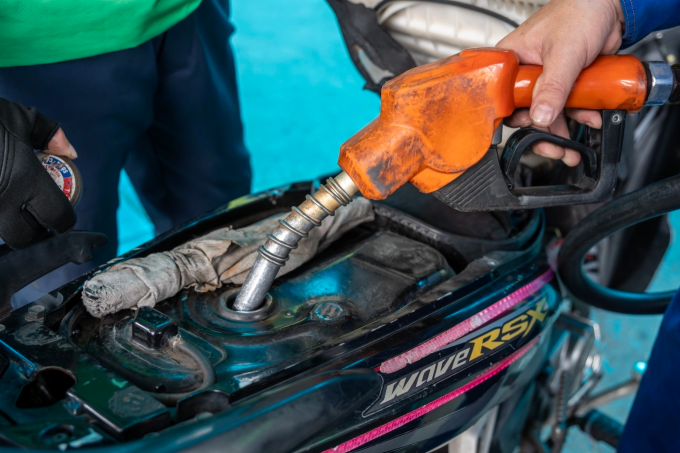

An employee refills a motorbike at a fuel station in Hanoi in March 2026. Photo by VnExpress/Giang Huy
The Vietnamese government needs to overcome challenges to fuel supply and ensure reasonable prices to achieve the 10% GDP growth target this year, Singapore’s United Overseas Bank has said.
The Iran conflict has been affecting energy critically and reducing the availability of supply, Suan Teck Kin, head of research at UOB’s Global Economics and Markets Research, told VnExpress International. “This would mean businesses are facing higher costs of energy and non-energy inputs.”
Energy availability and reasonable retail prices are now among the top concerns for businesses and consumers, and Vietnam needs to ensure “economic growth is not affected significantly while keeping inflation rates in check,” he said.
The popular fuel RON95 has risen by more than 24% since the beginning of this year, as the U.S. and Israel’s attacks on Iran and the latter’s retaliation squeezed the output of major oil producing countries.
The fuel import bill jumped by 78% in the first three months to over US$2.9 billion, according to Vietnam Customs, as global prices skyrocketed.
The government has intervened to stabilize the market: It has increased the nation’s fuel reserves from 15 days to 26, and activated fuel subsidies and tax waivers to offset the price surge.
In the long run the government aims to establish a reserve of at least 90 days’ worth of net imports by 2030.
Short-term supply is guaranteed since the country’s two refineries, at Dung Quat and Nghi Son, have sufficient crude stocks to maintain production through the end of April, Minister of Industry and Trade Le Manh Hung said last week. Their supply would fully meet April demand, he assured.
UOB’s Suan said the government’s plans to build oil storage facilities in central Vietnam should help improve the energy sector.
But developing infrastructure in terms of transportation, power generation and healthcare would drive demand up further, he pointed out.

Comments are closed.