

The projected growth is also among the highest in developing Asia and the Pacific, reflecting the continued resilience of the country’s manufacturing sector, sustained export and investment performance, and stable domestic demand, ADB said in its Asian Development Outlook July 2026 released on Wednesday.
Vietnam’s inflation is predicted to rise from 3.3% in 2025 to 4% this year before easing to 3.8% in 2027.
The country stands out as one of the brightest performers in the report, even as the bank cut its growth forecast for Asia and the Pacific to 4.9% this year, 0.2 percentage points lower than its April projection and down from 5.5% in 2025.
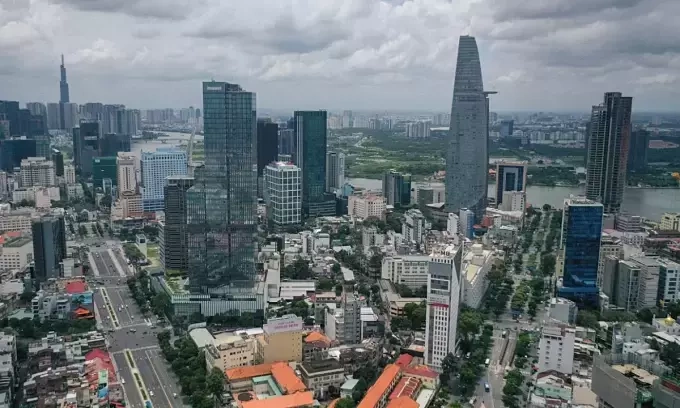
Downtown Ho Chi Minh City, Vietnam. Photo by Read/Quynh Tran |
The report said prolonged disruptions in global energy markets caused by the conflict in the Middle East have exerted greater-than-expected pressure on the region’s economic outlook. The bank maintained the region’s 2027 growth forecast at 5.1%, anticipating that economic activity will regain momentum as these pressures gradually subside.
The outlook expects uncertainties in global energy markets to ease only gradually despite the temporary agreement reached between the U.S. and Iran in June. The July update was released before the latest escalation in tensions between the two countries.
With rising energy costs spilling over into fertilizers, commodity prices and global supply chains, inflationary pressures across the region are expected to remain elevated.
ADB now forecasts regional inflation at 4.3% in 2026, 0.7 percentage points higher than its April projection and up 3% in 2025. The inflation forecast for 2027 remains unchanged at 3.4%.
ADB Chief Economist Albert Park said that while Asia and the Pacific continues to demonstrate resilient economic growth, the persistent challenges arising from the Middle East conflict require policymakers to carefully balance measures to sustain growth with efforts to contain inflation.
The report also warned that renewed geopolitical tensions and prolonged instability remain among the key risks to the region’s economic outlook. Such developments could further tighten global energy markets, intensify inflationary pressures and increase external vulnerabilities.
Comments are closed.