
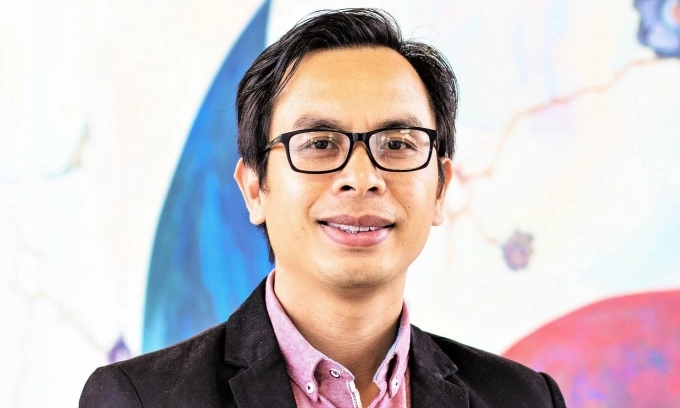
Vietnamese professor in Canada lands million-dollar grant to extend life of North America’s largest power grid

The funding, announced by UQTR in late February, comes from Canada’s Natural Sciences and Engineering Research Council (NSERC), the research organization Mitacs, and industrial partners Hydro-Quebec, PLP Canada, and Soucy Baron Inc.
The project targets a critical piece of North American energy infrastructure. Hydro-Quebec TransEnergie, the utility’s transmission division, operates more than 11,400 km of ultra-high-voltage 735 kV lines, the largest such network on the continent. These lines, some dating back decades, carry hydroelectric power from remote dams in northern Quebec to population centers more than 1,000 km away.
Phuong said on March 6 that the dampers and clamp seals used along the network have been supplied by U.S. manufacturers for over 20 years and are showing signs of deterioration. His team’s goal is to develop Canadian-made elastomeric replacements that last longer and perform better under Quebec’s extreme weather conditions.
In the laboratory, Phuong’s team has used accelerated aging techniques combined with mathematical modeling to evaluate how current materials degrade over time. Early results have been promising enough to attract the multi-partner funding package, he said.
Between now and 2030, the team will finalize advanced elastomeric compounds specifically engineered for the dampers and clamp seals in high-voltage transmission drive systems. If successful, the materials could reduce annual maintenance costs by millions of dollars while strengthening Canada’s ability to produce its own critical energy components.
“This research will help address vulnerabilities in the current transmission system, helping Canada become more self-sufficient in designing sustainable energy systems,” Phuong said.
UQTR rector Christian Blanchette said in the university’s announcement that Phuong’s work demonstrates the institution’s capacity to deliver advanced solutions for Canadian industry. Sebastien Charles, vice-rector for research and development, called Phuong one of UQTR’s most outstanding researchers, crediting his ability to build a team that is helping position the university internationally.
Phuong, born in 1977 in Hanoi, earned his bachelor’s degree from the University of Science under Vietnam National University, Hanoi, in 1999 before winning a government scholarship to study in France. He obtained a master’s degree from the Ecole Nationale Superieure de Chimie de Mulhouse and a PhD in materials science from the Conservatoire National des Arts et Metiers (CNAM) in Paris in 2009.
After teaching at CNAM for two years, he moved to Canada, working as a researcher at the Ecole de Technologie Superieure and later at the Universite de Montreal before joining UQTR as a professor. He founded the university’s Laboratory of Advanced Materials for Energy and Environment in 2019.
Phuong has published more than 120 high-impact scientific articles and edited 10 reference books, according to the university. He ranks among the world’s most cited researchers for 2022, 2023, and 2024, based on an independent analysis by Stanford University.

Comments are closed.