
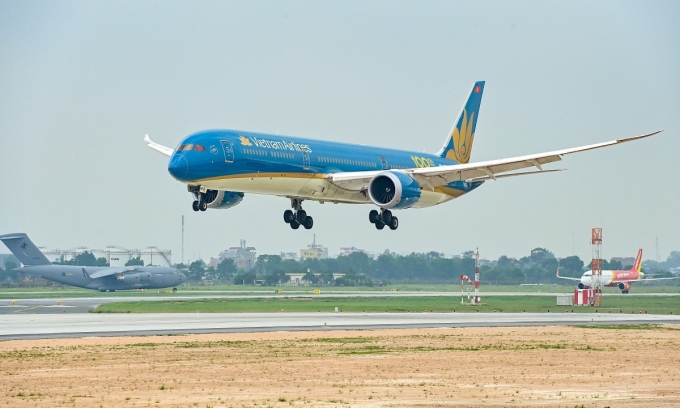
Vietnam’s aviation hits record 83.5 million passengers in 2025 as international travel surges

International travel was the main growth driver. Airlines transported 46.6 million international passengers, up 12% year on year, while air cargo volumes surged 22% to around 1.3 million tons.
The strong performance was supported by the continued expansion of international routes. Vietnamese carriers now operate 113 international routes linking the country with major aviation hubs across Northeast Asia, Southeast Asia, South Asia, Europe and Oceania. Authorities have also stepped up negotiations and agreements with foreign aviation regulators, creating more favorable conditions for international operations to and from Vietnam.
Foreign airlines expanding services to Vietnam further boosted international traffic, while closer coordination between aviation and tourism helped push international arrivals past 20 million in 2025. More flexible visa policies and local tourism promotion programs added momentum to travel demand.
On the domestic front, airlines faced headwinds from global engine recalls that temporarily grounded part of the fleet. Even so, carriers improved efficiency by increasing aircraft utilization, shortening turnaround times, optimizing flight schedules and prioritizing high-demand routes.
Domestic passenger traffic reached 36.9 million in 2025, up 8.4%, while cargo volume held steady at 226,800 tons. Vietnam currently maintains about 55 domestic routes, connecting Hanoi and Ho Chi Minh City with 20 airports nationwide.
Regulatory flexibility also played a role. Aviation authorities coordinated flight approvals and supported airlines in leasing or adding aircraft during peak travel periods, helping stabilize operations throughout the year.
A notable development was the market entry of Sun PhuQuoc Airways, as demand for travel and tourism rebounded. The new airline is expected to intensify competition, diversify services, and offer passengers more options.
Despite the strong recovery, the sector continued to face challenges. Flight delays increased during peak periods, driven by prolonged adverse weather, congestion at major airports, and the temporary grounding of about 10% of the fleet due to engine recalls.
Airlines also remained under pressure from high operating costs, rising interest expenses and limited financial resources, complicating restructuring efforts. External risks, including geopolitical tensions and dependence on global supply chains, added further uncertainty.
Looking ahead, Vietnam’s aviation industry is targeting double-digit growth in 2026. Forecasts suggest total traffic could reach about 95 million passengers and more than 1.6 million tons of cargo, up 13.6% and 9.3% respectively from 2025.
The outlook is supported by stable macroeconomic conditions, ambitious GDP growth targets and expectations that demand for travel and tourism will continue to rise. Amendments to the Civil Aviation Law and new visa policies are also expected to improve the regulatory environment.
Upcoming airport infrastructure, including the opening of Long Thanh International Airport in mid-2026, is expected to ease congestion at Tan Son Nhat Airport and gradually address capacity bottlenecks in southern Vietnam.
Authorities say priorities in the coming period include accelerating infrastructure investment, supporting airlines in expanding fleets, diversifying leasing and purchasing options, and strengthening domestic aircraft maintenance capabilities. Vietnam also plans to continue negotiating new and revised air service agreements to expand international markets.

Comments are closed.