
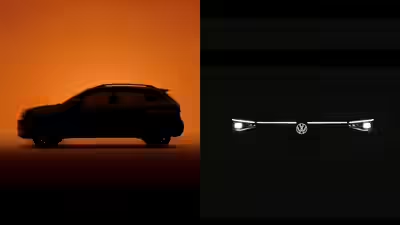

The SUV will feature a sleeker grille flanked by new LED headlamps and LED DRLs, connected by a thin LED strip. An illuminated Volkswagen logo has also been added at the front, while the bumper has been revised for a cleaner look. The side profile remains largely unchanged from the current model. However, the facelift may introduce a new design for the alloy wheels. Elements such as conventional door handles, body-coloured ORVMs, blacked-out B-pillars, roof rails and a shark-fin antenna are expected to continue unchanged.At the rear, the Taigun facelift gets updated taillamps, although the overall housing of the connected lighting setup appears similar to the current model. The test vehicle seen carries camouflage between the taillamps, possibly concealing a thicker full-width LED strip. It may also be hiding an illuminated red Volkswagen badge positioned between the tail-lamps. The rear bumper has also been revised with a simpler design. Chrome detailing has been reduced, while the silver skid plate now has a smoother finish. The bumper reflectors have been repositioned vertically, replacing the horizontal layout used on the current model.Moving to the cabin, the overall layout is expected to remain largely unchanged, with a few minor revisions and feature additions.
These could include a panoramic sunroof, rear-seat massage function, a fully digital instrument cluster, and AI-based integration for the infotainment system. Other expected features include wireless Apple Car Play/Android Auto, wireless charger, a six-speaker sound system with subwoofer and amplifier, automatic climate control, leatherette seats, electrically adjustable front seats with ventilation and more. Expected safety features include six airbags, ABS, EBD, traction control, cruise control, front and rear parking sensors, reverse camera, all-wheel disc brakes, rain sensing wiper, defogger, auto IRVM and more.As part of the update, just like Skoda, Volkswagen is expected to introduce a new 8-speed torque converter automatic transmission for the 1.0-litre turbo-petrol engine, replacing the earlier 6-speed unit. The new gearbox is expected to improve fuel efficiency while also delivering smoother shifts and reducing fuel loss during acceleration and deceleration compared to the outgoing transmission. The 1.0-litre, 3-cylinder, turbo petrol produces 115 hp and 175 nm torque. Another engine is a 1.5-litre, 4-cylinder, turbo petrol with 150 hp and 250 nm. Gearbox options expected include only a 7-speed DSG for the 1.5.
Comments are closed.