
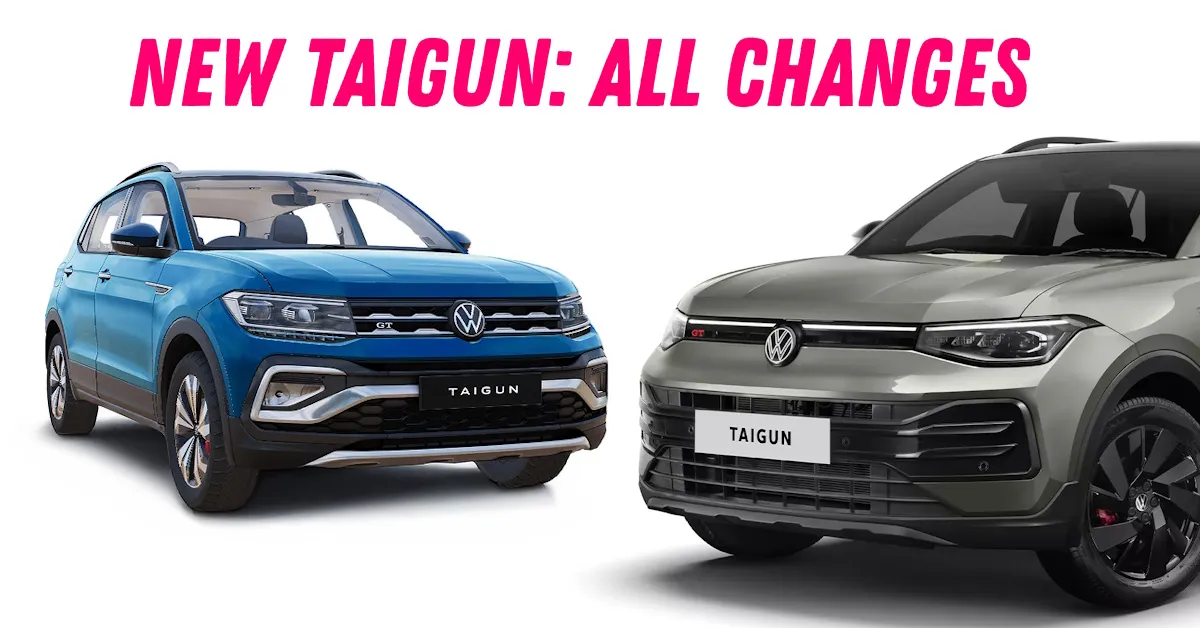

Volkswagen, today, unveiled the facelifted Taigun. It gets notable styling improvements, more features and a new eight-speed automatic transmission. While the manufacturer hasn’t revealed the prices yet, here’s a quick comparison between the facelift and the pre-facelift models, highlighting these changes.
The facelift comes with a thoroughly revised exterior design. It now tries its best to look like a mini-Tayron. The front fascia’s styling has evolved significantly. It now gets sleeker adaptive LED headlamps connected by LED strips. These run along the grille section and there’s even an illuminated Volkswagen logo at the centre. The pre-facelift had bigger headlamps that were not connected by LED light bars. The Volkswagen logo there, was a regular metallic unit.
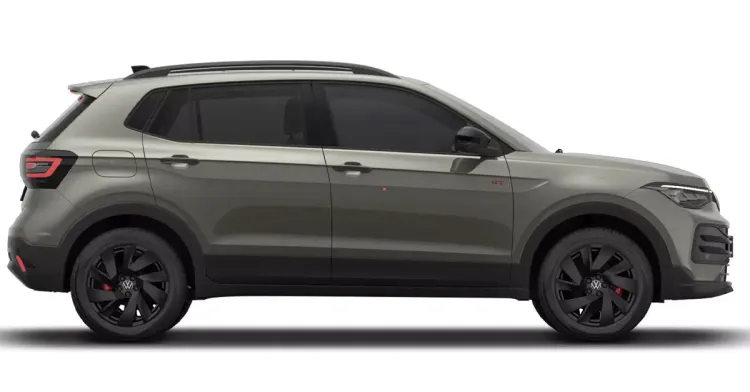
The grille section itself is slimmer on the new SUV. The front bumper now appears to have more visual bulk, but is styled nicely. It has wide horizontal slats and a large air dam, that gives the overall design good presence. Chrome elements can be seen on the bumper, which are Blacked out on the GT variants.
The silhouette remains almost the same as that of the pre-facelift model. The only change you could possibly spot here would be the new set of 17-inch wheels.
At the rear, two things have been restyled significantly- the tail lamp cluster and the rear bumper. The overall design of the connected tail lamp cluster has been retained. But the internals have been redesigned. Result? The lighting signature is noticeably different from that of the pre-facelift Taigun. There is an illuminated VW logo here as well. Design changes to the rear bumper are minor.
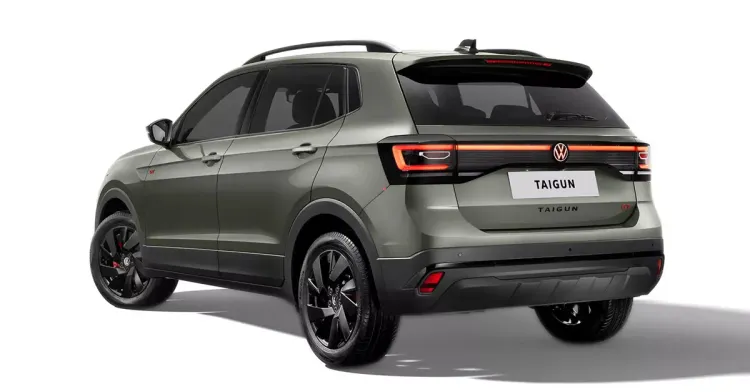
Another change is in the colour palette. The pre-facelift used to be offered in 8 colour options. Volkswagen rejigged that palette- removing some and adding two new colours. The new model comes in 9 different colours, including the two new shades- Steel Grey and Avocado Pearl.
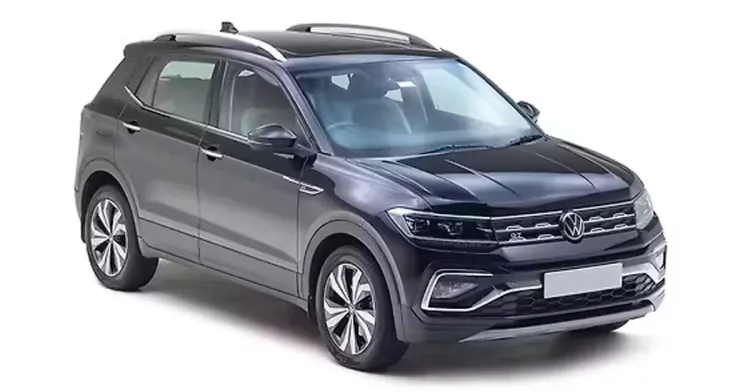
Image: Volkswagen Taigun pre-facelift model
There is no change in vehicle dimensions. The length, width and height remain the same as before- 4221mm, 1760mm and 1612mm. The wheelbase stands at 2651mm. Volkswagen claims that smart packaging has generated more room inside. The new SUV has a boot capacity of 385 litres- same as that of the pre-facelift.
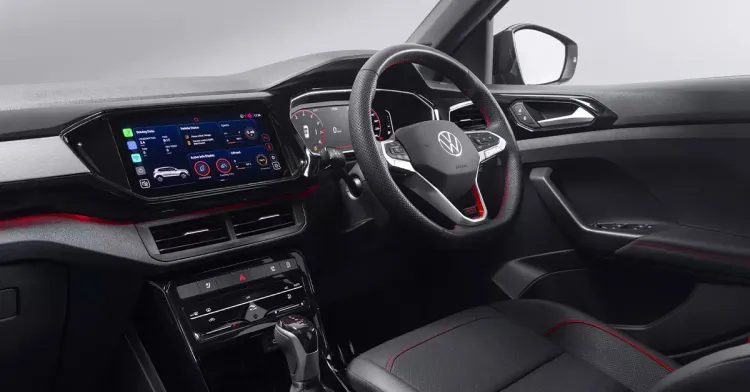
The facelift’s dashboard design isn’t a big departure from that of the previous model. Look carefully and you can see that certain trims are new and feel more upmarket. Volkswagen is offering six different upholstery options depending on variants that one chooses.
The infotainment unit on the new model is a 10.1-inch touchscreen – same size as that of the pre-facelift. However, the responsiveness and quality are claimed to have improved and it now has a new, more modern interface. It gives you more information than before and comes with wireless Apple Carplay and Android Auto. Voice commands are now powered by Google Automotive AI.
Another major change is the instrument cluster. The digital instrument cluster (virtual cockpit) on the new Taigun is a larger 10.25-inch unit. The previous car used to come with an 8-inch unit. Both the front seats are powered and ventilated- just like before.
There is still no 360-degree camera on offer. However, the facelift gets front parking sensors- something not seen on the previous model.
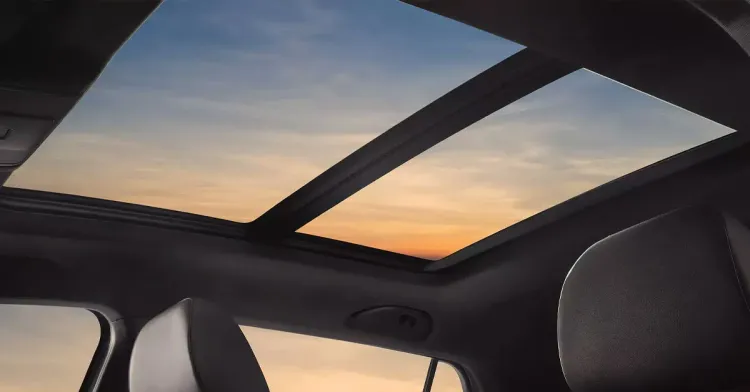
Closing the technology gap with rivals, the facelift also gets a panoramic sunroof. The previous Taigun used to come with a single-pane unit. Other features likes wireless charging, cruise control, automatic climate control and more have been retained.
Most important update- the facelift gets disc brakes on all wheels. The previous Taigun used to come with front discs and rear drums. The engine options remain the same as before- 1.0L TSI making 113 hp and 178Nm, and 1.5L TSI making 148hp and 250Nm.
The smaller engine comes with a six-speed manual and a new 8-speed torque converter automatic transmission. Previously, the automatic unit used to be a six-speed unit. The 1.0L engine’s fuel efficiency is also claimed to have improved significantly. The 1.5 TSI engine continues with a 7-speed DSG transmission.
Comments are closed.