
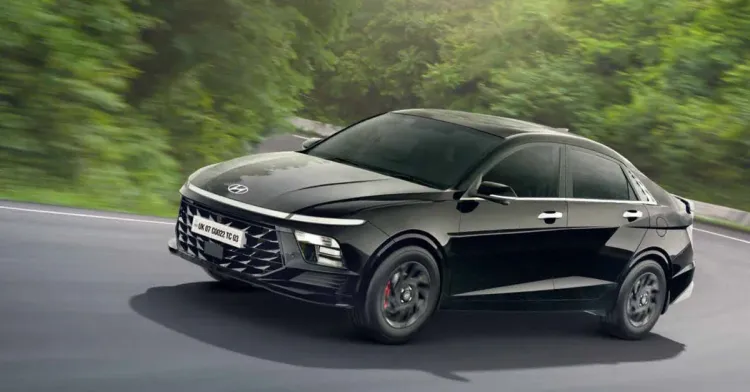

The mid-size sedan segment has shrunk significantly in recent years. It now has just a handful of value-packed products- the Volkswagen Virtus, Honda City, Skoda Slavia and the Hyundai Verna. The Verna recently got a facelift, improving the sedan’s overall proposition. Here’s a quick comparison between the top-end Volkswagen Virtus GT variant and the facelifted Hyundai Verna HX10 Turbo. Which of these is for the enthusiasts? Let’s see…
Virtus In High Demand
The Virtus remains a very popular choice and has been consistently outselling the Verna in recent months. In the calendar year 2025 (January – December), 11057 units of the Verna were sold in India. Volkswagen, on the other hand, posted sales of 22,844 units of the Virtus- more than double of Verna numbers during the same period.
Verna Is Bigger!
Let’s start with dimensions. The Virtus is 4,561 mm long, 1,752 mm wide and 1,507 mm tall. It has a wheelbase of 2,651 mm. The Verna is marginally larger. It measures 4,565 mm in length, 1,765 mm in width, and 1,475 mm in height. The wheelbase here is 2,670 mm. Talking of boot space, the Verna offers 528 litres while the Volkswagen has 521 litres.
Exterior Design
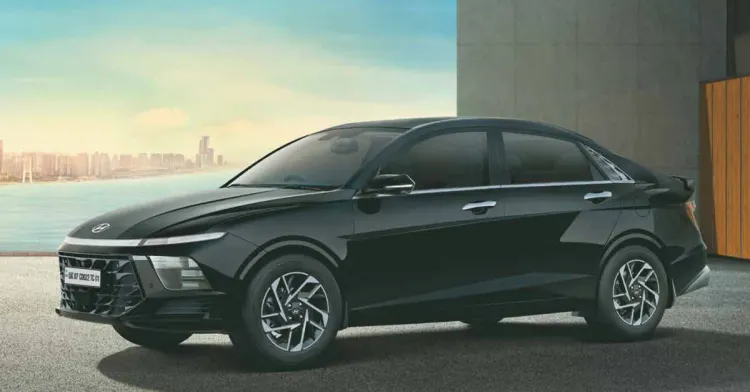
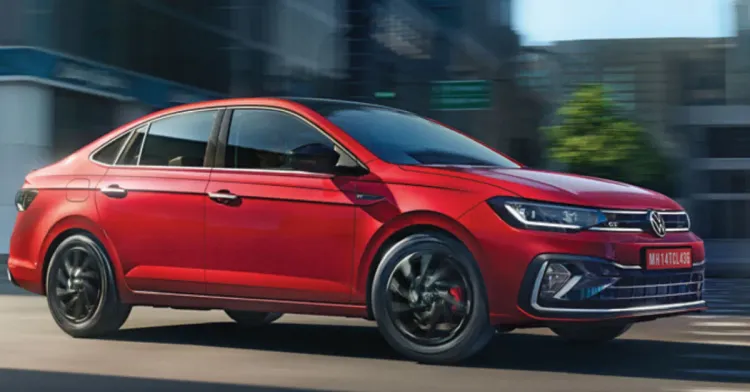
Styling is subjective. That said, both sedans look good. Both feature LED lighting, auto-folding ORVMs (Outside Rear View Mirrors) and ride on 16-inch wheels. The Verna, however, lacks front and rear fog lamps, which the Virtus has.
The facelift has improved the Verna’s overall styling. It now looks cleaner and a lot more upmarket. The front fascia now has a reworked grille design, tweaked headlamps, and halogen indicators. Despite its age, the Virtus continues to pack a lot of visual appeal.
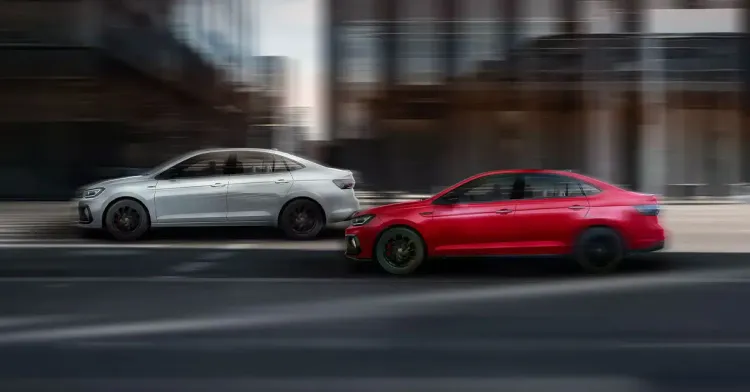
Another interesting detail is the rear spoiler. Both the Virtus and Verna come equipped with rear spoilers, bit have different approaches to their respective designs. The Verna gets a shouty spoiler design whereas the Virtus has a subtle boot-lip spoiler that looks better integrated into the overall design.
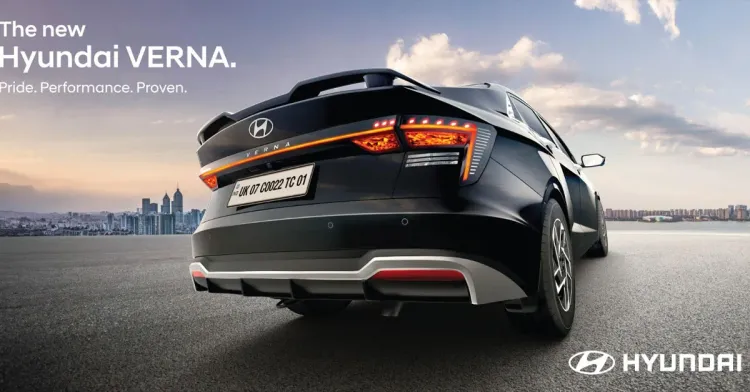
The colour palettes are also different. The new Verna comes in seven colours, including a dual-tone option. The Virtus GT is available in two distinct sub-trims- ‘Sport’ and ‘Chrome’, featuring distinct styling.
Verna Is More Tech-Heavy\
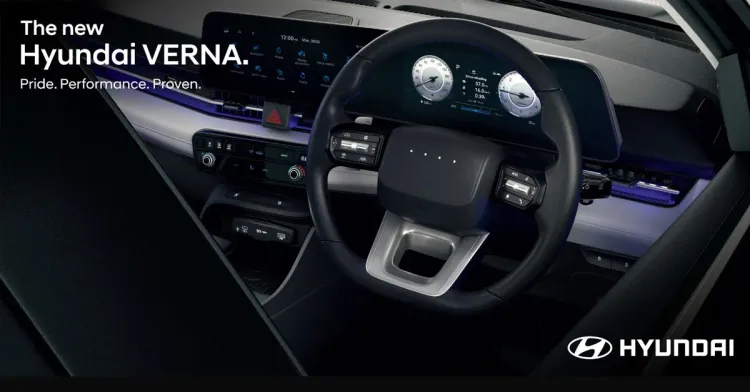
Clearly, the Verna HX10 has a more feature-rich cabin. The new Verna comes with two 10.25-inch screens- one functioning as the central touchscreen and the other as the digital instrument cluster.

It also gets powered and ventilated front seats, 70+ connected features, wireless Android Auto and Apple CarPlay, rear sunshades (absent on the Virtus), wireless charging bay, ambient lighting, a single-pane electric sunroof,360-degree camera and an 8 -speaker BOSE premium audio system. The Virtus too has an eight-speaker audio system, but not BOSE.
The driver seat on the new Verna gets an 8-way power adjustment and memory function. It even has a welcome retract feature. The front passenger seat gets four-way electric adjustment and an electric ‘Boss mode’. The Virtus offers six-way power adjustment for both front seats, but lacks the memory function or boss mode.

The Verna also has level 2 ADAS on offer, which is not available on the Virtus. The Virtus facelift, expected to arrive sometime this year, will likely get ADAS. The Verna also offers three selectable driving modes, which are absent on the Volkswagen.
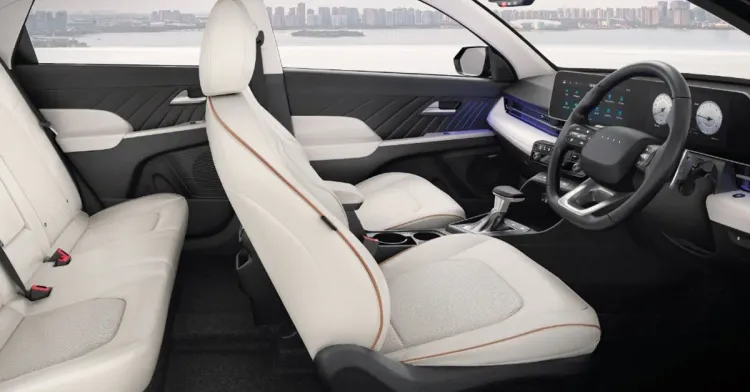
Let’s now talk about screen sizes. The Virtus has a 10-inch infotainment system and an 8-inch virtual cockpit. In comparison, the units on the new Verna are much larger. Finally, it is just the Virtus that has a 60:40 split rear seat.
Safety
Both the Verna and Virtus have solid safety reputations. Both vehicles come equipped with all essential safety equipment- airbags, ABS, electronic stability control, tyre pressure monitoring and an auto-dimming inside rear-view mirror. The Verna HX10, in fact, offers additional equipment like level 2 ADAS a, 360-degree camera, front parking sensors and a seventh airbag.
Engine And Transmissions: Verna Is More Powerful

The Virtus GT and the top-spec Verna HX10 are both petrol-only models. The new Verna’s HX10 trim offers two engine options- 1.5L naturally aspirated petrol and a 1.5L turbocharged petrol. These make 115PS and 143Nm, and 160PS and 253Nm respectively. The customer gets more options to choose from, with the latter being the enthusiast’s choice.
The Virtus GT is available with a 1.5 TSI turbocharged petrol engine alone. It comes with Active Cylinder Technology (ACT) and makes 150PS and 250Nm. Clearly the Verna is more powerful than the Virtus, at least on paper.
These engines are offered only with automatic transmissions- the naturally aspirated engine with an iVT transmission and the turbo-petrol with a DCT gearbox.
Virtus GT vs Verna Turbo: How Do They Drive?
The Verna is quicker with its acceleration. The Virtus launches faster up to around 40 kph, but then the Verna manages to overtake and keeps the acceleration steady till 100kph and even beyond. The additional power and torque reflects in real-world performance. The Verna’s DCT transmission, however, feels less mechanical and slightly softer in engagement than Volkswagen’s DSG. The Virtus’ transmission offers blazing-fast shifts and is good to cruise at high speeds.
Both sedans excel with their driving dynamics and handling. The Virtus GT feels planted on highways and during aggressive cornering. The Verna prioritises comfort and has a lighter steering and softer suspension, in comparison.
The Verna Turbo has an ARAI mileage of 18.6-20.6 km/l while the Virtus GT has an ARAI fuel efficiency of 19.6 km/l.
Verna Covers More Price Points

The Verna benefits from a more accessible price structure, partly due to the availability of a cheaper, naturally aspirated petrol engine. Even when comparing the turbo-petrol versions, the Verna HX10 remains around Rs 59,000 cheaper than the Virtus GT. The range-topping Virtus GT Plus 1.5 TSI automatic has an ex-showroom price of Rs 18.99 lakh while the Verna HX10 1.5 Turbo automatic costs Rs 18.40 lakh.
Verdict
Considering the broader feature list, safety equipment, and lower price, the Verna HX10 presents a stronger value proposition and emerges as a clear winner. The range-topping Virtus GT variant also remains a compelling choice for performance-seekers.

Comments are closed.