
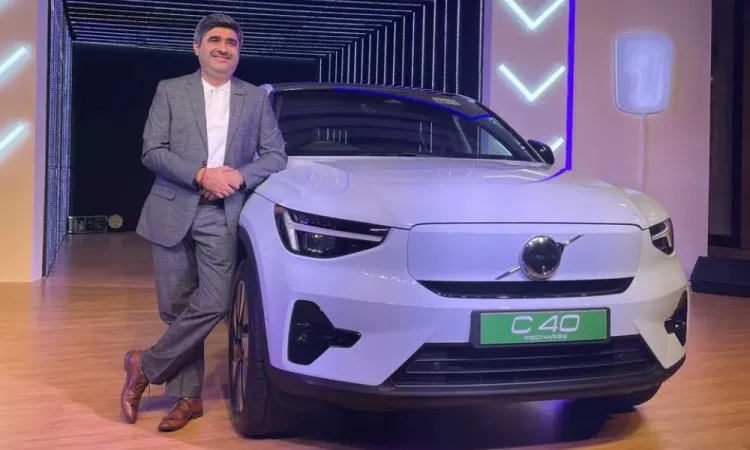

Volvo Car India has officially revised its long-term electrification strategy, stepping away from its previous global commitment to become a fully electric carmaker by the year 2030. The company is now adopting a more flexible, market-led approach that does not tie the brand to any strict, fixed timelines for phasing out internal combustion engines. While the ultimate ambition to transition entirely to electric vehicles remains intact, the pace at which this happens locally will now depend heavily on charging infrastructure readiness, actual consumer demand, and government policy support.
The decision to drop the hard 2030 deadline reflects the reality of the evolving luxury car market in the country. Jyoti Malhotra, managing director of Volvo Car India, clarified that the company will not put a specific date on full electrification. Instead, Volvo will maintain a dual product strategy, continuing to offer traditional internal combustion engine cars alongside mild hybrids and pure electric vehicles for the foreseeable future.
Electric Sales Trend Still Strong
Despite relaxing its long-term targets, Volvo continues to lead the electrification charge within the luxury segment locally. Electric vehicles currently make up an impressive 25 percent of the brand’s total domestic sales. To put this into perspective, the overall EV penetration across the broader luxury car segment hovers around just 10 to 11 percent. Volvo aims to push its own EV share even higher, targeting nearly one-third of its total sales volume in the near term.
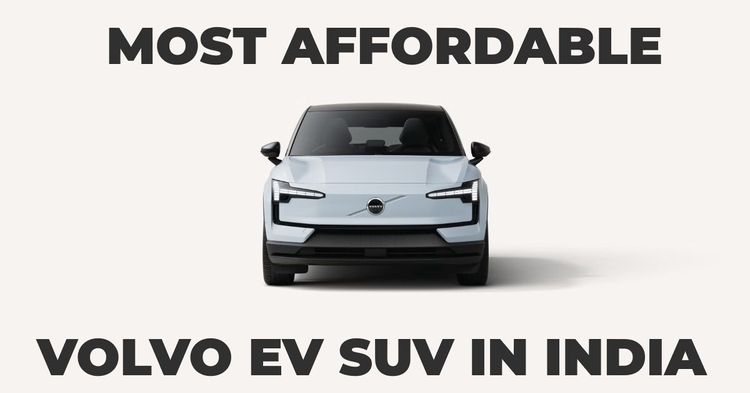
This growth will be supported by fresh product injections. Volvo is preparing to launch two brand new electric models in 2026. While the exact details of these upcoming vehicles are still under wraps, the company has confirmed that one will be an SUV and the other will enter the sedan category. These new additions will expand the current EV portfolio, which presently consists of the EC40 Recharge, EX30 and the EX40 Recharge, and give buyers more choices across different body styles.
Mirroring Global Reality
This local shift in strategy closely aligns with a major pivot made by Volvo on a global scale. In late 2024, the Swedish carmaker officially abandoned its worldwide goal of selling exclusively pure electric vehicles by 2030. The company adjusted its global target, now aiming for 90 to 100 percent of its total global sales by the end of the decade to consist of electrified models, which explicitly includes plug-in hybrids alongside fully electric cars.
The remaining 0 to 10 percent of global volume will continue to be mild-hybrid models. Volvo’s leadership cited changing market conditions, cooling consumer demand for pure EVs in key global markets, and sudden shifts in government tariffs as the primary reasons for walking back the strict 2030 deadline. The Indian arm of the company is essentially falling in line with this revised, more pragmatic global roadmap.
Focus On Sustainable Growth
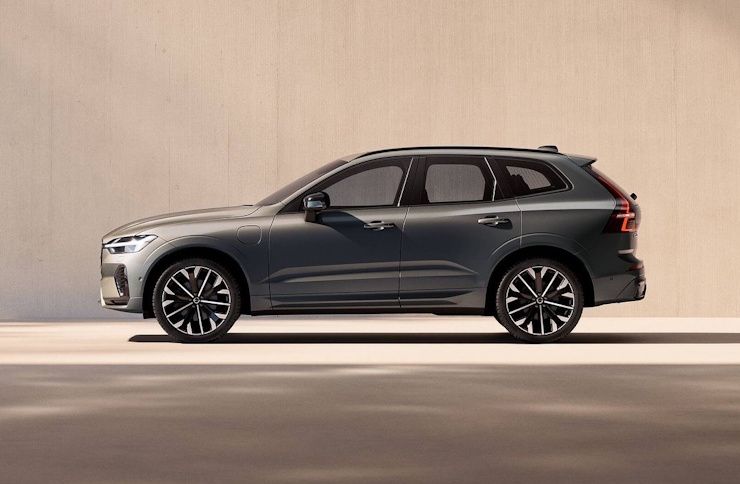
The shift in strategy comes at a time when Volvo’s overall sales figures have seen a slight downward trend. The company recorded sales of 2,120 units in 2023, which dropped to 1,861 units in 2024, and further down to 1,630 units in 2025. According to recent vehicle registration data, the brand has registered 307 units so far in 2026. However, the management has stated that the company is not interested in chasing short-term volume spikes.
The primary focus right now is on building a solid foundation for sustainable growth. A major part of this effort involves investing heavily in the underlying charging ecosystem and improving the overall customer experience. Volvo recently commissioned an ultra-fast charging station on the busy Mumbai-Nashik corridor and plans to further support the development of a wider, more reliable charging network. By improving after-sales service and ensuring parts availability, the company aims to retain its premium positioning while letting the market organically dictate the speed of the electric transition.
Via BusinessStandard

Comments are closed.