

After triggering debate with remarks that Europe could no longer act as the “custodian of the old world order,” European Commission President Ursula von der Leyen has sought to clarify the EU’s position by reaffirming its commitment to international law and the rules-based global order.
The controversy began after von der Leyen addressed the annual conference of EU ambassadors in Brussels, where she argued that Europe must adapt to a changing geopolitical environment marked by increasing violations of international law and global instability. In that speech, she said Europe could no longer act as the “custodian” of a old world order that “has gone and will not return,” while emphasizing that the EU should develop a more pragmatic and interest-driven foreign policy.
Her remarks quickly sparked debate among European policymakers and commentators who questioned whether the statement could signal a weakening of the EU’s long-standing role as a defender of international legal norms and multilateral governance.
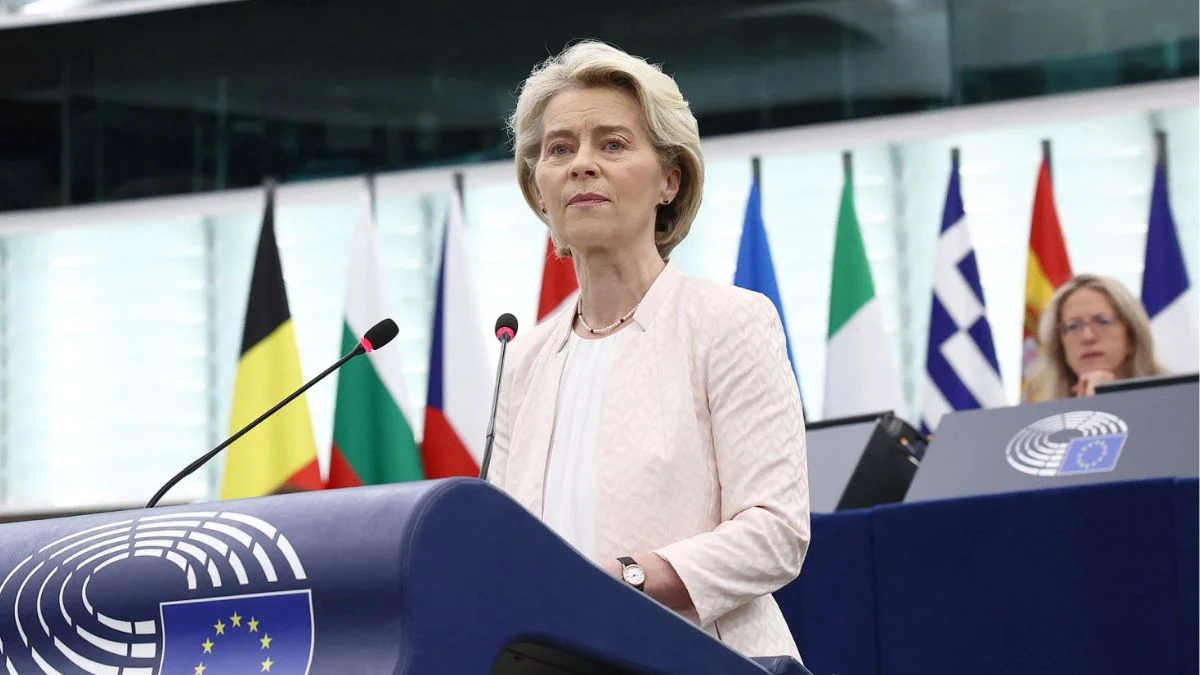
Responding to the backlash, von der Leyen clarified her position during a subsequent address to the European Parliament in Strasbourg. She stressed that recognizing geopolitical change does not diminish the EU’s legal commitments to international law and global governance institutions.
“The European Union was founded as a peace project,” she told lawmakers, reaffirming that the bloc remains committed to the principles of the United Nations Charter and the international legal system. She emphasized that these principles remain central to the EU’s identity and foreign policy objectives.
The Commission president also reiterated that support for multilateral institutions, including the United Nationsremains an essential component of EU external relations. At the same time, she argued that the evolving international environment requires the EU to adapt its strategic approach in order to address emerging security threats and geopolitical competition.
The remarks come amid growing global tensions and conflicts that have placed pressure on the rules-based international order. In her earlier speech, von der Leyen noted that Europe cannot rely solely on existing multilateral frameworks to defend its interests in an increasingly volatile world. Instead, she suggested the EU must strengthen its strategic capabilities and pursue a more realistic foreign policy while continuing to uphold international law.
The comments drew particular criticism in Spainwhere Prime Minister Pedro Sanchez publicly disagreed with the framing of the issue. Sánchez argued that the central challenge facing global governance is not the replacement of an “old world order” but the risk of moving from a system governed by international law to one characterized by disorder.
According to Sánchez, while the global political environment is evolving, the EU should remain firmly committed to its core values and legal principles. The disagreement reflects wider debates within Europe about how the Union should balance geopolitical realism with its traditional role as a champion of international law.
The discussion also highlights structural challenges within the EU’s foreign policy framework. Under EU treaties, major foreign policy decisions require unanimous agreement among the bloc’s 27 member states. While this rule is designed to ensure consensus among governments, it can also slow decision-making during international crises and limit the EU’s ability to respond quickly to geopolitical developments.
At the same time, other EU leaders have stressed the continued importance of multilateralism and international legal norms. Antonio CostaPresident of the European Councilrecently emphasized that a multipolar global environment requires stronger multilateral cooperation rather than the erosion of the rules-based order.
Costa warned that violations of international law should not be tolerated regardless of where they occur, underscoring the EU’s treaty-based commitment to uphold the principles embedded in the United Nations Charter and European law.
The debate surrounding von der Leyen’s remarks illustrates the broader legal and policy challenges facing the EU as global power dynamics shift. While the Union continues to present itself as a defender of international law and multilateral governance, policymakers are increasingly confronted with the need to adapt to a geopolitical environment characterized by strategic rivalry, regional conflicts, and contested legal norms.
For the European Union, the key policy challenge lies in balancing pragmatic foreign policy objectives with its foundational legal commitment to the rules-based international system. As discussions continue within EU institutions, the controversy highlights the sensitivity of the bloc’s role as a guardian of international law in an increasingly complex global order.

Comments are closed.