


Highlights
- The VR & AR Browsers are expected to give us the online world in a much more captivating way than the traditional flat screen.
- They can be great tools for 3D use, multitasking, teaching, and sharing.
- Still, there are difficulties that need to be solved: comfort level, price, hardware requirements, and convenience of use.
- They are maturing quickly, but still not to he point of taking over normal browsing.
The net has always been accommodating to the new device types — first came desktop monitors and then smartphones, tablets, and smart TVs. The newest form factor that it is adapting to is the VR (Virtual Reality) and AR (Augmented Reality) web browsing, which tries to change the user experience of online content. With the new technology, browsing is no longer a two-dimensional experience; users can walk through a three-dimensional environment of their choice when they open the browser, amid floating tabs, interactive panels, and stunning visuals.
However, the core issue is that the VR/AR browsing is pretty much a tech novelty and not at all useful.
What Are VR and AR Browsers?
VR Browsers are dependent on virtual reality headsets. Users develop a space in which web pages are shown as floating screens around them. They can simply move or combine the web pages in the 360-degree total space instead of minimizing or changing tabs.
In contrast, AR users “stay” in the real world, and the piece of information given through the internet shows up in their physical surroundings — like a digital coating on reality.
Some of the major ecosystems that have taken the leap to VR/AR browsing are Meta Quest, Apple Vision systems, and dedicated VR browsers that are optimizing websites for spatial viewing, all of which are up and running as early as now.
How VR / AR Browsing Works
VR/AR browsers turn the web into an immersive area by giving different interpretations to the current web features:
- Webpages can be displayed on gigantic screens just like in movies.
- Users can have different pages open around them at the same time, like in a library.
- The video and three-dimensional things can develop into stunning visuals that are hard to get out of.
- Users can choose to navigate by hand, use controllers, and sometimes even speak the commands.
This makes VR/AR browsing particularly attractive for those people who are always taking care of several things at a time or are huge consumers of visual content.

Where VR / AR Browsers Truly Shine
Although not too long in the market, VR and AR browsers have already been showing high real-world potential in some fields, particularly.
Education and Training
For the purpose of teaching and learning, students and teachers will be able to access:
- Three-dimensional diagrams
- Interactive models
- Virtual teaching rooms
The fields of medicine, engineering, and architecture gain immensely when the learning process removes the limitations of flat textbook visuals.
Professional Workspaces & Collaboration
Groups can get together in a virtual place, discuss, and do what they might do in a physically present situation together. The coming together of people over the internet can be made very real and does not have the constraints of screen-sharing.
Entertainment
VR browsing improves:
- Video streaming that feels like you are there,
- Pictorial entertainment in virtual places, and
- Web viewing related to gaming activities.
The use of 360-degree media for creating games and enjoyment is one of the leading trends in the world today.VR browsing for the purpose of entertainment and creativity feels like a good way rather than a bad one.
Usability and Comfort Challenges
On the other hand, a few practical problems have not let VR/AR browsing gain popularity as yet.
Comfort & Health
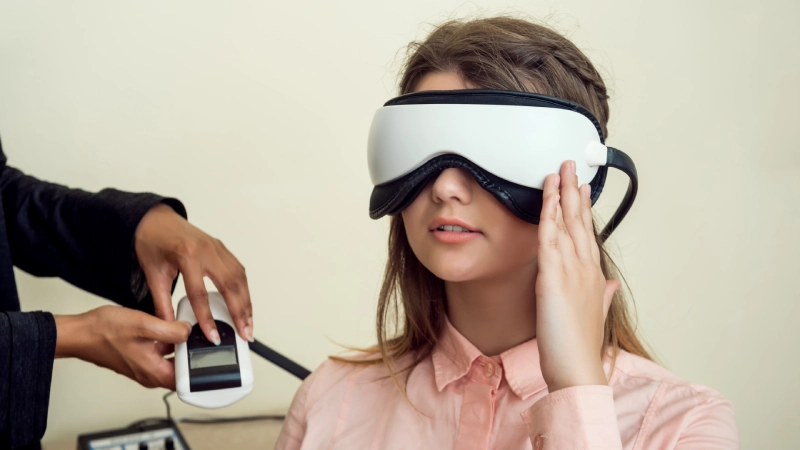
VR headset usage for a long time can result in eye discomfort, neck tiredness, and motion sickness.
Virtual reality reading has been reported to be tiring.
AR technology is not very dominant yet; the field of view of its glasses is still narrow, and the lighting is still a problem.
Hardware Dependency
Users require:
- VR/AR headgear
- Devices that are compatible
- Sufficient computation power
This renders browsing via VR or AR technically more challenging than using a phone or a laptop.
Website Compatibility
The majority of websites are aimed at 2D screens. The VR/AR scenario of these websites is not created to completely make use of the three-dimensional space. The process of adaptation is slow, but there are still no established standards.
Performance & Speed
The conventional web browsers are still the champions in the following areas:
- Speed
- Responsiveness
- Simplicity
Virtual and augmented reality browsing requires more computing power, thus making page rendering feel slower at times. For daily tasks such as quick searches, banking, mail, or text reading, the traditional browsing method is still the more convenient option.
Is It Just a Gimmick?
To label VR and AR browsing as mere gimmicks would be wrong. The technology undoubtedly convinces with its powerful use-case capabilities. However, it still has the character of a luxury good rather than a necessity.
Currently, people are still relying on:
- Mobile phones for instant access
- Laptops for work
- Tablets for entertainment
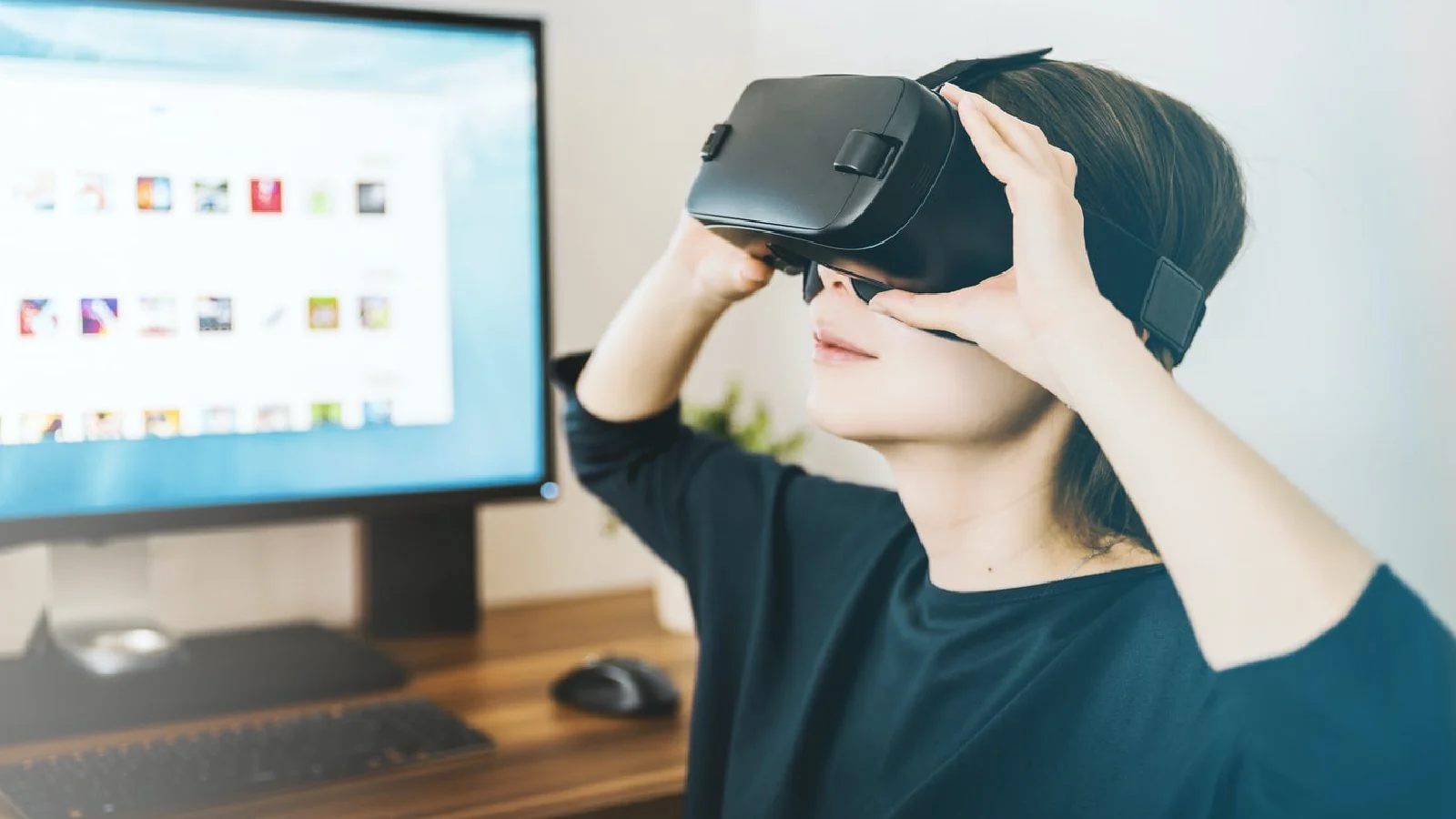
VR/AR browsing is excellent in immersive participation, but it has not rendered everyday browsing habits extinct. On the contrary, it seems to be a mighty supplement — when the context is right, it is indispensable.
What Needs to Improve?
In order for VR/AR browsing to become common, the industry needs:
- More comfortable, lighter headsets
- Better battery efficiency
- Affordable pricing
- Dedicated web design standards for 3D browsing
- Improved accuracy for gesture/eye-tracking controls
The future evolution of these technologies could potentially make VR and AR browsers considerably more practical than they are now.
Who Will Benefit the Most?
- Early tech adopters
- Designers, architects, researchers, and media professionals
- Students participating in immersive learning
- Entertainment and gaming aficionados
- Artists and remote team workers
To the casual everyday users, VR/AR browsing may be fun, but it is still not a necessity.
Conclusion
VR and AR browsers mark the new beginning in the history of interaction with the internet. They open up new possibilities for us to visualize, multitask, and interact with content by bringing the whole browsing process into an immersive, spatial world. On the other hand, the traditional browsing method is still the one that people would use most in their daily routines, for the time being, despite the impressive innovations in VR and AR browsing technologies.
As hardware gets less and less cumbersome, software gets more and more intelligent, and web standards get more and more flexible to 3D environments, VR/AR browsing could easily turn into a creative tech experiment. It still has a long way to go before it can be seen as a regular use case. However, it is a very powerful experience in some specific cases, and it is also gradually moving toward the direction of practical mainstream usage.

Comments are closed.