
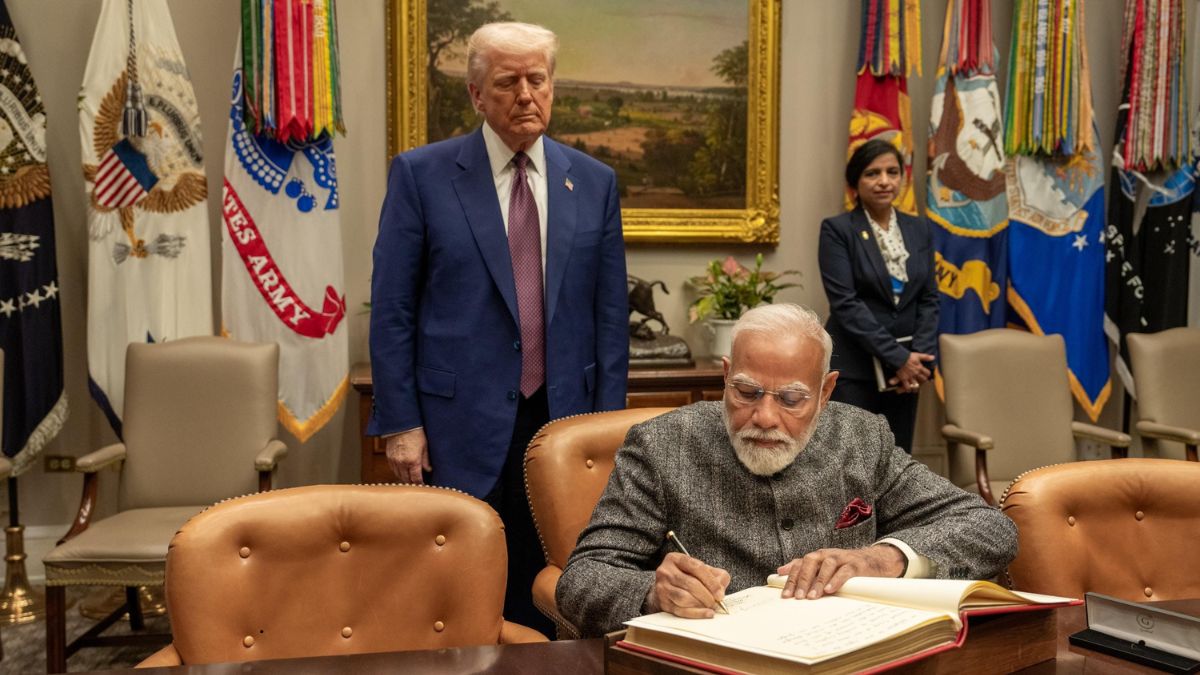
WATCH: US Commerce Secretary Lutnick says India, US trade deal did not happen because ‘Modi didn’t call the President’

The long-pending India–U.S. trade deal has failed to materialise because Prime Minister Narendra Modi did not directly call US President Donald Trumpaccording to a sharp claim made by Howard Lutnickthe US Commerce Secretary.
Speaking publicly, Lutnick said, “I set the deal up. But you had to have Modi call President Trump. They were uncomfortable with it. So Modi didn’t call.” The remarks mark the clearest admission yet from a senior US official on why negotiations have hit a dead end despite months of engagement.
America went back on the trade deal it had agreed with India, confirms US Commerce Secretary Lutnick
“India remembers the deal we agreed to. I remember it. They tell me you agreed to this deal. I told them I agreed then. Not now” pic.twitter.com/fDEYSxg6ES
— Shashank Mattoo (@MattooShashank) January 9, 2026
From early optimism to stalled talks
The statement contrasts sharply with the optimism seen at the start of 2025when Narendra Modi was among the first global leaders to meet Donald Trump after his election victory. The two leaders had then vowed to double bilateral trade to USD 500 billion by 2030with assurances that teams would conclude a “mutually beneficial trade agreement” soon.
However, by December, India emerged as one of the most heavily tariffed countriesfacing duties as high as 50%exceeding even those imposed on China.
Political and economic fault lines
Despite strong economic incentives on both sides, negotiations have repeatedly stalled. Economists note that the US wants reliable supply-chain partners outside Chinawhile India needs continued access to the US market to sustain export-led growth.
Former US trade negotiator Mark Linscott pointed to a lack of political will, calling tariffs and agriculture “always difficult.” Agriculture, in particular, has emerged as the primary stumbling blockwith US pressure for access to genetically modified crops and dairy products facing stiff resistance from India’s domestic farm lobby.
Russia oil, tariffs, and strategic pressure
Trade talks have also been complicated by India’s continued imports of Russian oilwhich Washington sees as undermining Western sanctions. In response, the US imposed an additional 25% punitive tariff on Indian goods in August, pushing total duties to 50%.
India has maintained that its energy sourcing decisions are driven by global market dynamics and affordability needs for its population, while Reuters recently reported that Indian refiners resumed buying discounted Russian oil from non-sanctioned entities.
Cost of delay mounting
Market experts warn that the prolonged absence of a deal is proving costly. According to estimates cited by brokerage executives, 50% tariffs could shave 0.5–0.6 percentage points off India’s GDP growthwhile keeping equity markets cautious and adding pressure on the rupee.
US economists, meanwhile, argue that tariffs on Indian goods are fueling inflation and raising costs for American consumershurting both economies.
Deal still elusive
Despite repeated references to India as a “strategic partner” and Modi as a “friend,” analysts see little progress as the year ends. As one economist noted, India was once expected to be the first country to secure a Trump-era trade deal — it is now among the last without one.
Whether fresh political outreach or new compromises emerge in the coming months remains uncertain, but Lutnick’s remarks underscore that personal diplomacy at the highest level may now be the decisive missing piece.

Comments are closed.