
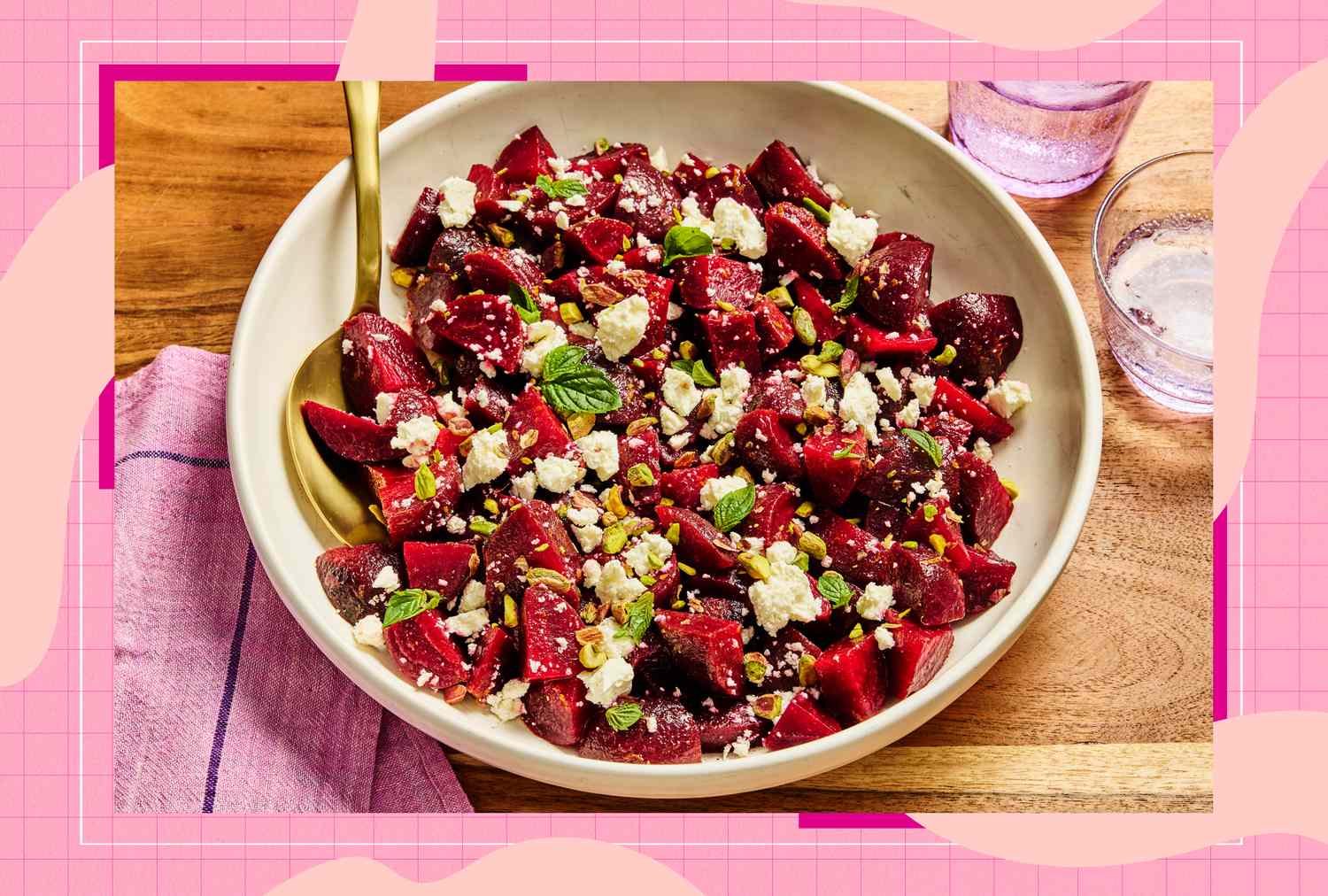

- Beets are packed with nitrates and antioxidants that can help relax blood vessels and ease blood flow.
- Drinking beetroot juice can reduce high systolic blood pressure by about 5 mmHg.
- Adding beets to meals can also shift oral bacteria to make nitric oxide more efficient.
With almost half of all American adults dealing with high blood pressure, or hypertension—a leading risk factor for heart disease and stroke—the need for heart-healthy foods is at an all-time high. While heart-healthy eating often emphasizes reducing certain foods and nutrients such as ultra-processed foods or those high in sodium, some of the biggest blood pressure benefits come from what you add to your diet.
Beyond their vibrant pink color and sweet flavor, beets are packed with important nutrients and compounds that support healthy blood pressure and heart health. Keep reading to learn how beets may positively impact blood pressure, creative ways to enjoy them and additional expert tips for lowering your blood pressure.
Beet’s Blood Pressure Benefits
They Could Improve Blood Flow
The most powerful way beets support healthy blood pressure is through a natural compound they contain. “Beets are rich in nitrates, which convert into nitric oxide, a compound that may lower blood pressure by relaxing the blood vessels, allowing blood to flow more easily,” explains Sarah Anzlovar, M.S., RDN, LDN. A 2024 meta-analysis of eleven clinical trials found that 200 to 800 milligrams of beetroot juice daily could reduce systolic blood pressure in people with hypertension by an average of 5 mmHg.
While many studies focus on beetroot juice for its blood pressure effects, whole vegetable sources of nitrates, including whole beets and leafy greens like arugula and spinach, have similar effects and are widely available.
They May Reduce Inflammation
In addition to being high in nitrates, beets are a rich source of polyphenols and antioxidants, especially betalains, responsible for their deep red color and multiple health benefits. “These help to fight inflammation and can help reduce the risk of chronic diseases and support heart health,” says Nicole Ibarra, RD, LD.
Betalains may protect the heart by reducing harmful inflammation, and some studies suggest they may improve arterial stiffness and endothelial function, even without nitrates.
They Enhance Your Oral Microbiome
Beets not only supply nitrates that support better blood flow, they may also increase how efficiently your body converts those nitrates into helpful nitric oxide. Research suggests eating nitrate-rich vegetables shifts the balance of microbes in the oral cavity. “This change increases the presence of beneficial bacteria in the mouth that are more effective at converting dietary nitrates into nitric oxide,” explains Whitney Stuart, M.S., RDN, CDECS. In one study, just two weeks drinking nitrate-rich beetroot juice led to favorable shifts in oral bacteria, higher nitric oxide and lower blood pressure among older adults.
Ways to Eat More Beets
If you think of beets as only “pickled beets” on a salad bar, think again—there are lots of delicious ways to enjoy this sweet root vegetable. Different methods bring out very different flavors, so keep experimenting!
- Juice them. Buy beet juice or make your own for a concentrated dose of antioxidants and nitrates (note: beet juice has little fiber). Stuart recommends drinking “fresh beet juice or a nitrate-rich juice blend 2 to 3 hours before lunch or early in the day to support vasodilation and enhance post-meal blood flow.” For more fiber, try a beet smoothie instead.
- Blend into a dip. Anzlovar recommends blending beets into hummus for a pink, fun, nutritious dip. Roasted beet hummus pairs well with pita, whole-grain crackers or crisp veggies.
- Roasted as a side. Beets, like sweet potatoes or winter squash, shine when they’re roasted. Ibarra loves beets roasted with walnuts for a hearty salad. Or try adding them to a kale salad or grain bowl for a nitrate-rich meal.
- Eat them raw. Short on time? Anzlovar recommends shredding raw beets into salads for crunch and nutrients. Actually, eating beets raw preserves more of certain nutrients, such as vitamin C, and may have a stronger blood pressure-lowering effect.
Other Tips for Healthy Blood Pressure
Eating more beets is a fantastic start, but other habits also matter for healthy blood pressure and heart health. Dietitians recommend focusing on:
- Exercise regularly. Moving your body—like daily walks—can help lower and control blood pressure. Even a single workout can drop blood pressure for hours. The American Heart Association recommends 150-300 minutes of moderate-intensity aerobic activity, or 75-150 minutes of vigorous activity plus two strength training sessions weekly.
- Monitor your sodium. Excess sodium pulls extra fluid into your bloodstream, raising blood pressure. The American Heart Association recommends limiting your sodium intake to 1,500 milligrams daily if you have hypertension. Check labels and rinse canned foods to reduce sodium.
- Eat more potassium-rich foods. Stuart recommends eating potassium-rich foods like spinach, sweet potatoes, bananas, and beans, which help counteract sodium and aid vasodilation. Increasing potassium can lower blood pressure by 5–7 mmHg.
- Prioritize your sleep. Healthy sleep is vital. Issues like obstructive sleep apnea, shift work, or disruptions in your circadian rhythm can all raise blood pressure risk.
Our Expert Take
Eating beets regularly may be an effective—and tasty—way to support your blood pressure. Not only are beets rich in inflammation-fighting antioxidants and nitrates, but they may also help your body better convert the nitrates that you eat into nitric oxide to relax your blood vessels and improve blood flow. Combined with daily activity, a potassium-rich diet and reduced sodium, they support healthy blood pressure and heart health.

Comments are closed.