
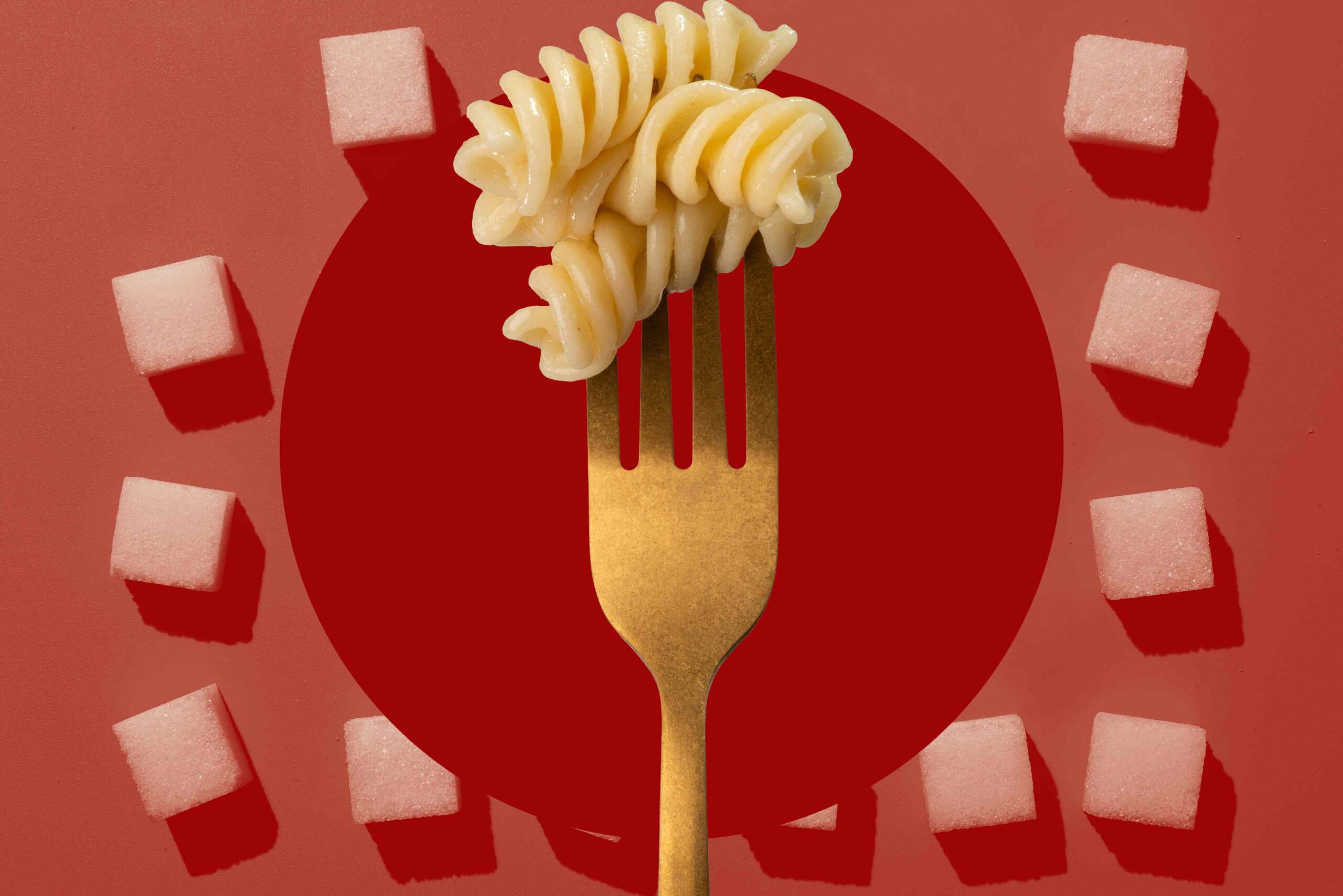

Does a life without noodles sound pre-pasta-rous? Dietitians share how pasta can fit into a blood sugar–friendly diet.
Key Points
- Pasta increases blood sugar since it’s a carb. There are simple ways to reduce the effects.
- You can eat pasta every day, even if you have diabetes. Pair it with protein and veggies.
- Cooling your pasta after cooking, plus eating it al dente, can also help keep blood sugar in check.
Pasta lovers, have you ever wondered if you have to cut out your fave carb to protect your metabolic health? Good news—you can usually keep enjoying this tasty carb while managing your blood sugar. Pasta raises your blood sugar as your body breaks the carbs down into sugars, but that’s not inherently bad. In fact, this is how your body gets energy. It only becomes a problem if your blood sugar is too high, too often. We interviewed diabetes dietitians and dug through the latest research to share more on how pasta impacts blood sugar and tips for weaving it into your diet without neglecting your health goals.
3 Ways Pasta May Impact Blood Sugar
Pasta Raises Blood Sugar
“Pasta is a carbohydrate, so it breaks down into glucose during digestion and can raise blood sugar levels, especially when eaten on its own or in large portions,” says Gina Hassick, M.A., RD, LDN, CDCES, NCC. Your body gets energy from that sugar, so it’s not something to fear. If you don’t have diabetes, your body usually produces and responds well to insulin, so your blood sugars won’t rise too high or stay too high after eating pasta. If you have diabetes or other blood sugar issues, you may have to be more mindful of your pasta intake to prevent a spike. How much pasta you eat and what you pair it with will impact how your blood sugar responds (more on that later).
It Doesn’t Raise Blood Sugars Quite as Much as Other Carbs
Not all carbs impact blood sugar the same way, and pasta’s one of the better options for preventing a spike. “Pasta tends to raise blood sugar more gradually than foods like white bread or sweets, thanks to its naturally lower glycemic index,” says Hassick. “The protein structure of pasta slows digestion, which can help prevent sharp blood sugar spikes compared to other refined grains,” says Hassick. Studies show that even refined wheat pasta has a low glycemic index. It’s much more blood sugar–friendly than other refined carbs like white bread or potatoes.
Whole-Wheat and Protein Pastas Have an Even Lower Effect
Pasta options like chickpea pasta, lentil pasta and whole-wheat pasta are even more blood sugar–friendly. “Whole-grain or legume-based pastas can be helpful options for some people because they provide more fiber and protein,” says Hassick. In turn, they raise blood sugars more slowly and steadily than regular pasta. They make it easy to boost your intake of fiber and protein—two key nutrients for keeping blood sugars steady.
Is It Safe to Eat Pasta Every Day?
Noodles can absolutely be a part of your daily rotini (pun intended)! About 45% to 65% of our calories should come from carbs, so pasta can have a place on your plate every day.
If you’re trying to balance your blood sugar, be intentional about how you eat pasta to mitigate sharp spikes. “How pasta is eaten matters more than how often it’s eaten, since portion size and meal balance play a bigger role in blood sugar response than frequency alone,” says Hassick.
“People with blood sugar issues can eat pasta daily without large blood sugar swings when it is part of a balanced diet that includes veggies, lean protein and healthy fats,” says Sheri Gaw, RDN, CDCES. That could look like preparing your pasta with spinach, tomato sauce and ground turkey, or eating it with a hearty side salad and 3 ounces of chicken.
Strategies to Eat Pasta for Better Blood Sugar
- Pair it with protein, fiber and healthy fat. “A balanced diet provides protein, fiber and healthy fat, which helps to slow the release of sugar into the bloodstream for steady blood sugar versus spikes,” says Gaw. Ideally, most meals—including ones with pasta—should have this combo of nutrients. So add veggies, lean protein (like turkey, fish or chicken) and a healthy fat (like olive oil or a side salad with an oil-based dressing) to your pasta for balanced blood sugars.
- Cool and reheat it. Here’s a simple trick to lower pasta’s impact on blood sugars—prep a big batch of pasta ahead of time, refrigerate it, then reheat it later on. “The reheated pasta is a good source of resistant starch, which has a lower impact on blood sugar levels,” says Gaw. The cooling process forms more of this resistant starch—a fiber that resists digestion in the small intestine.
- Cook it al dente. “Overcooked, softer pasta is digested more quickly and may lead to higher blood sugar responses than pasta cooked al dente,” says Hassick. When researchers tested this with spaghetti, cooking it al dente reduced the digestion of starches, leading to a lower glycemic index. Cooking your pasta a couple of minutes less may reduce its effect on your blood sugar, and many people enjoy the taste of noodles with a bit of bite.
- Be mindful of the portion. Of course, the amount of pasta you have also influences how much it’ll raise your blood sugar. “I recommend limiting portions of pasta to about 1 cup cooked or 2 ounces of dried pasta,” says Gaw. “Pair pasta with a generous portion of veggies and 3–4 ounces of protein for better blood sugar balance,” she adds.
Our Expert Take
Dietitians and research say that your fave carb can absolutely be a part of a blood sugar–friendly diet. In fact, it has a lower glycemic index than other common carbs, like white bread and potatoes. Remember, “The amount that blood sugar increases depends on the quantity, the type of pasta and what the pasta is paired with,” says Gaw. So add a generous helping of veggies and a few ounces of lean protein for a slow, steady rise in blood sugar instead of a rapid spike.

Comments are closed.