
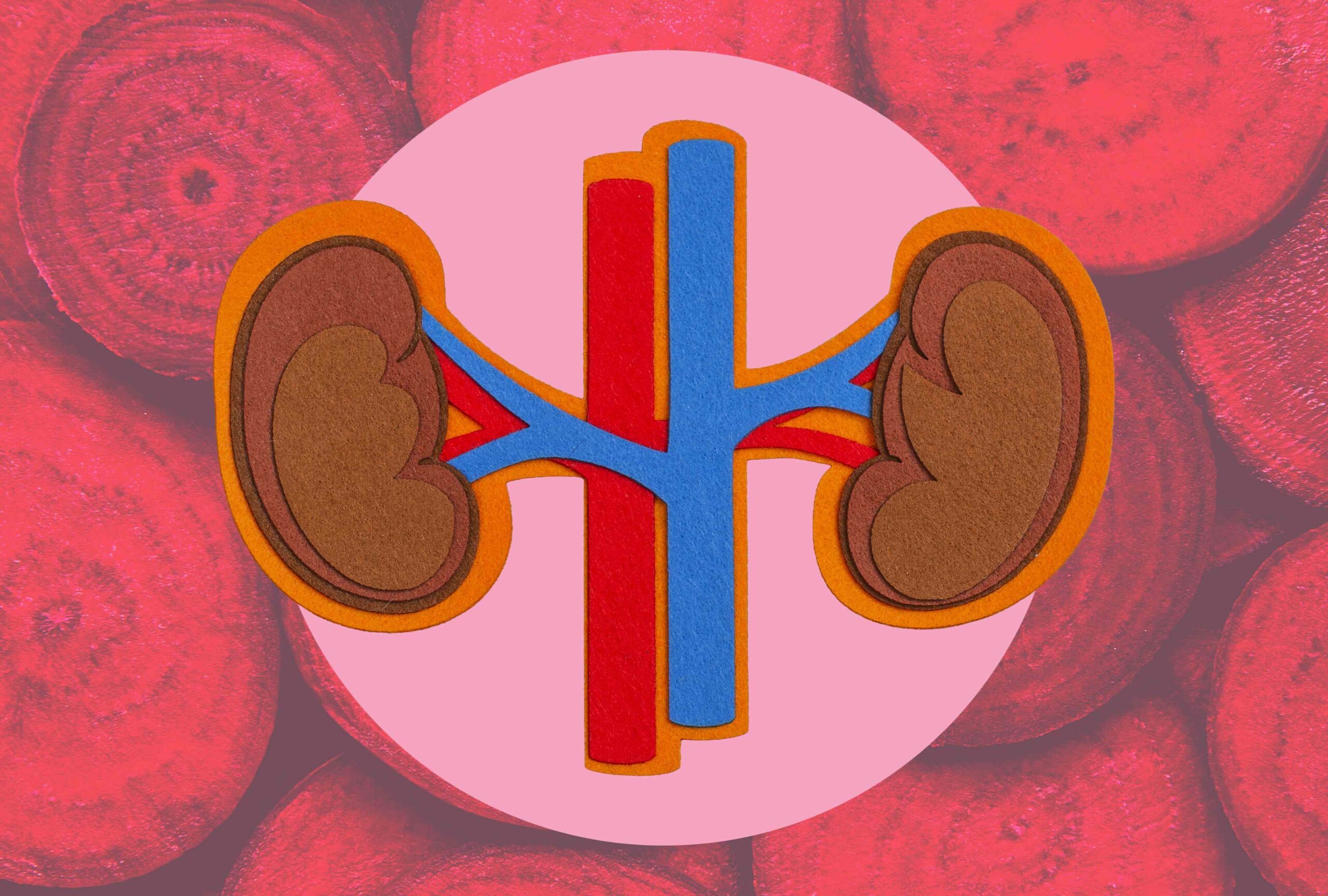

Beets are packed with nutrients—but their oxalate content raises questions for people prone to kidney stones. Here’s what dietitians want you to know.
Reviewed by Dietitian Casey Wing, RD, CD
Key Points
- Beets are nutrient-dense and support heart health, blood flow and blood pressure with dietary nitrates.
- For most, beets are safe, but those with kidney stone history should limit oxalate-rich beet juice.
- Boiling beets reduces oxalates; pair with calcium and stay hydrated to lower kidney stone risk.
If you’ve ever shaved a raw beet into a salad and watched your cutting board turn ruby red, you know beets are not exactly subtle. From roasted beet salads to bright pink smoothies, beet-red fingers are often part of the deal when preparing them, but many people would agree the earthy flavor and nutritional value make the temporary stains worth it. Besides their glorious color, this veggie deserves your attention since beets provide fiber, folate, potassium and naturally occurring nitrates that support healthy blood flow and blood pressure.
However, while beets bring plenty of nutritional benefits, they also contain oxalates,which are naturally occurring compounds that may contribute to kidney stone formation in some people. So should you be wary about welcoming beets to your plate? Here’s what dietitians say about the effects of beets and how to enjoy them wisely.
How Beets Can Affect Your Kidneys
They May Support Healthy Blood Pressure
Beets are rich in dietary nitrates, which convert in the body to nitric oxide, a compound that helps relax blood vessels. “Beets are a nutrient-dense, low-calorie ‘superfood’ that can help lower blood pressure, improve blood flow and enhance athletic performance,” confirms Stephanie Cordano, RDN.
Why does that matter for your kidneys? High blood pressure can cause damaged blood vessels, which can reduce blood flow. Since kidneys are responsible for filtering blood, this can lead to decreased kidney function and extra fluid in the blood, which can raise blood pressure even more in a dangerous cycle. It makes sense, then, that high blood pressure is one of the leading causes of chronic kidney disease. Supporting healthy blood pressure may help reduce long-term strain on these vital organs.
This doesn’t mean beets are a magic fix. But as part of an overall eating pattern that includes vegetables, fruits and adequate hydration, they can contribute to cardiovascular health, which indirectly supports kidney function as well.
They May Contribute to Kidney Stone Formation
Now for the part of the story that tends to spark concern.
Oxalates are naturally occurring compounds found in many plant foods, including leafy greens, nuts, seeds and beets. In the kidneys, oxalates can bind with calcium to form calcium oxalate kidney stones, the most common type of kidney stone.
“While beets do contain oxalates, eating beets in typical food portions does not meaningfully increase kidney stone risk for people who have never had stones,” says Nicole Randazzo, M.A., RDN, CDCES. “For most individuals, they can be enjoyed as part of a balanced diet.”
But for individuals with a history of calcium oxalate stones, consistently high intakes of oxalate-rich foods may increase risk, especially if fluid intake is low. It’s important to remember that kidney stones usually develop from a combination of factors and rarely just from one food in isolation.
They May Turn Your Urine Pink
If you’ve ever noticed pink or red urine after eating beets, you’re not alone. This phenomenon, known as beeturia, happens when pigments called betalains pass through the digestive system and into urine. This effect can be even more noticeable after drinking beet juice, since the pigments are more concentrated. “Pink urine after eating beets can sometimes surprise people, but it’s typically harmless and temporary. The color usually resolves within a day,” says Randazzo.
Although beeturia on its own is typically nothing to fear, Randazzo cautions, “If someone notices persistent red or pink urine without having eaten beets or other red foods, they should check with a health care provider to rule out other causes.”
Tips to Enjoy Beets
If beets are on your menu, here are some practical ways to enjoy them thoughtfully:
- Keep form and portion in mind. While whole beets contain oxalates, the oxalates in beet juice can be even more concentrated into a smaller volume. For someone prone to calcium oxalate kidney stones, regularly drinking large amounts of beet juice could increase risk, particularly if fluid intake overall is low. “A good approach is to eat whole beets rather than relying on concentrated beet juice, since whole beets contain fiber and are less concentrated than juice or powders,” says Randazzo.
- Consider cooking methods. “The way you prepare beets can affect their oxalate content. Boiling is the most effective method to remove a substantial portion of oxalates,” Cordano says. “Steaming and fermenting are also effective methods.” Roasting, on the other hand, tends to retain more oxalates since there’s less water involved. The physical form of the beet can make a difference as well—slicing or cubing beets before boiling can further reduce oxalate content.
- Pair with calcium. “When calcium and oxalates bind together in the digestive tract, they’re more likely to be excreted in stool rather than absorbed and filtered through the kidneys,” explains Roxana Ehsani, M.S., RD, CSSD, LDN. “Pairing high-oxalate foods like beets with calcium-rich foods like cheese can reduce the amount of oxalate your body absorbs.” She suggests enjoying beets with goat cheese, feta, ricotta or a yogurt-style sauce.
- Stay well-hydrated. Adequate fluid intake plays a major role in kidney stone prevention. “Drinking enough water is critically important for reducing kidney stone formation. Drinking enough fluids will not only hydrate you but will also dilute calcium, oxalate and uric acid formation. Research suggests high fluid intake can reduce stone formation up to 50%,” says Ehsani.
One beet salad doesn’t cause kidney stones. But a consistently high-oxalate pattern combined with low hydration might contribute to risk in susceptible individuals. And as Ehsani reminds us, “It’s important to also not overload on just one type of vegetable—make room for a wide rainbow of color on your plate.”
Our Expert Take
Beets are nutrient-dense vegetables that support heart and vascular health, which in turn supports kidney health. For most people, they’re a vibrant and healthful addition to meals.
For individuals with a history of calcium oxalate kidney stones, awareness, not fear, is key. Preparation method, portion size, hydration and balanced pairings can all help manage oxalate intake without eliminating an otherwise nutritious food.

Comments are closed.