

We may receive a commission on purchases made from links.
As a reviewer of all things technology, I keep tools in my office that I use to measure the dimensions of the devices I write about. When Honor claimed its Magic V5 was the thinnest foldable in the world, for example, I could verify that with my own measurements thanks to my digital calipers. The reason they’re so handy is because they work in a few ways; having a a digital caliper at home helps you measure things that a ruler or tape measure might not be able to tackle as efficiently.
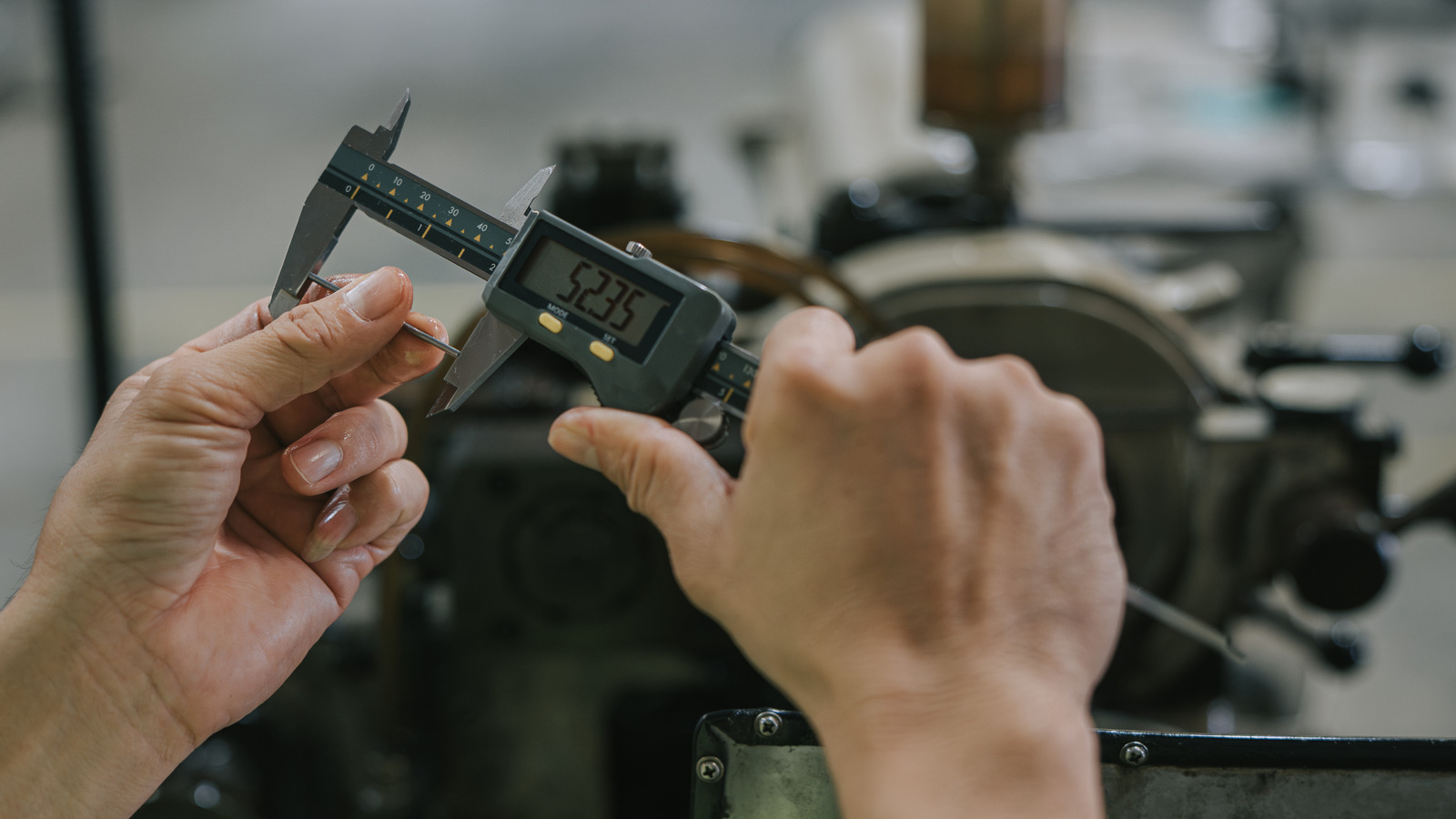
At their most basic, digital calipers are measuring tools. First, they have outside jaws that slide open so you can slip a part you want to measure between them; the caliper will tell you how much space is in between the jaws, revealing how large the item you’re measuring is. I will often use this to see how thick a phone is by inserting the handset between the jaws and closing them on either side.
A caliper also has a second, smaller set of jaws on the opposite edge of the main ones. You can use these to measure the inside of something. Just start with the inside jaws close together and then extend them until they hit both sides — at this point, the caliper will tell you the distance. I can use this to see, of example, how big a speaker port is on a phone by inserting the inside jaws in the port and opening the caliper until those jaws bump up against both ends.
Finally, most digital calipers also have a depth gauge. This is a point that extends down past the end of the caliper to measure how deep something is. I typically use the depth gauge to see how far a camera island protrudes from the back of a phone. Most calipers also have a locking screw that locks the jaws open to a certain measurement. This allows you to get the same measurement every time.
The benefits of using calipers

Digital calipers can be used in everything from metalwork, automotive work, 3d printing, and more. They’re particularly handy when you’re trying get measurements off an object that isn’t rectangular or doesn’t have well-defined edges. If you’re measuring something that isn’t perfectly square or has chamfered edges that makes getting a precise measurement difficult, calipers can be invaluable. Imagine trying to measure the thickness of a laptop with sloping curves that make it hard to line up edges — since the jaws on the caliper sit at 90-degree angles, anything that fits between those jaws at any point will give you an accurate measurement.
Calipers are also helpful if you need to measure an opening of some sort thanks to its set of inside jaws. Measuring something like a hole can be tricky with a ruler, since it can be hard to find the exact center of a circle to find the diameter. The depth gauge is likewise handy, as the probe is very thin and can fit into places that your typical ruler would not.
Arguably the biggest benefit of a set of digital calipers is that they’re typically quite affordable. The two I have were Amazon purchases, a $6.99 plastic version as well as a metal version that retails for around $50, though it’s on sale for $35.23 at time of writing. I prefer using the plastic version when I’m measuring scratch-prone components like a touchscreen, but I’ve found that the metal one is typically more accurate. If you don’t want to wait, you can also easily find a decent set of calipers at your local Home Depot or even at Harbor Freight.

Comments are closed.