
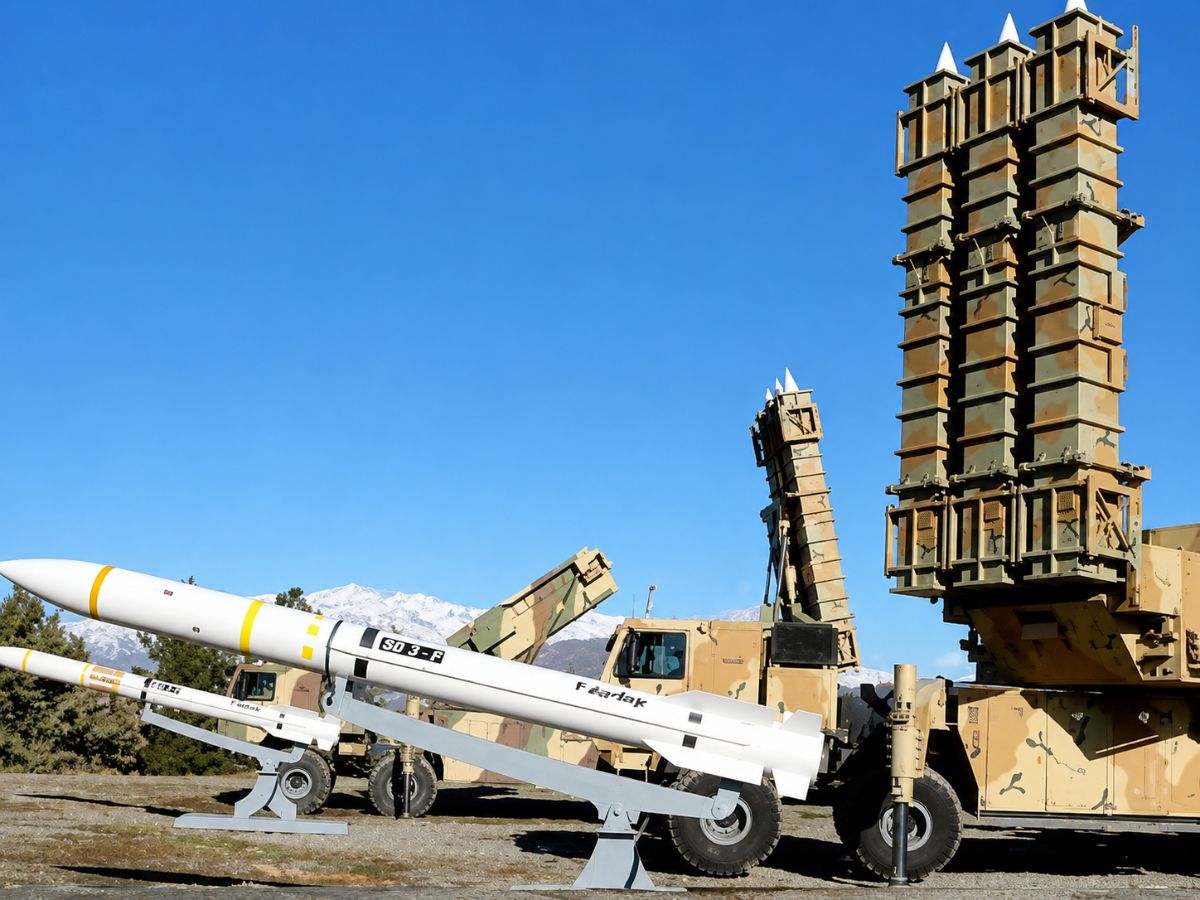

Iran has claimed that it used a newly developed air defence system called Arash-e Kamangir to shoot down a United States MQ-9 Reaper drone near the Strait of Hormuz earlier this week, a development that has drawn attention from military analysts and defence observers around the world. According to Iran’s Fars News Agency, the $30 million American surveillance drone was intercepted near Qeshm Island during what Tehran described as the first combat deployment of the Arash-e Kamangir system. There has been no independent confirmation of the claim so far, but experts say the incident is significant because it suggests Iran may still retain the ability to challenge American and Israeli military activity despite months of strikes targeting its military infrastructure. The incident comes at a time of rising tensions between Tehran and Washington, even as a fragile ceasefire remains in place. Reports also claimed that US forces recently carried out fresh strikes near Bandar Abbas, after which Iran’s Islamic Revolutionary Guard Corps said it targeted an “American airbase” in retaliation.
“Arash Kamangir” is the New Iranian air defence system capable of intercepting and downing Fighter jets and UAVs. Built in Iran by Iranians during sanctions.
“Arash Kamangir” is the legendary Persian archer who sacrificed himself to defend Iran’s borders. pic.twitter.com/5Ak8yRCsum— Consulate General of I.R.Iran in Mazar-e-Sharif (@IRANinMAZAR) May 28, 2026
What is Arash-e Kamangir and why is Iran highlighting it now?
Iranian media has described Arash-e Kamangir as a stealth-detection air defence system designed to intercept hostile reconnaissance drones operating close to Iranian airspace and maritime borders. Officials quoted by Fars News Agency claimed the system carries “hidden capabilities” and was specifically used during the reported drone interception near the Strait of Hormuz. “This operation, which was carried out using a system with hidden capabilities, is a clear and decisive message from Iran,” unnamed officials were quoted as saying.
The name Arash-e Kamangir comes from Persian mythology and translates to “Arash the archer.” In Iranian folklore, Arash is remembered as a heroic figure who defended Iran from foreign domination. According to the legend, the border between Iran and Middle Asia was determined by an arrow launched by Arash after sacrificing his own life in the process. Iran’s decision to use the name Arash-e Kamangir for the defence system appears symbolic, linking modern military technology to themes of resistance and national defence.
Analysts believe system may avoid traditional radar detection
Reports say that military analysts believe Arash-e Kamangir could be linked to Iran’s expanding network of short-range and loitering surface-to-air missile systems. According to reports cited by Al Jazeera, security analyst Alex Almeida from Horizon Engage believes the system may not rely heavily on traditional radar guidance.
Experts say this makes systems like Arash-e Kamangir harder to track and destroy compared to larger radar-based air defence batteries. Mobile systems can also be moved quickly, produced at lower cost and replaced more easily after attacks.
Some of these systems are believed to remain airborne while waiting for enemy drones or aircraft to appear. Analysts say slow-moving surveillance drones such as the MQ-9 Reaper can become particularly vulnerable against these kinds of interception systems.
Why the reported drone interception matters strategically
According to reports, the latest claims surrounding Arash-e Kamangir are especially important because Iran’s larger radar-guided air defence systems have reportedly suffered heavy damage from repeated US and Israeli strikes in recent months. Iranian S-300 systems supplied by Russia are also believed to have been degraded.
Despite this, defence experts say the reported use of Arash-e Kamangir shows Tehran may still possess enough military capability to maintain what analysts describe as a “persistent, limited, low-level air threat.”
Reports say that experts believe such systems may not stop a full-scale military air campaign, but they could still complicate operations for the US and Israel by forcing them to rely more on expensive long-range weapons instead of surveillance drones and lower-cost aerial systems.
Also Read: China Sends 10 Military Aircraft Near Taiwan, All Cross Median Line of Taiwan Strait
Khalid Qasid is a media enthusiast with a strong interest in documentary filmmaking. He holds a Master’s degree in Convergent Journalism from AJK MCRC. He has also written extensively on esports at Sportsdunia. Currently, he covers world and general news at NewsX Digital.
The post What Is Arash-e Kamangir? appeared first on NewsX.

Comments are closed.