
What is “criticality” in the historical prototype fast breeder reactor (PFBR) of Kalpakkam?

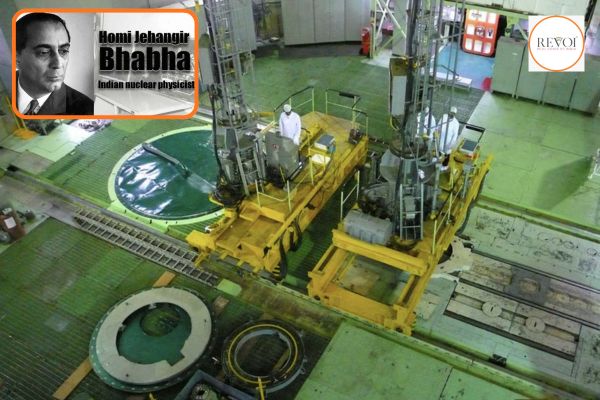
The history of the Prototype Fast Breeder Reactor (PFBR) at Kalpakkam is the result of India’s long scientific journey and vision. This project did not start in a single day, but it has been achieved after decades of research, planning and experiments. This history begins in the 1950s, when Homi Jahangir Bhabha envisioned a three-stage nuclear power program for India. He understood that India has limited uranium but has huge reserves of thorium, so he made a plan in which first uranium would be used, then plutonium and finally thorium based energy development.
To take this vision forward, “Fast Breeder Test Reactor (FBTR)” was built at Kalpakkam in the 1970s. This small reactor was like a laboratory for India, where scientists gained experience in sodium cooling, fast neutron technology and material science. This experience became the basis for PFBR.
Also read: India got huge success in the energy sector: What did PM Narendra Modi say about this?
Then in 2003, the Government of India gave official approval to the PFBR project and Bharatiya Nabhikiya Vidyut Nigam Limited (BHAVINI) was established specifically to build the fast breeder reactor. Construction of the PFBR began in 2004, and was originally scheduled to be completed by 2010.
But since this project was “first-of-its-kind” technology, it faced many technical challenges. The project was particularly delayed due to the liquid sodium cooling system, high-temperature materials, and complex nuclear systems. In 2012, the cost of the project was again revised and the deadline was also pushed forward.
core loading process
Moving forward, in 2023, thousands of tons of liquid sodium were filled into the reactor’s main vessel, an important technological step. Then on March 4, 2024, the “Core Loading” process was started by the Prime Minister, in which fuel started being put into the reactor.
The final fuel loading was completed during 2025 and the reactor was ready for “criticality” after all safety checks. Finally, on April 6, 2026, at 8:25 pm, PFBR successfully achieved first criticality, meaning a controlled and stable nuclear chain reaction began.
Thus, the history of PFBR can be divided into three main phases: 1. Idea and vision (1950–1970): Bhabhani plan and primary research, 2. Experiment and development (1970–2003): FBTR and technology preparations and 3. Creation and success (2004–2026): creation and criticality of PFBR.
This entire journey shows that PFBR is not just a reactor, but a living example of India’s scientific fortitude, research power and self-reliance. Today the PFBR takes India to the second phase of its three-phase nuclear program and paves the way for a future thorium-based energy era. This reactor has been designed and researched by the Indira Gandhi Center for Atomic Research.
In nuclear physics, “criticality” is a condition in which a fission chain reaction proceeds spontaneously and in a controlled manner. During each fission event, uranium or plutonium atoms break and about 200 MeV of energy is released. “Criticality” is a very important scientific condition for a nuclear reactor. If understood in simple language, nuclear fission takes place inside the reactor, in which an atom breaks releasing energy and neutrons. These neutrons break other molecules and this process proceeds as a chain reaction.
Also read: Missile attack, F-15E crash, missing pilot and thrilling 48-hour rescue mission
When this chain reaction runs in perfect balance, it is called “criticality”. In this situation the “multiplication factor” of the reactor is k = 1. This means that out of all the neutrons produced in one fission, only those neutrons are useful for the next fission. That is, the reaction neither speeds up nor slows down. It continues steadily. If k < 1, the reaction gradually stops (sub-critical condition). If k > 1, the reaction proceeds rapidly (super-critical state), which can be dangerous. But at k = 1 the reactor remains under complete control and safely produces energy continuously. Thus, “criticality” is the ideal state in which a nuclear reactor operates safely and stably, providing a continuous supply of energy to produce electricity.

This energy is converted into thermal energy and finally converted into electricity by steam turbine. PFBR has a “fast neutron spectrum”, that is, neutron energies of about 1 MeV or higher, which makes the breeding process more effective. The most important element in the methodology of PFBR is “Breeding Ratio”. If the reactor has a breeding ratio greater than 1, it produces more fissile material than the reactor. In PFBR, a blanket of uranium-238 is placed around the core, which absorbs fast neutrons and forms plutonium-239. In this process two beta-decays occur, due to which plutonium-239 is ultimately produced. This process makes PFBR a “fuel factory”.
liquid sodium coolant
“Liquid sodium coolant” is used in PFBR, whose thermal conductivity is much higher than water. The boiling point of sodium is approximately 883°C, so it remains liquid even at very high temperatures. This allows the reactor to perform high-temperature operations more efficiently. But sodium is very reactive with air and water, so “double loop systems” and inert gases (such as argon) are used to prevent sodium leakage.
“Neutron economy” is very important within PFBR. Here, to reduce the loss of neutrons, a moderator like water is not used. Due to this, more neutrons are available, which becomes useful for breeding. Also, by using “control rods” (boron or cadmium) in the reactor, neutrons are absorbed and the power of the reactor is controlled.

“Negative Reactivity Coefficient” is an important scientific element in PFBR from safety point of view. When the temperature of the reactor increases, the fission rate decreases, due to which the reactor automatically stabilizes. This is called “inherent safety”. Additionally, the PFBR also has a “Decay Heat Removal System” that removes heat generated even after the reactor is shut down. India’s three-stage nuclear program is designed by Homi Jehangir Bhabha, with PFBR being the main center of the second stage. In this step, thorium-232 is converted into uranium-233 using plutonium. This uranium-233 will become the main fuel for the third stage reactors. Scientifically speaking, U-233’s neutron production is more effective, which makes it an excellent fissile material.
Homi Jehangir Bhabha had done an in-depth analysis of India’s resources while designing this entire programme. He understood that India has limited uranium but has large reserves of thorium, especially in the monazite sands along the coast of South India. In their view, the fast bridge reactor is a “bridge technology” that brings about a change from a uranium-based system to a thorium-based energy system.
Also read: Watch VIDEO: More than 10,000 Dalits, including women, adopted Janoi in two days in Uttar Pradesh.
Apart from PFBR, there are many nuclear facilities at Madras Atomic Power Station, which include fuel reprocessing plant and PHWR reactors. This entire complex is like a complete laboratory for the “Closed Nuclear Fuel Cycle”, where fuel is produced, used and reprocessed in one place.
From a scientific point of view, PFBR is not just a power generation device, but an integrated technology platform that combines nuclear physics, thermodynamics, material science and chemical engineering. Through this project, India has made significant progress in high-temperature alloys, radiation resistant materials, sodium handling technology and advanced reactor control systems.
Seen in this way, PFBR is an important scientific achievement not only for India but for the entire world. It shows that more efficient, sustainable and environment-friendly technologies are being developed for energy production in the future. Through PFBR, India is now moving towards the Thorium era, which will lead it to energy independence and global leadership.


Comments are closed.