
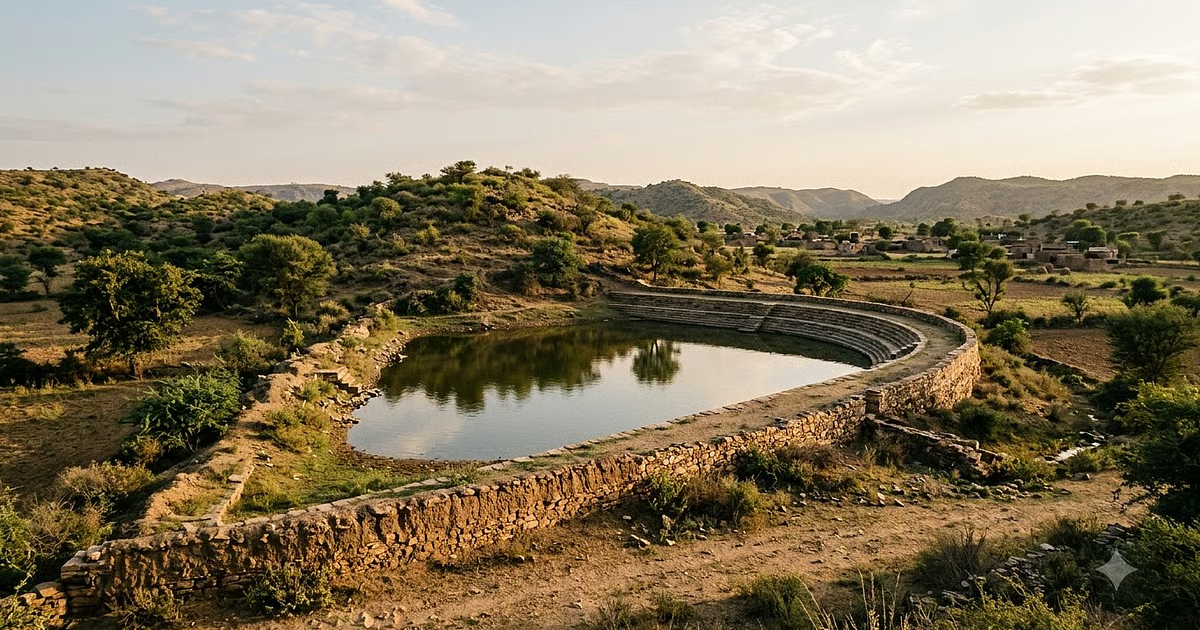

How the Johad became Rajasthan’s answer to water scarcity
A Johad is also referred to as a Pokhar or a percolation pond, which are crescent-shaped structures made of natural materials like mud, rocks, and stones. It is normally built in areas where rainwater naturally flows. Rather than allowing monsoon water to erode the soil, the construction helps in slowing down the water flow, leading to a better water storage system.
A simple solution with lasting benefits
The best feature of Johad is its capability to replenish the groundwater. In this process, the water slowly trickles down the ground and refills the underground reservoirs. This becomes an important aspect in places where groundwater is the major source of drinking water and irrigation.
Water availability also assists in cultivation. Moist soils allow farmers to grow crops regardless of rain scarcity because of moisture in the soil, while enhanced pastures benefit animals. When there is an extended period of drought, water stored in the soil allows for effective agriculture.
Johads also play a part in restoring the ecology. The water that filters underground helps improve the quality of the soil, promotes vegetation, and helps in restoring areas that have been degraded due to erosion and desertification.
Why are people reviving it in modern times?
The revamping of Johad structures has largely been spearheaded by many villages. This has resulted in the restoration of thousands of Johad structures in Rajasthan, thereby rejuvenating the drought-prone villages.
The achievements have been considerable. There is a rise in the groundwater level, there are improved yields from agriculture, and the water supply situation has become better for numerous villages.
Improved water availability has helped the local economy grow and slowed down urbanisation. Johads have proven to be so successful that even other countries, which lack water, such as parts of Africa, the Middle East and Australia, have also started relying on this process.
Comments are closed.