
What Is ‘Somaliland’, The Independent State Officially Recognised By Israel? Why It Matters, How It’s Less About Land And More About Control Of The Red Sea | Explained

Israel’s gesture of recognizing Somaliland, a state in the Horn of Africa, has made history in the region, registering reactions from the region. Somaliland has not been recognized by the international community for more than thirty years, when it started operating as a self-administered state.
Israel, a member state of the United Nations, has now made Somaliland the first state to recognize its sovereignty, a state with wider implications.
While the announcement has been framed as a breakthrough for Somaliland’s long quest for recognition, analysts say the move is driven primarily by maritime strategy, security concerns and control over one of the world’s most vital sea routes.
What Is Somaliland?
Somaliland is an internationally unauthorised state that is geographically positioned in the northwestern part of Somalia in Africa. It became an independent state in 1991 when it separated from Somalia due to the collapse of the central administration that had been ruled for many years by the oppressive regime of dictator Siad Barre.
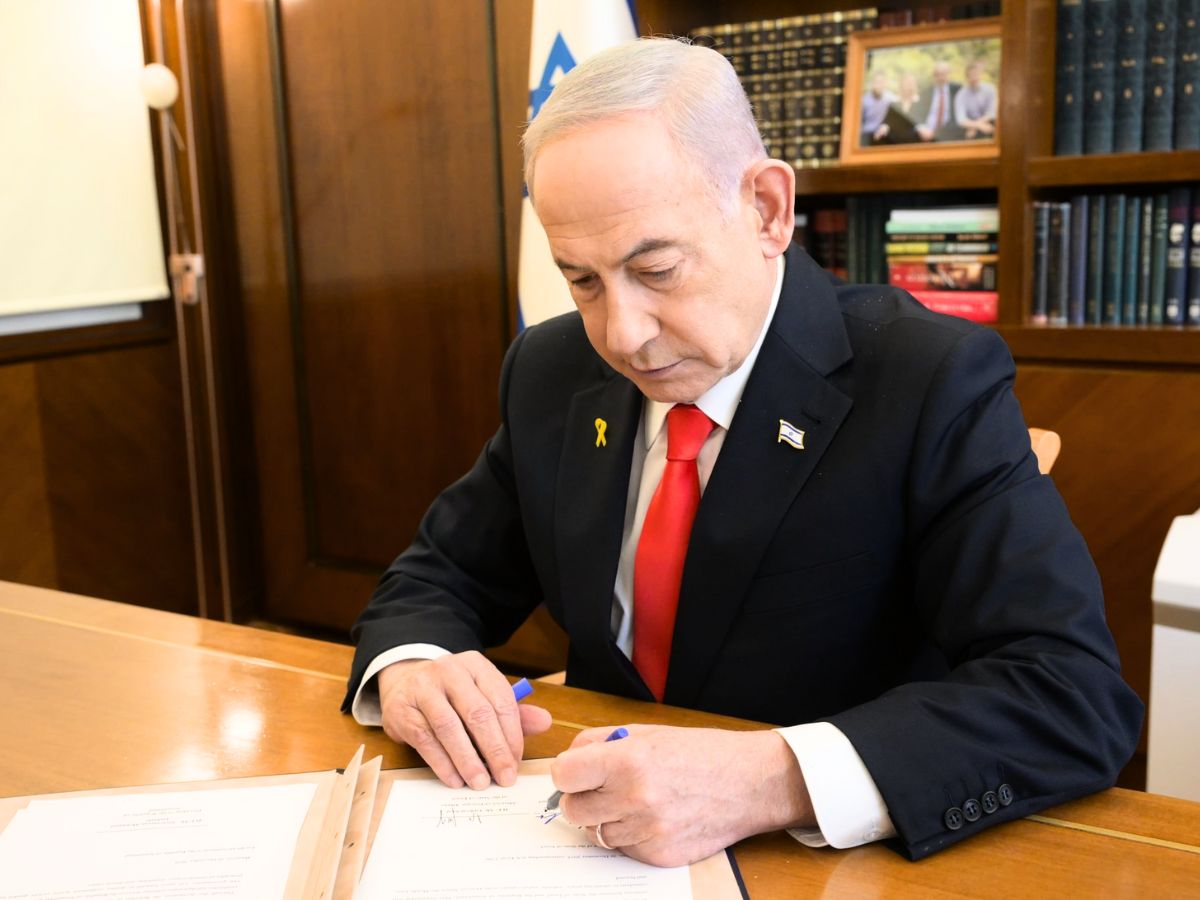
The Prime Minister announced today the official recognition of the Republic of Somaliland as an independent and sovereign state.
Prime Minister Netanyahu, Foreign Minister Sa’ar, and the President of the Republic of Somaliland signed a joint and mutual declaration. pic.twitter.com/M0AeTs5oxY
— Prime Minister of Israel (@IsraeliPM) December 26, 2025
Somaliland had previously been a British protectorate that gained independence on June 26, 1960. It merged with the ItalianSomalia colony just a few days later to form the Somali Republic.
The union, however, soon disintegrated. Political power was to remain under the dominance of the south, with the northern part being gradually marginalized. The tensions reached a climax after Somalia got defeated in the 1977-78 Ogaden War against Ethiopia.
The reaction of Barre’s government to opposition in the north was to bomb cities like Hargeisa, killing tens of thousands of civilians. The violence culminated in the initiation of a guerrilla war by the Somali National Movement against the government.
Following the collapse of Barre’s administration in 1991, leaders of the SNM held a grand conference in Burao and abrogated the union of 1960 by proclaiming Somaliland an independent state within the bounds of the old British protectorate.
How Somaliland Exists as a Non-Recognized State
Even without formal global recognition until recently, Somaliland has been an active state for over 30 years. It also has its own constitution, elected government, courts, currency, army, and police. There has been a peaceful transfer of power, making this situation unique in comparison to the rest of Somalia, which has been experiencing civil wars, terrorism, and political instability.
Somaliland has a governance structure that amalgamates democracy with customary dispute resolution by clans, giving the region a fairly stable political setup. It holds multiparty elections fairly frequently and has been rated “partly free” by global authorities who monitor its status. Also, its security situation remains quite good with minimal instances of piracy and terrorism.
Conversely, Somalia, which has international recognition from both the United Nations and African Union, is still a divided country, being controlled partly by Al Shabaab and supported economically and militarily from outside.
Why Recognition of Israel Matters
Israel’s recognition of Somaliland is a historic first that could have a domino effect. As far as Somaliland is concerned, getting recognition from a UN member state is an important boost to its international profile and could pave the way for investment and other international engagement. It also supports Somaliland’s position that stability and democracy should be internationally acknowledged and supported.
For Israel, the recognition has more profound strategic implications. The recognition brings Israel’s diplomacy into the Horn of Africa, which is a region that has become ever more central to global security and competition.
Why Somaliland’s Position Is Tied to the Ocean Rather Than Just the Territory Around It
The true geopolitical significance of Somaliland is not its land borders but its coastline. Somaliland boasts an extensive coastline of 850 kilometers on the Gulf of Aden, the narrow strait separating the Gulf of Aden from the Arabian Sea, and in turn the Red Sea from the Arabian Sea. This route is among the busiest in the world, accounting for a good percentage of international trade.
The Gulf of Aden is in front of Yemen, where Iranian-backed Houthi rebels have already attacked global shipping several times, as well as fired missile and drone attacks towards Israel. In the past year, attacks against ships in the Red Sea have increased global concerns about maritime security.
By forging a close relationship with Somaliland, Israel has found an advantage in being able to access a location that monitors this disputed sea lane. It was added that this will afford the Israelis opportunities to share maritime intelligence to thwart Iranian ambitions.
Strategic Significance of Berbera Port
The port town of Berbera in Somaliland has already become a military hub. The United Arab Emirates has a military base in Berbera, which comprises a naval facility as well as an airstrip, and has been instrumental in their operation against the Houthis. Increasing relevance in global politics means thatSomaliland finds itself at the crossroads ofMiddle Eastern politics in Africa.
Israel’s role within Somaliland is also effectively balancing China’s increasing military and business influence within neighboring Djibouti, where China maintains its first overseas military base.
Links between Israel and the Abraham Accords
The announcement was described as being in “the spirit of the Abraham Accords” by Israeli Prime Minister Benjamin Netanyahu, who hailed a series of agreements brokered by the United States to normalise Israel’s relations with a number of Arab states at the end of 2020.
The Israeli prime minister continued: “We will quickly move to work together on cooperation and development, and this is going to be in various fields: agriculture, health, technology, and economic development.”
As stated in the statements, Netanyahu, in collaboration with Israeli Foreign Minister Gideon Sa’ar, signed a joint declaration of recognition, along with Somaliland President Abdirahman Mohamed Abdullahi. Somaliland also made its intentions clear about joining the Abraham Accords, seeking a possible new strategic location in the Middle East as a friend of Israel and its allies.
After more than three decades of peaceful self-governance, constitutional order, and democratic practice, Somaliland has received its first formal international recognition as a sovereign and independent state.
This development affirms an objective reality that has long existed.… pic.twitter.com/Kw0JrhfZKM
— Presidency | Republic of Somaliland (@Presidencysl_) December 26, 2025
Regional Backlash
The action has been quickly condemned by Somalia and one of the key powers in the region. Egypt stated that its minister of foreign Affairs held urgent phone consultations with the foreign ministers of Somalia, Turkey, and Djibouti over the issue, citing that the declaration to recognize breakaway regions undermines regional and international order.
Already, the rising profile of the new player, Somaliland, has contributed to tensions between Somalia, Ethiopian, and Egyptian governments, and Israel’s recognition is set to heighten the rivalry in the Horn of Africa as the Red Sea is becoming the most militarized body of water in the world.
The Bigger Geopolitical Picture
The acknowledgment of Somaliland by Israel reveals another truth about modern-day politics. The nature of power and geography has evolved, and control over sea lanes has become an increasingly important factor. Somaliland has a coast that provides it with access, strategic leverage, and strategic monitoring capabilities over one of the most vital maritime points around the earth.
Thus, the Israeli action is not only about acknowledging the existence of a long-isolated state but also about gaining strategic leverage over the Red Sea, trying to counter their regional adversaries, as the competition for influence is taking place not only on land but also on the waterways.
ALSO READ: Condom Shortage Sparks Panic in Bangladesh: Muhammad Yunus Out Of Funds, Only One Month’s Stock Left
Sofia Babu Chacko is a journalist with over five years of experience covering Indian politics, crime, human rights, gender issues, and stories about marginalized communities. She believes that every voice matters, and journalism has a vital role to play in amplifying those voices. Sofia is committed to creating impact and shedding light on stories that truly matter. Beyond her work in the newsroom, she is also a music enthusiast who enjoys singing.
The post What Is ‘Somaliland’, The Independent State Officially Recognised By Israel? Why It Matters, How It’s Less About Land And More About Control Of The Red Sea | Explained appeared first on NewsX.

Comments are closed.