
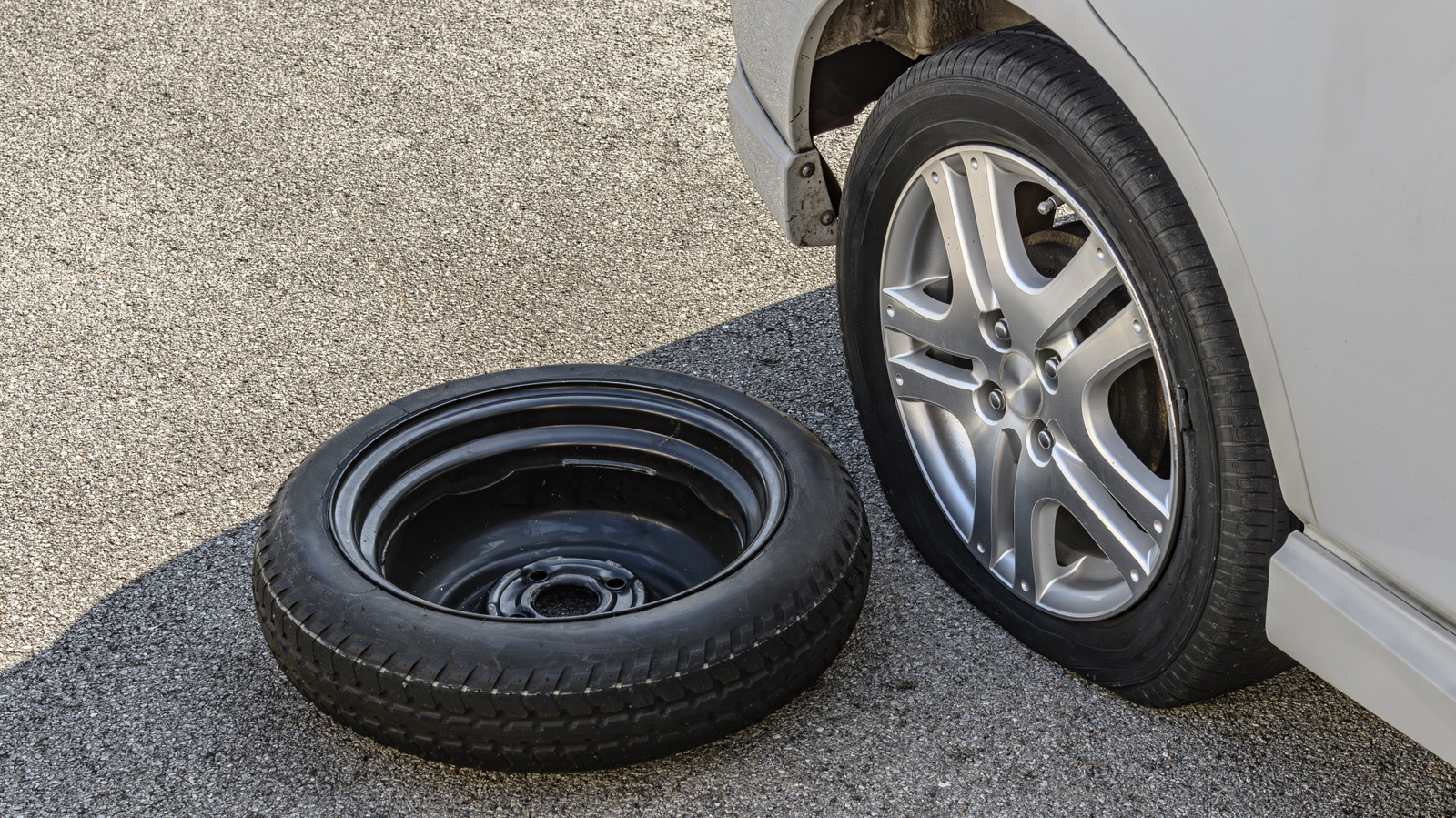

There are several ways to deal with a flat tire. If the hole in the tire isn’t too big to fix, drivers can attempt to repair it with a puncture repair kit. Alternatively, they can fit a spare tire. While some cars might have full-size spares, many cars have a smaller, space-saving tire that’s designed to be a temporary fix to get back on the road again, sometimes called a donut.
Anyone who fits a smaller-sized spare tire should keep in mind the 50-50 rule, which is an easy way to remember what you can and can’t do when your car has a spare tire fitted. The rule states that you should not drive more than 50 miles on a smaller-sized spare tire, and you should not drive at more than 50 mph during your journey.
The spare tire is designed to be a way to get you to the nearest shop, where your flat tire can be replaced and refitted to your car. It isn’t designed to be a permanent replacement, and if you drive for a much longer period of time on a spare, you can end up costing yourself more money in the long run. This is because a smaller-sized spare tire can cause damage to the transmission if it’s used for extended journeys.
Be sure to check if your car has a spare tire at all
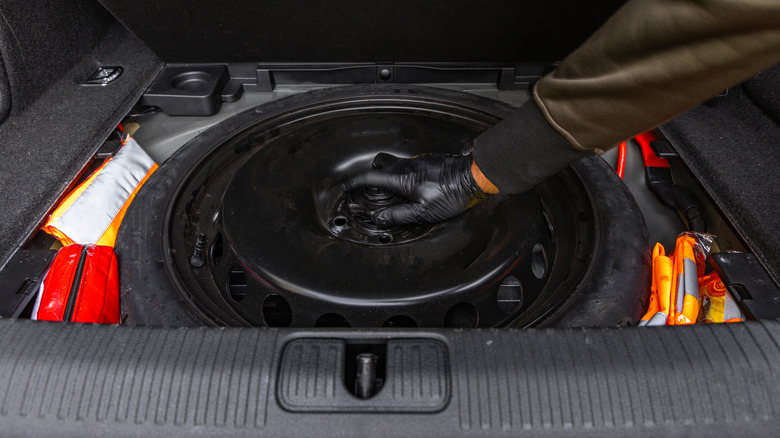
If you drive a new car and haven’t checked already, it’s worth making sure that your car does, in fact, come with a spare tire. Many new cars no longer include them as standard, since there are various cost and efficiency benefits for manufacturers who remove them. According to a Honda representative quoted by the LA Times“The problem is if the vehicle is in an accident, the spare tire can cause damage to the electric battery which could cause a failure in the battery.”
To offset the potential inconvenience caused by removing the spare tire, some cars now feature runflat tires from the factory. These tires are designed to retain their structure even if they get a puncture, meaning drivers can drive to the nearest tire shop without needing to stop and change a wheel. However, a punctured run-flat tire should still be treated the same way as a smaller-sized spare tire. The 50-50 rule remains useful here, as driving less than 50 miles at less than 50 mph is the best way to ensure you can drive to get your tire changed without causing damage to other components of your car.
To minimise the chance of flat tires in the first place, it’s best to regularly check your tires to see if there are any warning signs that they need to be replaced. Among other things, these signs can include small cracks, uneven tire wear, or increased vibration when driving on smooth roads.

Comments are closed.