
What will change in India due to the new rules of Tea Board? Why such an exercise during the election season?

Indians are the largest tea drinkers in the world. From homes to squares, intersections, hotels and offices, you will find lovers of tea drinking. But, in contrast to all this, tea is the means of livelihood and livelihood for millions of people. In India alone, so much tea is consumed that it cannot be met by domestic demand alone. In such a situation, for some time now, cheap and low quality tea is being imported into India from outside countries. Importing tea from foreign countries is not bad but it is causing huge loss to Indian tea farmers and tea industry. In view of this problem, the Tea Board of India under the Ministry of Commerce and Industry has taken a big decision. In its decision, the Board has made several rules for tea imported from outside.
The Tea Board of India has recently said in an instruction that from May 1, 2026, it will be necessary to test every consignment of tea coming to India. This means that whatever tea comes to India from abroad, its quality will be checked first. This will ensure that spoiled or adulterated tea is not sold in India. The Tea Board has also issued a rule and procedure (SOP) in this regard.
Instructions issued on 10 February
Tea Board Deputy Chairman C. Murugan issued a directive dated February 10. In this he said, ‘Using the power under paragraph 34 of the Tea (Distribution and Export) Control Order, 2005, it is directed that from May 1, 2026, all import consignments of tea will be compulsorily tested as per the Standard Operating Procedure (SOP) to ensure the quality.’
Also read: ‘Heretic Kalnemi has come to Sanatani Chola…’, at whom was Avimukteshwaranand angry?
In fact, in 2013, an online mandatory checking system for the import of tea was started, under which the board tested tea samples and issued an online clearance certificate to every applicant. However, the Parliamentary Standing Committee, in its 194th report dated August 12, 2025, had recommended that in view of increasing imports and the dangers of adulteration, more stringent monitoring is needed.
Why was this decision necessary?
The Indian tea industry has been complaining for a long time that very cheap and inferior tea is being brought to India from Nepal, Kenya and some countries in Africa. This tea comes without tax and is sold at a very low price. Due to this, Indian farmers do not get the right price for their tea and they face financial problems. Especially small tea farmers are being greatly affected by this. India imports 25 to 30 million kg of tea every year from Nepal and Sri Lanka and other countries.
Earlier, for a long time, Darjeeling Tea Association had expressed surprise that how the government body Food Safety and Standards Authority of India (FSSAI) is allowing cheap and bad Nepali tea to be imported without testing? FSSAI is a legal entity under the Union Ministry of Health and Family Welfare. It regulates the quality of food items.
New rules for importers
According to an official of Darjeeling Tea Association, ‘Cheap duty-free dumping of low quality tea coming from Nepal and non-FSSAI compliant tea has turned the Darjeeling tea industry into an ICU patient.’ Many other tea associations have also protested similarly. The Tea Board said that any person or company who wants to import tea is required to register with the Tea Board. The importer will have to provide information about the date of arrival of tea, warehouse for storing tea, number of containers and bill on the Tea Council portal. Along with this, complete details of tea price, freight and insurance will also have to be given.
Tea Board officials will take samples for testing in a recognized lab to check safety compliance. Imported tea must be stored separately and cannot be sold or re-exported until final clearance is obtained.
If the sample does not meet the standards…
If any sample does not meet the standards, the exporter can ask for reserve sample testing. However, failing either of the two, it will be disposed of as tea waste under the Tea (Waste) Control Order, 1959. The exporter will have to re-export the imported tea within six months. Also, blends with Indian tea will have to be clearly mentioned about this on the packaging and documents. A tea garden owner from Darjeeling says that if the rule is implemented well then it is a welcome step.
Also read: Is there a split in Tamil Nadu ‘India Bloc’? DMK said many people want to become leaders
Why such an exercise during the election season?
This step of the government has come at a time when assembly elections are to be held in states like West Bengal and Assam. There are a large number of tea gardens in both these states and the livelihood of lakhs of people is linked to these gardens.
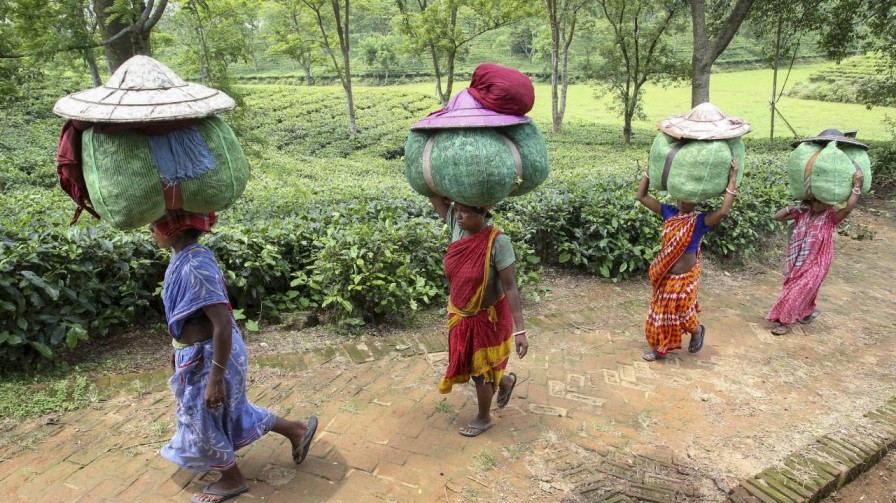
In fact, the politics of tea in Assam is quite important because tea plantation workers, called ‘Tea Tribes’ or tea tribes in Assam, constitute about 17-20% of the state’s population. This population is a big vote bank in Assam. This community mainly lives in the districts of Upper Assam. For political parties, winning the support of these workers is the key to electoral success. In such a situation, after the implementation of the new rule of the government, if the tea garden owners get different profits, then the socially marginalized workers can demand increase in their wages.
Earlier, Congress had a strong hold on the laborers working in tea gardens, but in recent years, BJP has won this class in its fold. This class is currently the strong base of BJP. Out of the 126 assembly seats in Assam, the tea industry and tea workers have a decisive influence on about 40 seats. Here their population can decide the election result.

Comments are closed.