
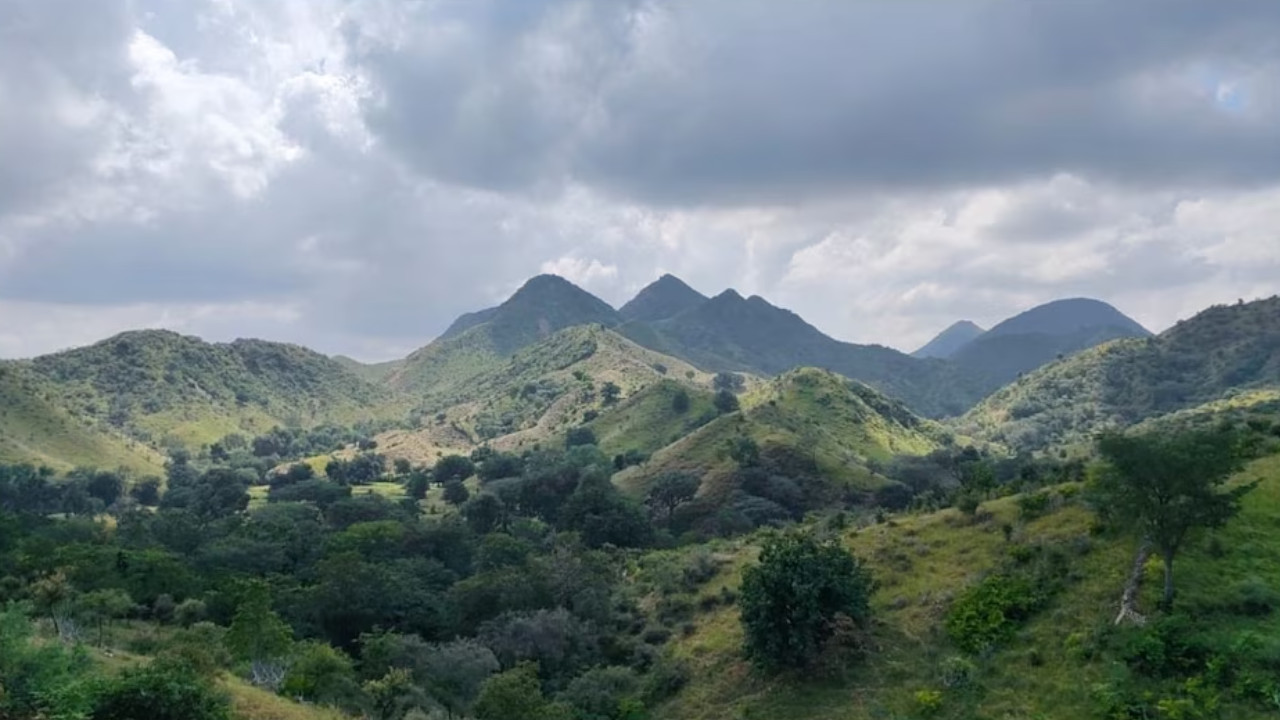

The Aravali mountains are one of the most ancient mountain ranges in the world. Aravali is the breath of North India, but environmental activists have issued a warning that ‘these breaths’ are in deep danger. Let us tell you that since the new definition of Aravali hills has come out, the existence of Aravali has come in danger. Let us know how important these hills are for North India and how life will be affected by their absence.
What is the new definition of Aravali?
According to the new definition of Aravali, only the landforms at least 100 meters high from the ground will be included in the Aravali range. At the same time, experts say that according to this definition, 90 percent of the hills will go out of the scope of conservation. After this, there will be no restrictions for mining, construction, cutting of trees, etc. in Aravali, which will cause damage to the environment.
Aravali: Breath, backbone and protective shield of North India
The Aravalli mountain range starts from Gujarat and extends to Rajasthan, Haryana and Delhi. Apart from being the oldest, this mountain range is also the ‘breath’ and ‘backbone’ of North India. In fact, the Aravali mountain range works as a natural shield of India and the backbone of environmental balance.
Why is Aravali important?
Preventing the spread of the desert: The Aravalli mountain range is a natural wall preventing the Thar Desert from expanding towards the north and east. If it is destroyed, the desert will expand rapidly towards North India. Due to this, the land will gradually become barren, farming will be affected and drought-like situations may become common.
Important role in the balance of rain and weather: Aravali influences the direction of the wind, which makes rain possible in Rajasthan, Haryana and Western Uttar Pradesh. It maintains the balance between drought and flood. If Aravali is destroyed, unseasonal rains, prolonged drought and weather uncertainty will increase, with farmers and rural populations being the biggest losers.
Natural source of groundwater: According to scientists, the rocks of Aravali act like a natural sponge. They trap rain water and slowly send it underground, thereby recharging groundwater in Delhi-NCR, Haryana and Rajasthan. If these hills disappear, the water crisis will deepen.
Shield of protection from pollution and dust: A large part of the dust and pollution coming to Delhi and North India comes from the west. The Aravalli hills help prevent dust storms and pollutants. Due to their weakening, the air quality will deteriorate further, which will increase respiratory diseases and will have a serious impact on the health of children and the elderly.
Strong base of biodiversity: Thousands of species of plants, birds, animals and insects are found in the Aravalli region. This entire ecosystem is dependent on each other. Deforestation and loss of hills can cause extinction of many species, which will disrupt the food chain. Since humans are also a part of this food chain, it will ultimately affect human life as well.

Comments are closed.