
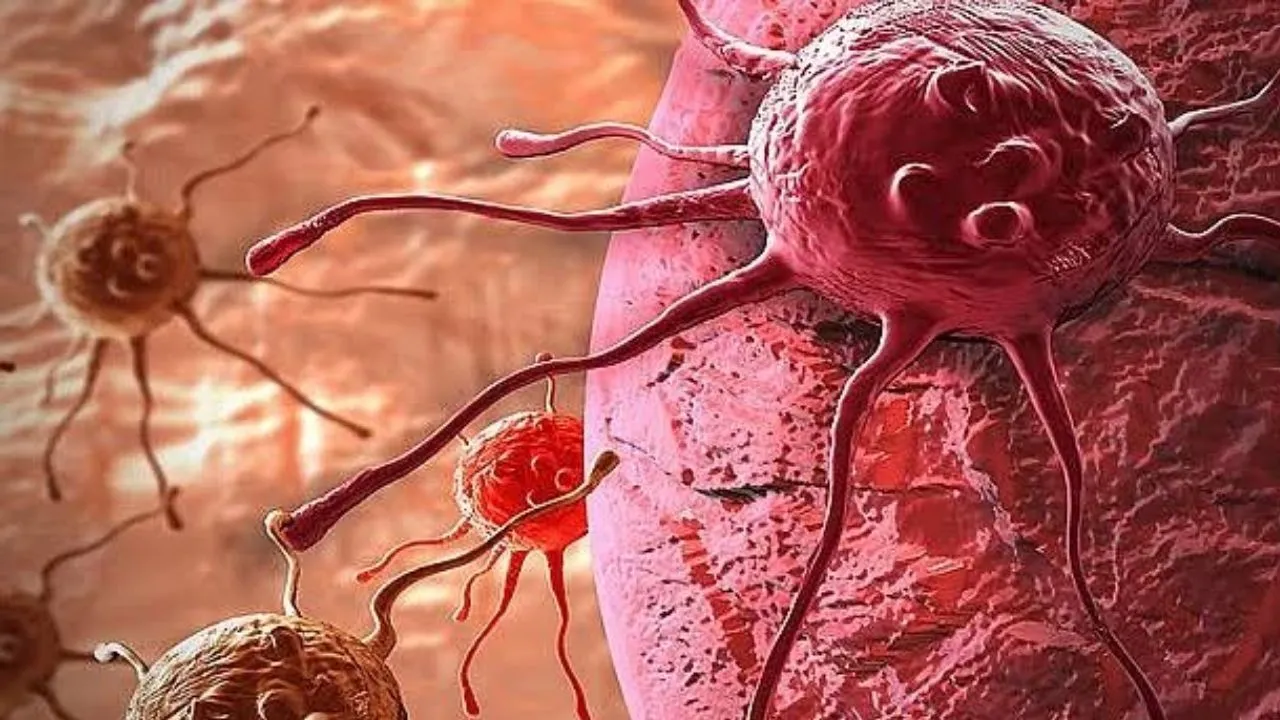
The world will face a bigger disaster than Corona in 2050! Will millions of children become orphans? The report disturbed everyone’s sleep

Cancer Report 2050: The horrific memories of the Corona epidemic are still fresh in people’s minds. But now the new report of the World Health Organization (WHO) has created another big concern. According to the report, cancer may become the biggest health challenge globally in the coming years and a record increase in its cases may be seen by the year 2050.
According to WHO’s report released on July 8, by the year 2050, the number of new cases of cancer every year in the world may increase to 35 million. This will be about 67 percent more than the current level. The report says that this increase will have the biggest impact on low- and middle-income countries, where cases may increase by up to 133 percent.
One out of every five people may get cancer
According to reports, one out of every five people in the world may be affected by cancer at some point in their lifetime. At the same time, the impact of cancer will not be limited only to the patient, but will also affect the family, caregivers and the financial system. For this reason, WHO estimates that 92 percent of the world’s population may be affected by cancer in some way or the other.
2.06 crore new cases surfaced in 2024
| Category | type of cancer | Projected new cases (2024) |
|---|---|---|
| total global figures | new cancer patients | 2.06 crore+ |
| total global figures | deaths from cancer | 97 lakhs |
| Male | lung cancer | 16 lakhs |
| Male | prostate cancer | 1.5 million |
| women | breast cancer | 24 lakhs |
| women | lung cancer | 10 lakhs |
| women | colorectal cancer | Major cancers included |
| Children | different types of cancer | danger is increasing |
The report states that every year about 4 lakh children and adolescents (0-19 years) fall prey to cancer. Most of these patients are from low and middle income countries, where facilities for timely diagnosis and treatment are limited.
Cancer is becoming a major cause of premature death
More than 48 lakh of the cancer deaths in 2024 were in the 30 to 69 years age group. WHO says that cancer is now becoming the leading cause of premature deaths.
millions of children becoming orphans
According to the report, around 24.5 lakh children across the world became orphans due to cancer deaths in the year 2020. 10.4 lakh children lost their mothers. 14.1 lakh children lost their father. The number of such cases was highest in countries like India, China, Nigeria, Indonesia, Ethiopia and Pakistan.
Mental and economic crisis also increased
WHO said that cancer is not only a physical disease, but it also affects mental health and economic condition. More than half of the patients face mental stress, depression and anxiety. Family members caring for patients also feel stress and social isolation. Heavy treatment expenses and loss of income push many families into financial crisis. WHO calls cancer ‘medical bankruptcy’ (Medical Bankruptcy) has also been mentioned.
Huge lack of testing and treatment in poor countries
According to the report, more than half of the world’s population still does not have access to basic diagnostic facilities like pathology and medical imaging. In sub-Saharan Africa there is only one pathologist available for every 1 million people, whereas in high-income countries this number is almost 50 times higher.
Big difference in treatment between rich and poor countries
The report shows that in developed countries, patients have higher chances of survival due to timely diagnosis and better treatment. In high-income countries, 85 percent of breast cancer patients survive for five years. In low-income countries this figure is less than 45 percent. The same difference is also seen in childhood lymphoid leukemia. While in Europe 93 percent of children survive after treatment, in some areas of Africa the rate is only 19 percent.
Also read- Ebola Crisis CongoCongo Ebola crisis causes 600 deaths, UN warns of terrible outbreak
WHO warning
WHO has said in its report that cancer is no longer just a health problem, but has become a global issue related to social justice, economic security and availability of quality health services. If prevention, timely detection and treatment facilities are not improved, cancer may become the largest cause of death in the world in the coming years.

Comments are closed.