
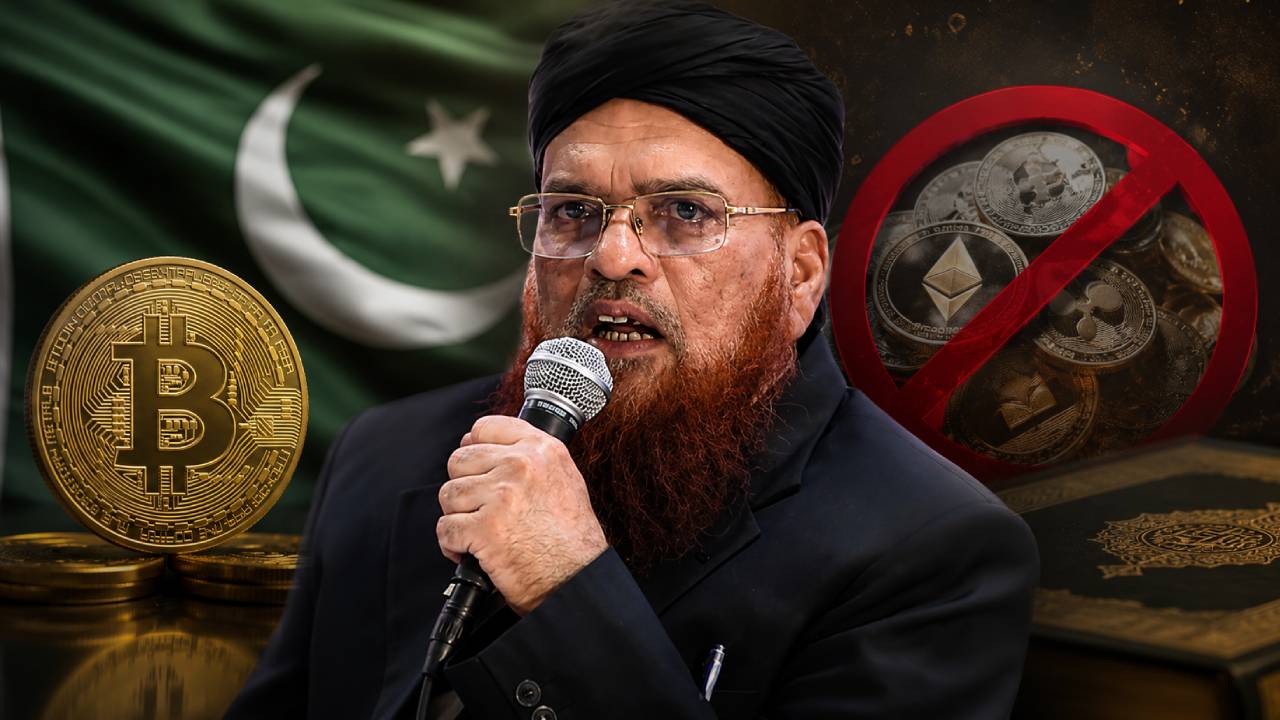

Government efforts to promote cryptocurrency in Pakistan have suffered a major setback. Mufti Muhammad Taqi Usmani, one of the most influential Islamic scholars in the country, has described trading of all types of cryptocurrencies including Bitcoin, Ethereum, Stablecoin as “Haram” i.e. prohibited under Islamic law (Sharia). This fatwa has come at a time when the Pakistan government is trying to establish itself as a crypto-friendly country.
After this decision, a debate has erupted not only in Pakistan but also among other Muslim majority countries of the world and Muslim investors. Although this fatwa is not a government law, but due to Taqi Usmani’s great reputation in religious and financial matters, it can have an impact on a large number of people.
What is a fatwa?
A fatwa is a religious opinion or legal interpretation given by a qualified Islamic scholar on an issue related to Islamic law (Sharia). Contrary to popular belief, a fatwa is not a law and is generally not legally binding. However, if it is issued by a big and influential Islamic scholar, it can have a deep impact on his followers.
In Pakistan, Mufti Muhammad Taqi Usmani is counted among the biggest Ulema (religious scholars) of Islamic Finance. He is associated with Darul Uloom Karachi, Karachi, which is considered one of the most prestigious Islamic education institutes in Pakistan.
Why was cryptocurrency declared haram?
The fatwa states that cryptocurrency does not meet the standards of legitimate wealth or property as per Islamic law. According to the fatwa, elements like excessive uncertainty, speculation and gambling are present in cryptocurrency, hence it cannot be accepted under Sharia. This decision is not limited to Bitcoin or Ethereum only, but is said to be applicable to all cryptocurrencies, crypto tokens and stablecoins used for trading and investing. Taqi Usmani believes that most cryptocurrencies do not meet Islamic standards.
Who is Mufti Muhammad Taqi Usmani?
Mufti Muhammad Taqi Usmani was born on 3 October 1943. He is considered a leading Islamic jurist of Pakistan, an expert in Quran, Hadith, Islamic law and Islamic economics. He was a member of Pakistan’s Council of Islamic Ideology from 1977 to 1981. After this, he was the judge of the Federal Shariat Court in 1981-82 and the judge of the Shariat Appellate Bench of the Supreme Court of Pakistan from 1982 to 2002.
What is the connection with India?
In the year 2020, he was chosen as the world’s most influential Muslim personality. He is also counted among the leading thinkers of the Deobandi movement and his fatwas are given importance in many Deobandi institutions around the world, including Darul Uloom Deoband in India.
Since 2021, he is the President of Wifaq-ul-Madaris al-Arabiya. His father Mufti Shafi Usmani was the Grand Mufti of Darul Uloom Deoband. After the partition of India, his family moved to Pakistan in 1948. Taqi Usmani received education from Darul Uloom Karachi, Karachi University and Punjab University. He started teaching at Darul Uloom Karachi in 1960.
He has written 143 books in Arabic, English and Urdu. His contributions to the field of Islamic banking and Islamic finance have been recognized worldwide. He has also been the Chairman of Bahrain-based Accounting and Auditing Organization for Islamic Financial Institutions (AAOIFI). In 2014, he was appointed Chairman of the Sharia Board of State Bank of Pakistan.
What is the reason for the fatwa coming at this time?
This fatwa has come at a time when the Pakistan government has been trying to make the country crypto-friendly for the last one year. The government has formed the Pakistan Crypto Council, constituted the Pakistan Virtual Assets Regulatory Authority (PVARA) and prepared regulations for digital assets. Apart from this, the government is also working on new policies to increase investment in blockchain technology and digital finance.
Is crypto illegal in Pakistan now?
No. This fatwa is a religious opinion, not a government order or court decision. The legal status of cryptocurrencies in Pakistan is different and this fatwa does not automatically impose a legal ban on trading. However, analysts believe that given the influence of Taqi Usmani, a large number of religious investors may voluntarily exit the crypto market.

Comments are closed.